Southwark London England About Methodology
Bermondsey · SE1

Cardinal Bourne Street

Named after a cardinal in an era of Catholic expansion, this Bermondsey street has been entirely remade as modern social housing.

Name Origin
Bishop Francis Bourne
First Recorded
As Lower Bland Street
Borough
Southwark
Character
Social Housing
Last Updated
Time Walk

A Street of Modern Social Housing

Cardinal Bourne Street is a compact residential street in Bermondsey, wholly composed of modern social housing developed in the latter half of the twentieth century. The street sits at the heart of an area shaped by medieval monasticism and Victorian industry, yet the buildings here are entirely contemporary—a postwar redevelopment that swept away the tenements and workshops of an earlier era. From its position near Borough tube station, the street is embedded in the neighbourly fabric of Bermondsey, surrounded by conservation areas and historic sites that tell far older stories.
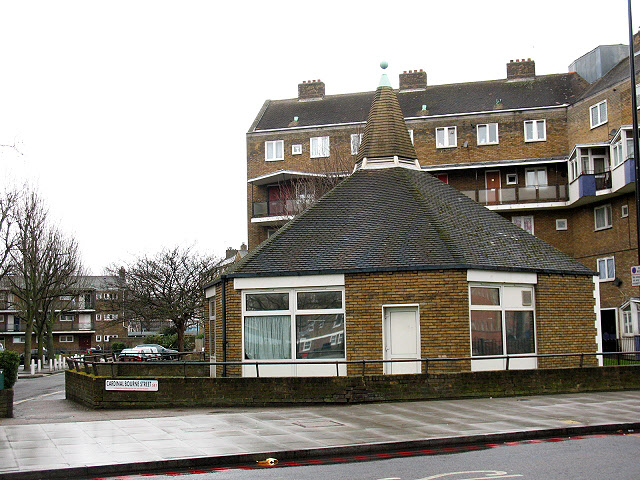
2010
The Roundhouse, Cardinal Bourne Street
Wikimedia Commons · CC BY-SA 2.0
Historical image not found
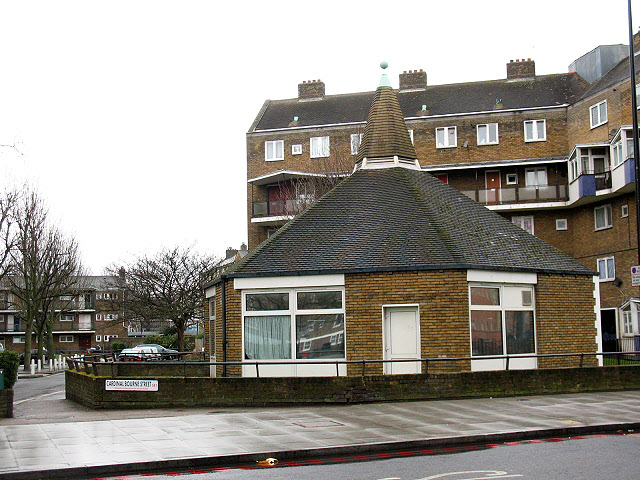
Today
The Roundhouse, Cardinal Bourne Street
Geograph · CC BY-SA 2.0

But the street’s name points to something different: not to Bermondsey’s Anglo-Saxon origins or industrial past, but to a figure of the high Catholic Church in the early twentieth century. That name is relatively new, replacing an older designation that had held for nearly a century before it.

✦   ✦   ✦
Name Origin

Cardinal in an Age of Expansion

The street takes its name from Francis Bourne, Bishop of Southwark in the late 19th century. Bourne arrived in Southwark in 1884 and presided over the diocese during a period of vigorous Catholic expansion in London. Created cardinal in 1911, he went on to become the longest-serving Archbishop of Westminster at more than thirty-one years (1903–1935). Yet today, despite his prominence, he remains largely forgotten outside ecclesiastical circles.

The street was once called Lower Bland Street, a name rooted in property ownership rather than commemoration. The renaming to Cardinal Bourne Street reflects both a shift in local Catholic identity and the wave of late Victorian civic pride that saw many Southwark streets renamed to honour public figures of the age. The timing of the change is not precisely documented, but by the early twentieth century the new name was in use. The street is now entirely made up of social housing, making it a physical record of postwar urban renewal rather than a living archive of the street’s ecclesiastical namesake.

How the name evolved
c. 1800–1911 Lower Bland Street
1911–present Cardinal Bourne Street
✦   ✦   ✦
History

From Bland Street to Social Housing

Bermondsey’s transformation from marshland to leather-working centre to modern residential quarter occurred in waves, and Cardinal Bourne Street reflects the most recent of these upheavals. For much of the nineteenth century, the street and its surroundings were zones of dense urban settlement—terraced housing, small workshops, and the tight street patterns of pre-industrial and industrial-era London. The construction of railways in the 1830s brought goods and people; the proximity to the Thames ensured waterside trades flourished.

Key Dates
c. 1880
Lower Bland Street
The street is recorded as Lower Bland Street, a typical working-class residential lane in the heart of Bermondsey.
1911
Cardinal Created
Francis Bourne is created cardinal by Pope Pius X; the street is renamed in his honour sometime around this period.
1940s–1950s
Postwar Redevelopment
The street undergoes substantial rebuilding as part of wider Southwark renewal; modern social housing replaces Victorian terraces.
1980
Postcode Introduction
SE1 4EJ postcode system introduced; the street enters the modern administrative era.
Did You Know?

The Roundhouse, a hexagonal community hall just off Great Dover Street near Cardinal Bourne Street, is part of the Lawson Estate and sits in the footprint of the older Bermondsey, a reminder of the neighbourhood’s social and community infrastructure preserved through redevelopment.

The postwar redevelopment that reshaped Cardinal Bourne Street was part of a wider movement to clear and rebuild London’s inner boroughs. Social housing blocks rose where Victorian courts and terrace rows once stood, a deliberate policy of urban modernisation that prioritised modern standards of space, light, and sanitation. The street became a symbol of that aspiration—though decades later, opinion on that legacy remains divided between those who see it as much-needed reform and those who mourn the loss of older community patterns.

✦   ✦   ✦
Culture

A Twentieth-Century Neighbourhood

Cardinal Bourne Street itself does not host named cultural institutions; rather, it is part of the living culture of modern Bermondsey—a residential street whose character is defined by its housing stock, its residents, and its role within a broader conservation area. The wider neighbourhood, however, carries deep cultural weight. Bermondsey is home to the Bermondsey Market (New Caledonian Market), an antiques and bric-a-brac market relocated from Islington in the 1950s, and to numerous heritage sites including churches, former monastic sites, and Victorian warehouses now repurposed as studios and galleries. Cardinal Bourne Street’s social housing connects directly to Southwark’s postwar narrative—the deliberate civic commitment to providing affordable homes for working and lower-income Londoners at a time when bomb damage and housing shortage created urgent need.

The street sits within a landscape shaped by centuries of spiritual and commercial life. Bermondsey derives from Beormund, a Saxon lord of the district, and ‘ea’ or ‘eye’, meaning “island”—a reminder that this was once marshy ground. Medieval monks transformed the landscape; Victorian industrialists built upon it; twentieth-century planners remade it yet again. Cardinal Bourne Street, in its postwar social housing form, is a product of that third transformation.

✦   ✦   ✦
On the Map

Cardinal Bourne Street Then & Now

National Library of Scotland — Ordnance Survey 6-inch, c. 1888. Hosted by MapTiler. Modern: © OpenStreetMap contributors.

✦   ✦   ✦
Today

A Quiet Corner of Modern Bermondsey

Cardinal Bourne Street today is a residential street of modern flats and maisonettes, predominantly social housing managed by housing associations. The architecture is functional and postwar, the street quiet and residential. Its location near Borough tube station, minutes from Tooley Street and London Bridge, places it within one of London’s oldest commercial and transport hubs, yet the street itself remains tucked away from the main thoroughfares and tourist routes. Residents here are part of a neighbourhood that has undergone gentrification and cultural shift in recent decades, yet Cardinal Bourne Street maintains its character as an affordable housing neighbourhood within a borough increasingly known for expensive renovated warehouses and fashionable cafés.

The green spaces nearest the street offer respite and community connection. Tanner Street Park, a ten-minute walk away, commemorates Bermondsey’s industrial past as a leather-working centre and preserves a fragment of St Olave’s church. Southwark Park, the larger public park of the area, lies a fifteen-minute walk south and provides open green space, sports facilities, and cultural programming. Guy’s Hospital gardens and the Thames Path offer further options for movement and recreation within walking distance. For a street largely defined by social housing and residential quiet, these nearby amenities ground Cardinal Bourne Street within Bermondsey’s evolving community life.

Tanner Street Park
10 mins walk
Historic park marking Bermondsey’s leather-working legacy; contains a fragment of St Olave’s church.
Southwark Park
15 mins walk
Larger public park with open green space, sports facilities, and cultural events.
Thames Path
8 mins walk
Riverside walking route offering views of the river, Tower Bridge, and Rotherhithe.
Guy’s Hospital Gardens
12 mins walk
Green courtyard and grounds adjacent to historic teaching hospital.
✦   ✦   ✦

Frequently Asked Questions

Why is it called Cardinal Bourne Street?
The street takes its name from Francis Bourne, a late 19th-century Catholic Bishop of Southwark who later became Cardinal Archbishop of Westminster. He was created cardinal in 1911 and served as Archbishop for over thirty years. The street was renamed from its earlier designation of Lower Bland Street, most likely around the time of or after his elevation to cardinal, as a mark of honour and local Catholic identity during a period of expansion for the Church in London.
What was the street called before Cardinal Bourne Street?
The street was known as Lower Bland Street, a name reflecting Victorian-era property designation rather than any commemorative purpose. The name change to Cardinal Bourne Street occurred in the early twentieth century, replacing a purely functional street name with one honouring a prominent religious figure at a time when Southwark’s Catholic infrastructure was expanding and local civic pride in public commemoration was high.
What is Cardinal Bourne Street known for?
Cardinal Bourne Street is known as a residential street in Bermondsey composed entirely of modern social housing developed in the postwar era. It represents twentieth-century urban renewal and affordable housing policy. Located near Borough tube station within the Chaucer ward, the street sits at the heart of Bermondsey—a neighbourhood rich in medieval heritage (Bermondsey Abbey), industrial history (leather-working), and modern residential redevelopment. The street itself is quiet and residential, a snapshot of London’s postwar housing ambitions.