Southwark London England About Methodology
Southwark · SE5

Addington Square

A Georgian refuge named after a wartime Prime Minister, where Burgess Park and a legacy of crime collide with some of London’s most untouched period architecture.

Named After
Henry Addington
First Recorded
c. 1810
Borough
Southwark
Character
Georgian & Regency
Last Updated
Time Walk

Untouched by Time

Three sides of this Georgian and Regency garden square remain among the most perfectly preserved nineteenth-century residences in south London, protected as listed Grade II buildings. The square backs onto Burgess Park on three sides with no through traffic, making it a peaceful space popular with lunchtime office workers, and its controlled access, period buildings and proximity to central London have made it popular with film crews.
2018
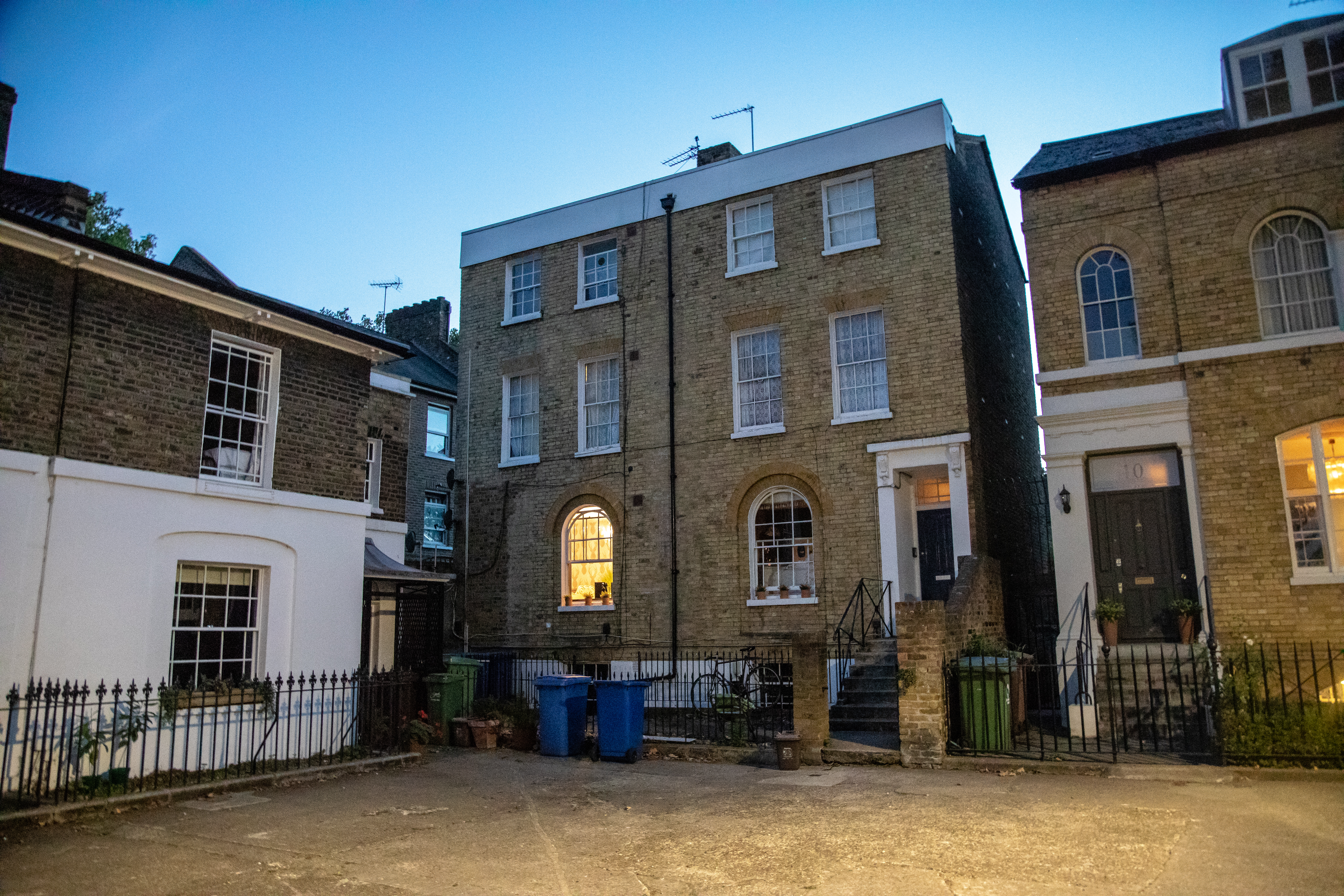
11, Addington Square
Wikimedia Commons · CC BY-SA 4.0
2018
11 Addington Square, Camberwell, June 2018
Wikimedia Commons · CC BY-SA 4.0
Historical image not found
Today
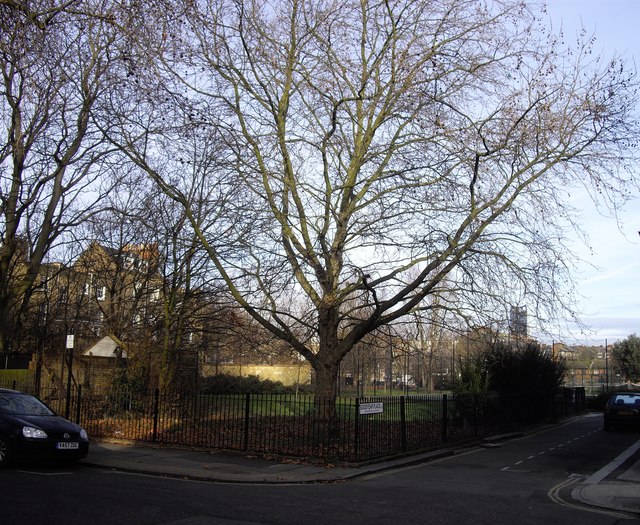
Goodyear Place Camberwell — near Addington Square
Geograph · CC BY-SA 2.0

The north side has changed entirely, replaced by the Southwark City Tennis Club. Yet the silence on the other three sides is almost shocking—traffic-free, domesticated, the world of the square entirely self-contained. The name belongs to a war leader, and it was chosen during a time of conflict. But who Henry Addington was, and why his name appeared here at all, is a tale of political favour and the ambitions of developers naming streets after powerful men.

✦   ✦   ✦
Name Origin

The Prime Minister Who Lasted Three Years

The square is named after the early 19th century prime minister Henry Addington. Henry Addington, 1st Viscount Sidmouth (30 May 1757 – 15 February 1844) was a British Tory statesman who served as prime minister of the United Kingdom from 1801 to 1804 and as Speaker of the House of Commons from 1789 to 1801. Addington is best known for obtaining the Treaty of Amiens in 1802, an unfavourable peace with Napoleonic France which marked the end of the Second Coalition during the French Revolutionary Wars.

The square was built at the same time as the basin of the Surrey Canal which lies to its north, and named after Henry Addington, Prime Minister from 1801 to 1804. Development began in 1810, when Addington was no longer in office—he had been forced out in 1804, but the memory of his premiership remained politically current. Developers building residential squares in Camberwell named them after prominent national figures as a mark of respectability and permanence. Addington's name, though briefly in power, represented stability and the nation itself during wartime.

How the name evolved
c. 1810–1844 Addington Square
1844–present Addington Square
✦   ✦   ✦
History

From Canal Basin to Dereliction to Renaissance

Construction of the square in the early 19th century came with the Grand Surrey Canal which terminated at Camberwell Wharf lying on the north side of the square. The first house in the square (now number 48) was completed by 1810 and owned by Nathaniel Simmons who was the engineer to the Grand Surrey Canal Company. Most of the rest of the square was built by 1827, and the square was complete by 1844.

Key Dates
1810
First House Built
Number 48 completed for Nathaniel Simmons, engineer to the Grand Surrey Canal Company.
1811
Canal Terminal
The Grand Surrey Canal reaches its terminus at Camberwell Wharf, north of the emerging square.
1827
Square Takes Shape
Most of the remaining houses completed; construction continues in fits across the next two decades.
1844
Square Completed
Final buildings finished. Robert Hunter, later founder of the National Trust, born at number 13.
1855
Private Square Status
Completed as a private gated square, access restricted to residents and their guests.
1897–1898
Dereliction & Renewal
Square had become derelict but was renovated and opened for public use; the Metropolitan Public Gardens Association donated six seats.
1960s
Richardson Gang Era
Square became the base of the Richardson Gang, south London rivals to the Kray twins.
2008
Film & Music
Goldfrapp music video for "Happiness" filmed in the square, bringing it to wider cultural attention.
Did You Know?

Nikolaus Pevsner points out in his The Buildings of England that as the construction was completed over a period of time (unlike most North London squares) "uniformity was abandoned" leading to "the pleasant irregular early c19 houses and terraces around Addington Square." This inconsistency is what makes the square charming: no attempt at perfect symmetry, just honest vernacular architecture building itself across decades.

The 1851 census showed 32 houses with 179 residents and 33 servants, an occupancy rate of 6.2 persons per house. This was solid upper-middle-class territory. It was completed as a private square in 1855. By 1897 the square had become derelict, but was renovated and opened for public use; the Metropolitan Public Gardens Association donated six seats in 1898. The nineteenth century saw the well-to-do move farther out of London, leaving Camberwell behind. But the square was rescued and maintained as public space, a democratic gesture that preserved its architecture for the generations that followed.

✦   ✦   ✦
Culture

From Drawing Rooms to Film Sets

Addington Square is an unusually well-preserved conservation area with the houses that make up the east, south and west sides of the square listed Grade II. The architecture speaks to the confidence of the early nineteenth century—sash windows running floor to ceiling, arched ground-floor recesses, three storeys plus basement in the Georgian manner. Each house was built to last, and they have.

Architectural Inconsistency
The Virtue of Gradual Building

Unlike most London squares, which were built to a unified design, Addington Square developed piecemeal across three decades. This created charming irregularity: houses of varying heights, fenestration patterns, and setbacks. It is an accident of history that has become the square’s greatest asset, each house a minor variation on the Georgian theme.

In 2008 it was used as the location for the electronic duo Goldfrapp's music video for their single "Happiness", which features on their fourth studio album, Seventh Tree. The video focused on a young man in a white suit joyfully jumping down the streets in Addington Square, and featured the duo in a variety of cameos. The square continues to attract filmmakers drawn to its period setting and traffic-free atmosphere, making it a working studio for contemporary media production.

✦   ✦   ✦
People

Residents Who Shaped the Nation

In 1844, National Trust founder Robert Hunter was born at number 13. Hunter would go on to co-found the National Trust, the conservation organisation that today owns and preserves much of Britain’s heritage. His birth in this square of fine houses may have shaped his later conviction that beautiful places and buildings ought to be protected for the public good.

In the 1960s, the square was the base of the Richardson Gang, a south London rival to the Kray twins. They ran a private drinking club from the square, which had "Mad" Frankie Fraser and two dancing bears in residence. The genteel terraces became an unlikely headquarters for organised crime, a reminder that no street exists outside history or social conflict. Yet the square survived this era too, its architecture intact, its character resilient.

✦   ✦   ✦
Recent Times

Restoration and Film Presence

By the late twentieth century, Addington Square had begun to attract interest from conservationists and buyers seeking authentic period properties away from the busier streets of Southwark. The conservation area designation protected the buildings and ensured that any restoration work would respect the original fabric. Properties began to be carefully refurbished, with original sash windows and period details restored rather than replaced.

The square’s peaceful, traffic-free environment and Grade II listed status made it increasingly attractive to production companies. Its use in the Goldfrapp video in 2008 brought it wider cultural attention. Today, it remains a sought-after residential address and a location of choice for filmmakers seeking authentic Georgian and Regency London without the intrusion of modern streetscape.

✦   ✦   ✦
Today

A Living Archive

Addington Square today is a rare thing: a complete picture of Georgian and Regency residential life, preserved almost intact into the twenty-first century. Because three sides of the square back onto Burgess Park and there is no through traffic, it is a peaceful space popular with lunchtime office workers. The garden itself is well-maintained, with mature trees and benches donated over more than a century ago. The north side, where the canal once terminated and industry once pushed into the square, is now home to a tennis club managed by Southwark.

Walking around Addington Square is to step into London’s past without pretence. The houses still have their original proportions and many their original windows. The iron railings survive. The street level has never been altered. No chain stores, no ground-floor conversions interrupt the sequence of front doors and basement areas. It is not a museum piece, but a lived square, and that quality—of being inhabited, maintained, used—is what makes it worth seeing and worth preserving.

2 min walk
Burgess Park
Open green space with sports facilities, woodland areas and a serpentine lake. Directly adjacent to the square on the north side.
8 min walk
Russias Lane Nature Reserve
Wooded grassland and natural pond habitat, rich in insect and bird life. South of Camberwell Road.
12 min walk
Horniman Library Gardens
Victorian public gardens with mature plantings overlooking the library. East towards Peckham.
15 min walk
Seeley Gardens
Small community garden and social space. West towards Walworth, representing local greenspace initiatives.
✦   ✦   ✦
On the Map

Addington Square Then & Now

National Library of Scotland — Ordnance Survey 6-inch, c. 1888. Hosted by MapTiler. Modern: © OpenStreetMap contributors.

✦   ✦   ✦

Frequently Asked Questions

Why is it called Addington Square?
The square is named after Henry Addington, 1st Viscount Sidmouth, who served as Prime Minister from 1801 to 1804. Developers building the square from 1810 onwards named it after him as a mark of respectability and to honour a prominent national figure, even though Addington was no longer in office by the time construction began.
Who was Henry Addington and what did he achieve?
Henry Addington (1757–1844) was a British Tory statesman best remembered for negotiating the Treaty of Amiens in 1802, which briefly ended the Napoleonic Wars. Though his premiership lasted only three years, he is also known for his later tenure as Home Secretary (1812–1822), where he became controversial for his reactionary policies against democratic reformers. Streets and public places named after him commemorate his national prominence rather than the success of his brief time as Prime Minister.
What is Addington Square known for today?
Addington Square is known as an exceptionally well-preserved Georgian and Regency conservation area, with Grade II listed buildings on three sides and Burgess Park forming a backdrop. It became notorious in the 1960s as the base of the Richardson Gang, a south London criminal organisation. Today, it is popular with filmmakers seeking authentic period London, and with residents seeking a peaceful, traffic-free enclave close to central London.