Time Walk
A Plan Drawn After a Death


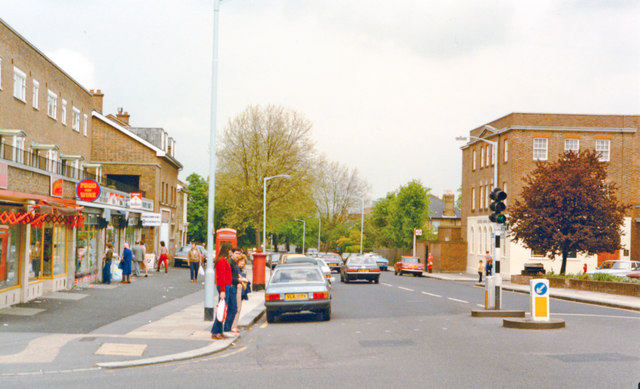
A lord's death gave this road its line, though not, it seems, its name. Today's walker finds rows of mid-Victorian villas, a red-brick 1930s telephone exchange on the corner with Rosendale Road, and, further along, an old electronics works turned business park.
Beneath the stucco porches and bay windows, the road still carries its first identity: houses here were known as Thurlow Villas before the name Park Hall Road settled in. That older layer hands us straight to the question of the name itself.
Name Origin
Thurlow's Shadow, an Unexplained Hall
Park Hall Road was drawn up as part of a plan for building in the area following the death of Lord Thurlow in 1806, together with Rosendale Road — as far south as Park Hall Road — and Thurlow Park Road. Two of those three roads plainly carry the Thurlow name. Park Hall Road does not, and the sources used here do not explain what "Park Hall" itself refers to.
The road's first houses were not even known by this name. Built between 1846 and 1854 on land sold off in freehold lots the previous year, they were originally called Thurlow Villas, and the 1864 Stamford Map still captions them that way. At some point after that the road settled into the name it carries now.
History
Villas, a Chapel, and a Lost Stone
The villas that still line Park Hall Road were built as a single mid-century development. Pairs of semi-detached houses share semi-basements, stock brick walls and stucco fronts. No. 61 stands apart, a detached villa with three dormers facing the road.
One house breaks the pattern entirely. A 1977 conservation area report describes No. 2 Park Hall Road as a large stucco villa, the first of a semi-detached pair, dated to the late 1650s — a date that sits oddly against a road not laid out until the nineteenth century, and the report itself records it only as a probable dating.
Faith arrived on the road in 1855, when a Congregational chapel opened at the corner of Chancellor Grove and Park Hall Road. Its foundation stone had a history of its own: laid in 1851 by the Rev. J. Burnet for a smaller chapel in Rosendale Road, it was carried into the fabric of the new, larger building on Park Hall Road. That chapel stood for less than a century — it was destroyed by enemy action in the war of 1939–45.
The 1855 chapel on Park Hall Road carried a foundation stone first laid four years earlier for a smaller chapel on neighbouring Rosendale Road.
Culture
Wireless and Television, Made Nearby
A former Pye Electronics building adjoins the West Norwood conservation area and is locally listed.
Recent Times
Protecting the Villas
The Council rehabilitated the properties on Park Hall Road in the late 1970s. The road had already been designated a conservation area in 1974, and since 1984 an Article 4 Direction has placed stricter controls on external alterations to the houses.
Today
Villas, an Exchange, and a Works
Park Hall Road sits at the eastern end of Robson Road, next to the north-eastern corner of West Norwood Cemetery. Its mid-19th century villas remain protected by conservation area status and the Article 4 Direction. At the Rosendale Road corner, the 1936 telephone exchange and its Edward VIII cipher still stand, and a locally listed former Pye Electronics building forms part of the adjoining business park.
On the Map
Park Hall Road Then & Now
Frequently Asked Questions
Why is it called Park Hall Road?
The road was drawn up as part of a building plan following Lord Thurlow's death in 1806, alongside Rosendale Road and Thurlow Park Road, but the sources used here do not explain where the name "Park Hall" itself comes from.
What is Park Hall Road known for?
Its largely intact run of mid-Victorian semi-detached villas, protected since 1974 as a conservation area, and its connection to Pye Electronics, credited with early wireless and television work in the 1930s.
What were the houses on Park Hall Road originally called?
Thurlow Villas. Built between 1846 and 1854, they are still shown under that name on the 1864 Stamford Map before the road took its current name.