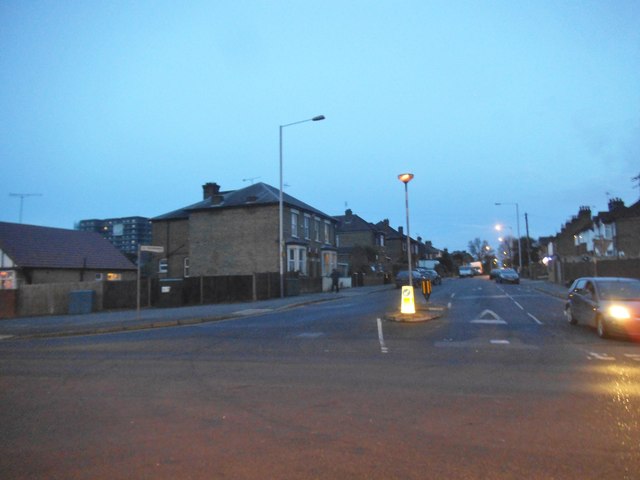
The land beneath Cowley Road was, until the early nineteenth century, pasture and market-garden ground. It lay within the Manor of Lambeth Wick, a possession of the Archbishop of Canterbury whose origins, as British History Online records, stretch back to a grant made to Hubert Walter in 1197. An Act of Parliament in 1807 permitted the Archbishop to grant building leases, but development was deliberately held back. The promoters were waiting to see where the new Vauxhall Bridge road would run.
1197
Archbishop’s Grant
The Manor of Lambeth Wick, within which Cowley Road later sits, is granted to Hubert Walter, Archbishop of Canterbury.
1816
Vauxhall Bridge Opens
The new bridge and connecting roads unlock development pressure on the Lambeth Wick estate, triggering the building boom that reaches Cowley Road within a decade.
c. 1824
Regency Terrace Built
Nos. 9–27 Cowley Road (then Nos. 1–10 Cowley Road) are built as a unified stucco terrace with elliptical-arched arcade fronts and wrought-iron balconies.
1830–31
Street Fills Out
Further houses built along the road, including a detached villa at No. 69 (George Henry Rickards, 1830) and rows of two-storey pairs. The southern section was originally known as Cowley Terrace.
1934–36
Cowley Estate Built
The London County Council constructs the Cowley Estate on adjacent Brixton Road, housing six hundred families displaced by slum clearance elsewhere in Lambeth.
1970s
Listed & Restored
Lambeth Council restores the Regency terrace, which had fallen into serious disrepair. The buildings are awarded Grade II listed status, securing their long-term protection.
Did You Know?
The southern section of Cowley Road was originally recorded as “Cowley Terrace” rather than Cowley Road — a separate address absorbed when the street was renumbered. The Survey of London records the transition: Nos. 89–107 Cowley Road were formerly Nos. 1–10 Cowley Terrace.
Vauxhall Bridge finally opened in 1816, and the connecting road to Camberwell followed two years later. Building began first in the northern parcels of the Manor. Lord Holland let the frontages in small parcels to both builders and speculators on 80-year leases — a policy that produced what the Survey of London describes as an “untidy and haphazard appearance,” individual terraces of charm set among plainer rows. Cowley Road reflects exactly this pattern: the refined arcade terrace and the humbler stock-brick pairs built almost simultaneously, under different hands, on the same landlord’s estate.
By 1831 the road was substantially built. George Henry Rickards of Vassall Road took a lease on the detached two-storey villa at No. 69 in October 1830. Mary Currey, widow, of Charterhouse Square, leased the pairs at Nos. 71–87 in May 1831. Benjamin Currey took the row at Nos. 89–107 — the humblest houses on the street, described in the Survey as “of the poorest type” — just one day later. Three leases, three social registers, the same street.