Lambeth London England About Methodology
Lambeth · SE11 · Clapham

Brighton Terrace

The road beneath this terrace was once the only way to reach Brighton from London — and the name never let anyone forget it.

Name Meaning
Brighton resort
First Recorded
c. 1840s
Borough
Lambeth
Character
Victorian residential
Last Updated
Time Walk

Where the Brighton Road Left Its Mark

Brighton Terrace sits in Clapham, tucked into the dense Victorian grain of SE11 Lambeth, a few minutes from Kennington Park. The surrounding streets are a mix of stock-brick terrace housing and later infill, typical of south London’s first great push outward from the city in the mid-nineteenth century. The street itself is modest — residential, manageable in scale — but the road it joins was anything but modest in its day.

2011
Main Brighton Line
Main Brighton Line
Wikimedia Commons · CC BY-SA 2.0
2014
Brighton Terrace leading to Trinity Gardens SW9. (14669719295)
Wikimedia Commons · Public domain
2018
Brighton Terrace
Brighton Terrace
Wikimedia Commons · CC BY-SA 2.0
Today
Brighton Terrace
Brighton Terrace
Geograph · CC BY-SA 2.0

The old coaching route from Westminster Bridge to Brighton ran directly through this neighbourhood, shaping every street that opened onto it. Developers gave the name “Brighton” to roads, terraces and villas along the corridor as a deliberate act of association. The name on this street is a trace of that ambition — and of the most famous road in Georgian England.

✦   ✦   ✦
Name Origin

Beorhthelm’s Farmstead, 47 Miles South

The name most likely honours Brighton, the Sussex seaside resort whose coaching road passed directly through this part of Clapham. As documented by British History Online in the Survey of London, Brixton Road and Kennington Road formed the principal artery south from Westminster Bridge — the road to Brighton. With the growing popularity of Brighton as a resort in the later eighteenth century, it was used by George IV on his excursions there. Streets named “Brighton” along this corridor celebrated that fashionable association.

Brighton itself has a history buried deep in Old English. The name derives from Beorhthelmes tūn — the homestead of a man named Beorhthelm. The town appeared in the Domesday Book as Bristelmestune in 1086, contracted over centuries to “Brighthelmston” before shortening to Brighton in common use by the early nineteenth century. Every “Brighton” street name in south London carries this Saxon farmstead with it, translated into Victorian brick.

How the name evolved
1086 Bristelmestune
c. 1493 Brighthelmeston
c. 1810 Brighton
c. 1840s Brighton Terrace
✦   ✦   ✦
History

From Coaching Corridor to Victorian Suburb

Before any terrace stood here, this land was part of the broad agricultural hinterland south of the Thames. As British History Online’s Survey of London records, Brixton Road may itself follow the line of a Roman road running from Brighton through the Weald to Streatham and on towards London. For centuries the area was meadow and pasture, with scattered copyhold holdings belonging to the Archbishops of Canterbury’s Manors of Lambeth and Lambeth Wick.

Key Dates
c. 70 AD
Roman Road
Evidence suggests a Roman route ran along what became Brixton Road, linking London to the Sussex coast.
1820
Brixton Gaol
The Brixton House of Correction opens nearby, with the first treadmill — the infamous ‘Brixton Wheel’ — installed within it.
c. 1840s
Street Laid Out
Brighton Terrace is believed to have been established during the mid-Victorian suburban expansion along the Clapham and Brixton corridor.
1861
Tram Service
Horse-drawn trams begin running down Kennington Road toward Brixton, transforming the corridor into a modern urban artery.
1898
The Empress Opens
The Empress Theatre opens on the nearby section of Brighton Terrace, Brixton — one of two theatres marking Brixton’s rise as a commercial centre.
1899
Borough Council
Lambeth Vestry is replaced by a Borough Council, signalling the full municipal maturity of the area around Brighton Terrace.
Did You Know?

The road through Clapham and Brixton was literally the Brighton Road — the A23 — used by King George IV for his regular excursions to his Marine Pavilion in Brighton. Streets and terraces named “Brighton” along the route were partly an act of royal flattery by Victorian speculative builders.

The Victorian building wave that swept through Lambeth from the 1840s onwards filled the fields between Kennington and Brixton with terrace housing aimed at clerks, tradesmen and the aspiring lower-middle classes. The Survey of London describes this era as one of “a great deal of undistinguished speculative building” — frank in its assessment, but accurate. Brighton Terrace was part of that wave: solid, unpretentious, built to last.

By the 1860s trams were running down Kennington Road toward Brixton, carrying half a million passengers a month at their peak. The neighbourhood around Brighton Terrace became genuinely urban — dense, connected, and commercially active — within a single generation of its first bricks being laid.

c. 1888
Brixton Road, Lambeth, c.1890
Brixton Road c. 1890 — the main artery of the Brighton Terrace neighbourhood.
Unknown photographer · Public domain
1898
Empress Theatre on Brighton Terrace, Brixton, c.1898
The Empress Theatre, Brighton Terrace — opened 1898.
Unknown photographer · Public domain
c. 1910
Kennington Road
horse tram era
No image available
Horse trams along the Brighton Road corridor transformed this area into a modern urban artery.
Today
SE11
Clapham
Present day
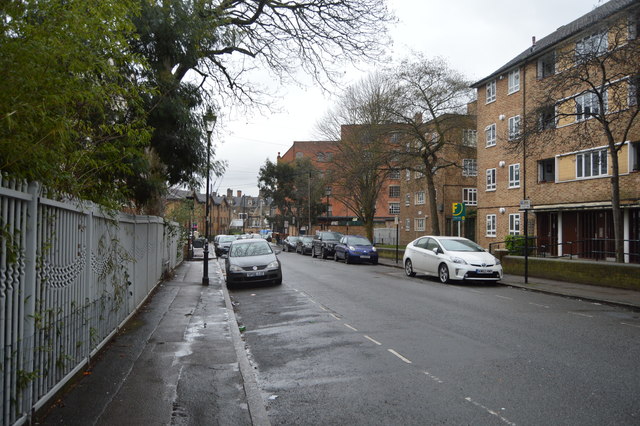
Brighton Terrace today — a Victorian residential street in Clapham, Lambeth SE11.
✦   ✦   ✦
Culture

Theatre, Treadmill and the Road South

The most vivid cultural landmark directly associated with Brighton Terrace is the Empress Theatre. As recorded at SE1 Direct and local Lambeth archives, the Empress first opened in 1898 — the same year Brixton was establishing itself as a significant commercial and entertainment centre, with large department stores, a public library and two theatres drawing audiences from across south London. The Empress sat on the Brighton Terrace frontage, its Music Hall programme a world away from the coaching inn culture that had defined the road a century before.

South London Music Hall Heritage
The Empress Theatre, Brighton Terrace

The Empress Theatre opened on Brighton Terrace in 1898, at the height of the Music Hall era. It was one of two theatres in Brixton at the time, reflecting the area’s rapid growth as a commercial and entertainment hub. The building later became a cinema and has had several further incarnations — a reminder that the street’s cultural life was never static.

Darker institutions also shaped the area’s cultural memory. The Brixton House of Correction, built in 1820, introduced the first treadmill in England — the notorious “Brixton Wheel” — just up the road from where Brighton Terrace would later be laid out. The landscape around this street was, in the early nineteenth century, simultaneously fashionable coaching country and the site of hard labour for the borough’s prisoners.

✦   ✦   ✦
People

Clerks, Travellers and a King’s Route

No verifiable individual has been identified in primary records as living or working on Brighton Terrace SE11 specifically. The street takes its name from a place — the resort — not a person. The residents documented in Victorian census records for comparable streets in this part of Clapham were overwhelmingly clerks, commercial travellers and tradesmen: exactly the class for whom speculative builders laid out these terraces.

The most famous figure associated with the road itself was George IV, whose regular journeys to Brighton along the Kennington and Brixton Road corridor lent the entire route its glamour. Historic England’s records of the wider Kennington area note the lasting architectural legacy left by Georgian development along the Brighton Road. That royal association — however indirect — is what made “Brighton” a name worth giving to a terrace of modest south London housing.

✦   ✦   ✦
Recent Times

Social Housing and the Changing Neighbourhood

The twentieth century brought significant change to the streets around Brighton Terrace. The area absorbed successive waves of inward migration — first from within Britain, later from the Caribbean, West Africa and beyond — that transformed Clapham and Brixton into some of the most ethnically diverse neighbourhoods in London. Census data shows the SE11 postcode today has a markedly higher proportion of social housing than the national average, reflecting the large-scale council building programmes of the post-war decades.

Excavations carried out by MOLA (Museum of London Archaeology) across the wider Lambeth area have periodically uncovered evidence of the Roman road network that preceded all of this development — a reminder that the corridor Brighton Terrace occupies has been a route of movement for nearly two thousand years. The Victorian terrace housing survives largely intact, though many properties have been subdivided into flats.

✦   ✦   ✦
Today

Clapham’s Victorian Grain, Still Intact

Brighton Terrace remains a residential street in one of inner London’s most densely populated boroughs. SE11 sits between the open green of Kennington Park and the edge of Clapham, with good connections south toward Brixton and north toward the river. The Victorian stock-brick character of the neighbourhood has proved resilient: despite significant redevelopment pressure, the terrace housing stock that defines this part of Lambeth largely survives.

10 min walk
Kennington Park
Historic park with formal gardens and one of London’s oldest public open spaces, once a site of political rallies.
15 min walk
Myatt’s Fields Park
A Victorian public park in nearby Brixton, with restored bandstand and community gardens.
20 min walk
Clapham Common
220 acres of common land at the heart of Clapham, with three ponds and historic bandstand.
25 min
Brockwell Park
A much-loved hilltop park with panoramic views over London, lido and walled garden.

The name on the street sign still points south — toward the Sussex resort, toward the old coaching road, toward two thousand years of movement along the same corridor. Brighton Terrace is a modest address, but its name carries the whole history of the road it stands on.

✦   ✦   ✦
“Much of this area is classic suburbia of the later eighteenth and nineteenth centuries — late-Georgian terraces in Kennington; detached and semi-detached villas in Brixton.”
Survey of London, Vol. 26 — Lambeth: Southern Area, British History Online
✦   ✦   ✦
On the Map

Brighton Terrace Then & Now

National Library of Scotland — Ordnance Survey 6-inch, c. 1888. Hosted by MapTiler. Modern: © OpenStreetMap contributors.

✦   ✦   ✦

Frequently Asked Questions

Why is it called Brighton Terrace?
Brighton Terrace most likely takes its name from the famous Sussex seaside resort of Brighton. Kennington Road and Brixton Road — running through this part of Clapham — formed the principal coaching route from London to Brighton, heavily used from the late eighteenth century onwards. Developers building terraces along this corridor regularly gave them the “Brighton” name, celebrating the fashionable associations of the road south.
What was the old coaching route to Brighton from London?
The road through Kennington and Brixton — now designated the A23 — was the main artery south from Westminster Bridge to Brighton. With the growing popularity of Brighton as a resort in the later eighteenth century, it was regularly used by George IV on his excursions to the Royal Pavilion, and later became famous for events such as the London to Brighton Veteran Car Run.
What is Brighton Terrace known for?
Brighton Terrace in Clapham, SE11 is a Victorian residential street in the London Borough of Lambeth. Its name reflects the historic importance of the nearby Brighton Road — the A23 — as the main coaching route south from London. The wider street shares its name with a section of Brighton Terrace in Brixton where the Empress Theatre first opened in 1898, making the name a touchstone for south London’s Victorian entertainment culture as well as its suburban development.