Southwark London England About Methodology
Southwark · SE5

Wanley Road

Named for a 17th-century clergyman whose work shaped the poetry of Robert Browning.

Named After
Nathaniel Wanley
First Recorded
1952
Borough
Southwark
Character
Residential, Post-war
Last Updated
Time Walk

A Post-War Street with Deep Literary Roots

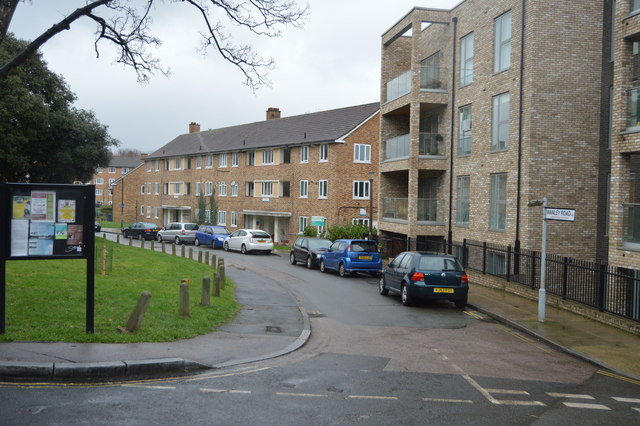
Wanley Road is a quiet residential street in Camberwell, lined with mid-twentieth-century terraced houses and purpose-built flats. The street looks typical of its era — functional, modest, built to house Londoners in the decades after the Second World War. But the street’s name carries an unexpected weight of scholarship and verse.

2018
Wanley Rd
Wanley Rd
Wikimedia Commons · CC BY-SA 2.0
2018
Alley to Wanley Rd
Alley to Wanley Rd
Wikimedia Commons · CC BY-SA 2.0
Today
Wanley Rd — near Wanley Road
Geograph · CC BY-SA 2.0

Behind the street sign lies a connection to seventeenth-century literature and to one of the great Victorian poets. To understand where this name came from, you need to reach back three centuries.

✦   ✦   ✦
Name Origin

A Clergyman Poet and His Legacy

According to the Dulwich Society, Wanley Road was formally named in 1952 after Nathaniel Wanley (1634–1680), an English clergyman and poet. Wanley’s most famous work was The Wonders of the Little World (1678), a compendium of tales, curiosities, and observations that became a reference book of its age. The book was not forgotten in later centuries. Robert Browning, the Victorian poet born in Camberwell in 1812, drew inspiration from Wanley’s work when crafting some of his own verses. The street is one of a cluster of roads on the Champion Hill Estate, all named to honour literary and intellectual figures with connections to Browning’s life and circle.

Recorded Names
before 1952 Unnamed
1952 Wanley Road
✦   ✦   ✦
The Cluster

A Ring of Literary Honour

Wanley Road is not the only street on the Champion Hill Estate named for a writer or scholar. When the estate was developed, its designers chose to commemorate a network of figures from the nineteenth and seventeenth centuries — many of them connected to Robert Browning or featured in his poetry. The most remarkable is the cluster itself: a ring of roads honouring people Browning knew or whose work he admired, yet oddly leaving the poet himself without a street bearing his name.

Naming Cluster
Literary Figures · 5 streets · Champion Hill Estate
Wanley Road
Nathaniel Wanley (1634–1680)
Clergyman and poet, author of The Wonders of the Little World.
Arnould Avenue
Joseph Arnould (1815–1886)
Barrister, author and judge in India, born in Camberwell.
Domett Close
Alfred Domett (1811–1887)
Poet and politician, became Premier of New Zealand and subject of Browning’s poem Waring.
Dowson Close
Ernest Christopher Dowson (1867–1895)
English poet and novelist, from Lee, associated with the Decadent movement.
Monclar Close
Name origin not yet recorded
Part of the Champion Hill Estate cluster, likely commemorating a nineteenth-century literary or intellectual figure.
✦   ✦   ✦
History

Cleve Hall to Council Estate

The land beneath Wanley Road was not empty fields before 1952. For nearly 150 years it was occupied by one of Champion Hill’s most distinguished private estates. In 1804, Hill Lodge was built on the corner of Champion Hill and Green Lane; Cleve Hall rose beside it in 1807, fronting onto Champion Hill itself. Both were built for wealthy merchants drawn by the new road the Dulwich College estate had extended through the hill. Their gardens ran nearly 200 yards down the slope; Cleve Hall’s grounds included a lake.

The Cleve Hall Estate — Key Dates
1804
Hill Lodge Built
The first of the two great houses goes up on the corner of Champion Hill and Green Lane, built for a wealthy merchant family.
1807
Cleve Hall Built
The Dulwich Estate grants an 84-year lease to George Sharp. Cleve Hall fronts onto Champion Hill with gardens stretching down to a lake.
1825
Goldsmid Tenancy
Isaac Lyon Goldsmid (1778–1859), financier and leading member of the Jewish community, becomes tenant. In 1833 he entertains Cabinet ministers here. In 1841 he becomes the first Jew to receive an English hereditary title.
1890s
Pelican House School
No longer viable as a private residence, the premises are taken over by a girls’ boarding school originally founded in Peckham. By 1901 a private boys’ school is recorded on the site.
1904
Hotel Opens
William Rogers opens the Cleve Hall Residential Hotel. By 1911, 79 boarders are living there. A 1913 brochure advertises a ballroom, Grand Winter Garden Lounge, tennis, croquet and punting for up to 200 guests.
1936
Receivership
The hotel business fails. Buildings pass to a receiver appointed by the National Bank. Protracted negotiations come to nothing; the site sits vacant through the war.
1947
Compulsory Purchase
The LCC serves a Compulsory Purchase Order on the Dulwich Estate. A public inquiry confirms the order in January 1948.
1952
Streets Named
The LCC builds 171 flats and houses on the site between 1952 and 1956. The new streets—including Wanley Road—are named for writers connected to Robert Browning.

The street name chosen in 1952 was part of a deliberate cultural scheme. The LCC developers looked back to history and literature rather than geography or landowners, naming their new roads for figures of intellectual significance. Nathaniel Wanley — clergyman, poet, and compiler of The Wonders of the Little World — was an inspired choice: a seventeenth-century scholar whose work had inspired Browning, commemorated a quarter-mile from where Browning was born.

Did You Know?

The Cleve Hall Hotel’s 1913 brochure boasted it was “within the City cab radius” and “within sound of St Paul’s chimes”, with rates from three guineas a week. By the 1930s business had collapsed; the buildings sat empty for over a decade before the LCC stepped in.

✦   ✦   ✦
Culture

Flats and Literature

Wanley Road’s architecture is representative of the post-war estate vernacular. The street is lined with terraced houses and purpose-built blocks of flats, most built between 1950 and 1975. These buildings were designed for efficiency and cost-effectiveness, not ornamentation. Brick facades, functional windows, modest communal spaces — the aesthetic of building quickly to meet desperate housing need. Today, the street remains almost entirely residential, with no major institutional buildings or commercial elements.

What distinguishes Wanley Road is not the architecture but the naming scheme of which it is a part. The Champion Hill Estate streets are a palimpsest: on the ground, a twentieth-century suburb; in the street signs, the shadow of seventeenth-century scholarship and Victorian poetry. To walk Wanley Road is to inhabit both eras at once.

✦   ✦   ✦
Today

A Residential Quarter of Camberwell

In 2026, Wanley Road remains a quiet residential street within walking distance of East Dulwich station and Denmark Hill. The street is populated by a mix of owner-occupied properties, private rentals, and social housing. Many residents are young professionals and families drawn to the area’s relative affordability and good transport links to central London.

The street itself has changed little since the 1970s. No major redevelopment has altered its character. It is, in essence, a working-class and lower-middle-class residential street where the greatest landmark is not a building but a name — a name that connects Camberwell’s present to centuries of English writing.

8 min walk
Dog Kennel Hill Wood
Community-managed green space with mature woodland and open grassland.
10 min walk
St. Francis Park
Local park with play areas and green space for the neighbourhood.
12 min walk
Goose Green
Open green space and recreational area in the Peckham area.
15 min walk
Ruskin Park
Large historic park with mature trees, open fields, and community facilities.
✦   ✦   ✦
On the Map

Wanley Road Then & Now

National Library of Scotland — Ordnance Survey 6-inch, c. 1888. Hosted by MapTiler. Modern: © OpenStreetMap contributors.

✦   ✦   ✦

Frequently Asked Questions

Why is it called Wanley Road?
The street was named in 1952 after Nathaniel Wanley (1634–1680), an English clergyman and poet known for The Wonders of the Little World (1678). Wanley’s work inspired the Victorian poet Robert Browning, who was born in Camberwell. The street is part of the Champion Hill Estate, where several roads commemorate literary and scholarly figures connected to Browning’s life and interests.
What was Nathaniel Wanley known for?
The Wonders of the Little World was Wanley’s most celebrated publication — a six-book compendium of tales, observations, and curiosities drawn from history and literature. It was widely read in the seventeenth and eighteenth centuries and became a source text for later writers, including Robert Browning. Wanley was also an accomplished poet and clergyman, serving as vicar of Trinity Church, Coventry, from 1662 until his death in 1680.
What is Wanley Road known for?
Wanley Road is known as a quiet residential street in Camberwell composed of mid-twentieth-century terraced houses and flats. Its true distinction lies in its name and the naming scheme of which it is part: the Champion Hill Estate streets honour writers, scholars, and intellectuals connected to Robert Browning, embedding three centuries of English literary history into a modest post-war suburb.