Time Walk


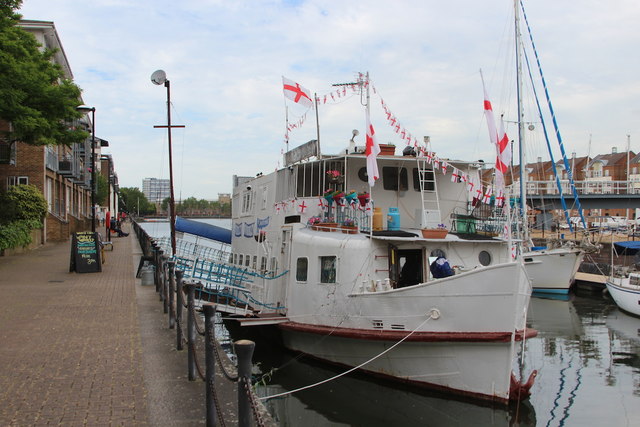
Walk the length of Rope Street today and one building dominates the record of the place: Swedish Quays, a long run of housing numbered 1 to 95 along the street. It is not a grand thoroughfare of shopfronts or civic buildings but a residential enclave, the kind of late-twentieth-century development that gives a street its whole identity. Wikipedia's entry on the complex is, in effect, the only detailed account available of what stands here, and it describes a single Grade II listed scheme rather than a street with a long, layered history of its own.
Name Origin
Nothing in the sources gathered for this page addresses why Rope Street carries that name. The available record is focused tightly on the Swedish Quays building rather than on the street's own naming history, so the honest position is that the etymology remains undocumented here. Any future account would need to draw on street-naming records or local history sources not represented in this pack.
History
The documented history of Rope Street is really the history of one building. Swedish Quays, occupying 1–95 Rope Street, was constructed between 1986 and 1990, according to Wikipedia's account of the development. It was designed by the architects David Price and Gordon Cullen. Decades later, Historic England's National Heritage List for England recognised the building's architectural or historic interest, granting it Grade II listed status on 18 April 2018 — a status confirmed in the statutory list entry itself.
Swedish Quays did not receive its Grade II listing until 2018 — nearly three decades after it was completed, showing how long recognition of late-twentieth-century architecture can take.
Culture
Beyond that listing, the record offers little on how the building or the street has featured in wider cultural life. What is documented is the design partnership behind it: architects David Price and Gordon Cullen, whose work at 1–95 Rope Street is now formally protected.
People
Two named individuals appear in the record of Rope Street, both architects. David Price and Gordon Cullen are credited by Wikipedia's account as the designers of Swedish Quays, the residential complex built between 1986 and 1990 that occupies numbers 1 to 95 of the street. No further biographical detail on either man is given in the sources available for this page, and no other named individuals — residents, developers, or historians — appear in the record.
Recent Times
The most recent documented event in Rope Street's history is the Grade II listing of Swedish Quays, confirmed by Historic England's National Heritage List for England as taking effect on 18 April 2018. This formal recognition, coming well after the building's completion in 1990, is the last dated development recorded in the available sources.
Today
Rope Street today is essentially synonymous with Swedish Quays, the Grade II listed housing complex that runs along numbers 1 to 95. Sitting within the London Borough of Southwark, the street's identity rests on this single, protected development rather than on a wider mix of shops, institutions, or public buildings recorded elsewhere.
On the Map
Rope Street Then & Now
Frequently Asked Questions
Why is it called Rope Street?
The sources available for this page do not explain the origin of the name Rope Street. The documented record focuses on the Swedish Quays building rather than on the street's naming history, so the etymology remains unconfirmed here.
What is Rope Street known for?
Rope Street is known chiefly for Swedish Quays, a Grade II listed housing complex at 1–95 Rope Street. Built between 1986 and 1990 by architects David Price and Gordon Cullen, it was formally listed by Historic England on 18 April 2018.
When was Swedish Quays on Rope Street built?
Swedish Quays was constructed between 1986 and 1990, according to Wikipedia's account of the development. It received Grade II listed status from Historic England nearly three decades later, on 18 April 2018.