Explore London England Scotland Wales About API
Southwark · SE1

Mint Street

Where a royal coining house became a Dickensian slum, then a park. A street named after 16 years of Tudor ambition.

Name Meaning
Royal Mint
First Recorded
c. 1679
Borough
Southwark
Character
Victorian terraces
Last Updated
Time Walk

From Slum to Sanctuary

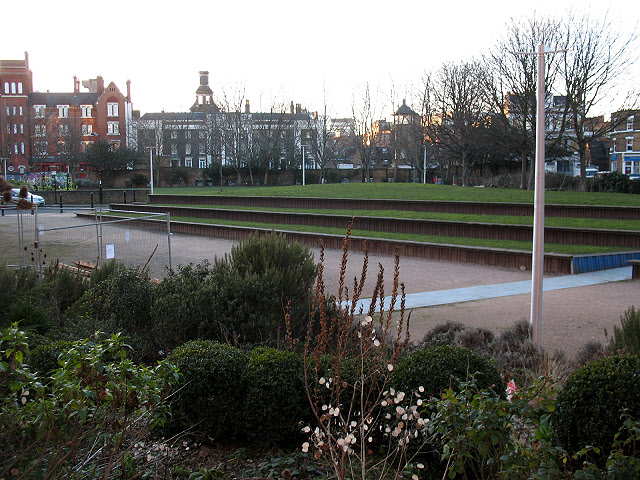
Mint Street today is defined by Mint Street Park, the largest green space in Bankside. The park occupies the site of the former Evelina Children's Hospital (1869–1976), which once treated childhood diseases in a crowded working-class neighbourhood. Where there was once a hospital, now there is a playground, a community stage, and plantings tended by volunteers. The street itself is short and narrow, cutting through Southwark between the railway arches and Southwark Bridge Road, its Victorian terraces marking the boundary between heritage and modernity.

2010
Mint Street Park, Southwark
Wikimedia Commons · CC BY-SA 2.0
2010
Douglas Buildings, Mint Street, Southwark
Wikimedia Commons · CC BY-SA 2.0
2016
Mint Street, Borough
Wikimedia Commons · CC BY-SA 2.0
Today
Southwark : vehicular access, Douglas Buildings
Geograph · CC BY-SA 2.0

But Mint Street was not always a place of healing. For over a century it was synonymous with human misery—a slum Liberty run by debtors’ privilege, home to a notorious workhouse, and a street Charles Dickens walked as a boy. The name, though, reaches back even further into Tudor history.

✦   ✦   ✦
Name Origin

Henry’s Silver House

Mint Street, opposite St. George's Church, keeps in remembrance a mint for the coinage of money, which was established here by Henry VIII. In the 1540s, Henry VIII set up mint Brandon House at a time when three additional mints were established to supplement that in the Tower. It was set up to produce silver coinage, and closed in 1551. The mint occupied Brandon House, a grand mansion that had belonged to Charles Brandon, Duke of Suffolk, Henry’s brother-in-law. A mint was established here for the king's use.

The area retained the name of the Mint despite its short existence. It was handed, under Mary I, to the diocese of York and they leased it for development of the worst sort and slums resulted. The Mint Street area had been known as ’The Mint’. It was a slum area with privileges for debtors until The Mint in Southwark Act 1722 removed these rights. The name persisted long after the royal house stopped striking coins—a street called after a building that lasted only 16 years, but whose identity outlived its purpose by centuries.

How the name evolved
c. 1540s Brandon House
c. 1545–1679 The Mint
1679–present Mint Street
✦   ✦   ✦
History

Privilege, Poverty, and the Workhouse Years

Mint Street dates from before 1679 in which year Thomas Lant married the daughter of Sir Edward Bromfield, and thus acquired an interest in a house called Suffolk Place. By then, Mint Street is shown on Morden and Lea's map of 1682 and was closely developed. The street took shape in the late 17th century as a distinct thoroughfare, but its character was shaped entirely by its past. As a Liberty—a privileged area exempt from London’s jurisdiction—it attracted debtors fleeing their creditors. By the 18th century, it had become a haunt of poverty and crime.

Key Dates
1545
Mint Established
Henry VIII opens a coining house at Brandon House to produce silver.
1551
Mint Closes
The royal mint ceases operation after just six years of operation.
1679
Street Named
Mint Street first appears in records and becomes established as a distinct street.
1729
Workhouse Built
St. Saviour’s Union opens a workhouse on Mint Street to house parish paupers.
1832
Cholera
The first case of Asiatic cholera in London appears in the miserable streets of the Mint.
1869
Evelina Hospital Opens
Evelina Children’s Hospital established to tackle childhood illness in Bankside.
1976
Hospital Closes
Evelina relocates; site becomes derelict before transformation to park.
Did You Know?

The St. Saviour's Union Workhouse at Mint Street is thought to have provided Dickens with the model for the scene in Oliver Twist where the starving boy ’asks for more’. When Dickens was young, lodging in nearby Lant Street, he passed Mint Street on his way to work.

The workhouse in Mint Street dates back to 1729. The initial number of residents was relatively small, and conditions were recorded in ’An Account of Several Workhouses’ in October 1731. But by the 19th century, conditions had become abysmal. The house appears to have suffered from various epidemics, and especially from typhus. The tramp ward for the women is a miserable room, foul and dirty, with imperfect light and ventilation, the floor being simply bedded with straw. The Mint is awfully memorable in modern annals; for amid the squalor of its narrow streets appeared, in 1832, the first case of Asiatic cholera in the metropolis.

Mint Street Park is located at the previous site of the Evelina Children's Hospital from 1869 to 1976. The hospital brought medical purpose to a street that had long known only want. Bankside Open Spaces Trust worked to transform the park. Large planting beds were added, including a rockery and loggery, to create a beautiful space for both local people and local wildlife to enjoy. Today, once a year the volunteer-run Mint Street Festival takes place celebrating music and culture created by the inspiring local community.
Street Origin Products

Your listing has a better story than it’s telling

Mint Street has roots that run from Tudor coining houses to Dickensian workhouses to modern community healing. Here’s how to put that story to work.

Professional Edition
Street Pack
“Why this address matters.”

Buyers pay more for addresses with a story. The Street Pack gives estate agents and developers brochure-ready copy, prestige framing and a name origin panel—everything needed to make this address feel significant before a viewing is booked.

  • Brochure copy — 100 & 200 word versions
  • Prestige framing version
  • Name origin panel
  • Timeline strip
  • Buyer persona framing
For estate agents, developers & property portals
From £19
Get the Street Pack
Street Social Kit
“Why this place feels interesting.”

Airbnb guests choose atmosphere as much as amenities. The Social Kit gives you five ready-to-post tiles, story templates, captions, hooks and a Reel script—all built from this street’s actual history. Done for you, in minutes.

  • 5 ready-to-post social tiles
  • 3 Story templates
  • 5 captions & 3 hooks
  • 1 Reel script
  • Hashtag clusters
For Airbnb hosts, boutique landlords & small agents
From £9
Get the Social Kit
✦   ✦   ✦
Culture & Character

Bankside’s Green Heart

Mint Street itself is quiet and residential, but its identity is now bound to Mint Street Park. The street functions as an anchor for Bankside culture, hosting the annual Mint Street Festival, which celebrates local music and creativity. The park provides relief from the bustle of Borough and Tooley Street, with volunteer-maintained gardens and a playground that serves families from the densely packed surrounding estates.

Community Anchor
Mint Street Park

Transformed from a semi-derelict site into Bankside’s largest public green space. The park hosts the Mint Street Festival annually, features volunteer-maintained planting beds, and serves as a gathering place for one of London’s most densely populated neighbourhoods.

The street’s character is rooted in transformation. Where the workhouse once stood, children now play. The Victorian terraces that line Mint Street itself remain modest, unmarked by the history beneath them. Yet every step on this pavement crosses centuries—from Tudor ambition to Dickensian misery to modern community resilience.

✦   ✦   ✦
Today

A Quiet Street with a Loud History

Mint Street itself is one of Southwark’s quieter passages, blocked to through traffic and lined with modest Victorian and Edwardian housing. It runs from Southwark Bridge Road southwards, terminating where the railway viaduct and Marshalsea Road now cut the ancient street short. The street sign above the entrance bears the name of a Tudor coining house, but there is nothing mint-green about the character—just solid red brick, drawn windows, and the hum of a working neighbourhood.

On the street
Mint Street Park
The largest green space in Bankside with playgrounds, community stage, and volunteer-tended gardens.
5 min walk
The Scoop
Open-air amphitheatre and cafe on the riverfront, summer film and concert venue.
8 min walk
Borough Market
Historic food and flower market, pedestrian space, communal gathering area.
10 min walk
South Bank
Thames riverside path with green spaces, walking routes, and open public realm.

Visitors coming to Mint Street today come for the park, the Mint Street Festival in summer, or because they live in one of the housing estates that crowd this corner of Southwark. They will not see the mint, nor the workhouse, nor the slum Liberty that gave the street its complicated character. But standing on the street, one stands on layers—on the site of royal ambition, of suffering, and finally, of community healing.

✦   ✦   ✦
On the Map

Mint Street Then & Now

National Library of Scotland — Ordnance Survey 6-inch, c. 1888. Hosted by MapTiler. Modern: © OpenStreetMap contributors.

✦   ✦   ✦

Frequently Asked Questions

Why is it called Mint Street?
Mint Street takes its name from a royal coining house established by Henry VIII at Brandon House in the 1540s. Although the mint closed in 1551 after just six years of operation, the area retained the name. The street inherited its identity from a building that lasted only 16 years but whose name outlived it by nearly 500.
Did Charles Dickens know Mint Street?
Yes. Dickens lodged nearby in Lant Street as a boy and passed the Mint Street Workhouse regularly on his way to work. The workhouse provided the model for the starvation scene in Oliver Twist where the boy ’asks for more.’ Dickens returned to Southwark as an adult and drew heavily on the area in his novels.
What is Mint Street known for today?
Today, Mint Street is known for Mint Street Park, the largest green space in Bankside, which occupies the site of the former Evelina Children's Hospital (1869–1976). The street hosts the annual Mint Street Festival celebrating local music and culture. It serves as a vital community anchor in one of London’s most densely populated neighbourhoods, and its transformation from workhouse site to healing space encapsulates Southwark’s broader journey from industrial squalor to modern livability.