Southwark London England About Methodology
Southwark · SE15 · Peckham

King’s Grove

Kings hunted this land for centuries before a single terrace was built — and the street remembers it.

Name Meaning
Royal grove
First Recorded
c. 1880s
Borough
Southwark
Character
Victorian terrace
Last Updated
Time Walk

Tree-Lined Dead End, Royal Ground

King’s Grove is a no-through street in Peckham, running south from Queen’s Road to meet Meeting House Lane. The houses are handsome two- and three-storey Victorian terraces, their raised ground floors and sash windows typical of the building boom that swept south London in the 1860s and 1880s. Today the street is quiet, tree-lined, and sits yards from Queen’s Road Peckham Overground station — an unlikely pocket of calm beside one of Peckham’s busiest transport corridors.

2009
Christ the King Chapel, Bermondsey
Wikimedia Commons · CC BY-SA 2.0
Historical image not found
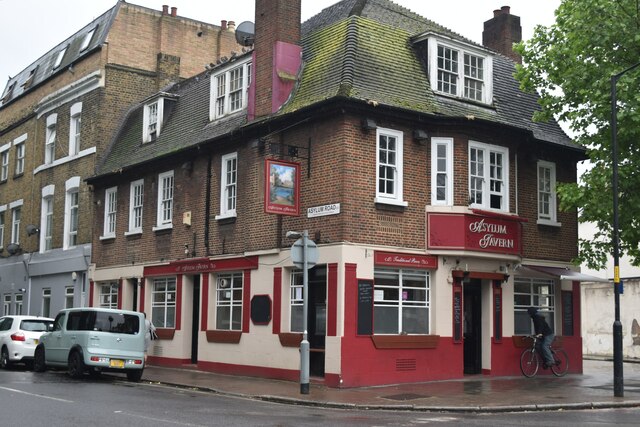
Today
Asylum Tavern on Asylum Road — near King's Grove
Geograph · CC BY-SA 2.0

The neighbourhood around it has changed dramatically in recent decades, with independent businesses, restaurants, and artists’ studios reshaping the streets along Bellenden Road and Rye Lane. But the name “King’s Grove” is older than any of these houses — a ghost of what this land once was, long before Victorian builders arrived with their brick and slate.

✦   ✦   ✦
Name Origin

Royal Hunt, Royal Wood

The name most likely preserves two distinct layers of Peckham’s past. The “King” element refers to the centuries of royal ownership over the Peckham manor. As documented by British History Online, Peckham’s history is bound up with royal figures: the manor passed to King Henry I, who gave it to his son Robert, Earl of Gloucester, and local tradition holds that King John hunted here — reportedly granting an annual fair in celebration of a good day’s sport. The “grove” element reflects the documented woodland character of pre-Victorian Peckham, which old accounts describe as having extensive groves, orchards, and green lanes across its southern portion.

When Victorian developers laid out new residential streets on this land in the second half of the 19th century, they frequently named roads after the historical character of the fields they were replacing. “King’s Grove” is probable evidence of this practice — a developer’s nod to the royal-owned, wooded land that had stood here for centuries. No documentary record has been found naming the street before the Victorian building era, so the specific coinage remains probable rather than verified.

How the name evolved
pre-1086 Royal woodland / King’s manor
c. 1880s King’s Grove
present King’s Grove
✦   ✦   ✦
History

From Domesday Manor to Victorian Suburb

Peckham appears in the Domesday Book of 1086 as “Pecheham” — a hamlet on the road from Camberwell to Greenwich. The Oxford Dictionary of English Place-names gives the origin as from Old English pēac and hām, meaning “homestead by a peak or hill,” a reference to the ring of hills — Telegraph Hill, Forest Hill, Honor Oak — that surround the low-lying village. The land on which King’s Grove now stands formed part of this ancient manor, held in royal hands for much of the medieval period.

Key Dates
1086
Domesday Record
Peckham recorded as “Pecheham” in the Domesday Book, held by the Bishop of Lisieux from Odo of Bayeux. The manor assessed at 2 hides, 2 acres of meadow.
c. 1100
Royal Manor
The manor of Peckham passes to King Henry I, who grants it to his son Robert, Earl of Gloucester. Royal ownership shapes the land’s identity for generations.
c. 1200
King John Hunts
Local tradition records King John hunting at Peckham. According to British History Online, a fair was reportedly granted to celebrate a good day’s sport — though no charter confirming this has been found.
1672
Bond’s Mansion
Sir Thomas Bond builds a grand mansion on the Peckham estate, surrounded by formal gardens noted for exotic fruit-trees. John Evelyn records the gardens in his diary.
c. 1851
Railway Arrives
A new bus service connects Peckham to the West End, followed by the railway at Rye Lane in 1865. Queens Road station opens, triggering rapid suburban development.
c. 1880s
Street Laid Out
King’s Grove is developed as part of the Victorian expansion spreading south from Queen’s Road. Terraced houses replace the last orchards and market gardens of old Peckham.
Did You Know?

Peckham once had extensive market gardens producing melons, figs, and grapes for London’s markets. The land around King’s Grove — now neat Victorian terraces — almost certainly formed part of this extraordinary southern fringe of market-garden London before the builders arrived.

By the late 18th century, as documented by British History Online, Peckham had transformed from a village of wealthy gentry into a more commercial district, attracting industrialists and tradespeople who valued its proximity to London without its rents. The area retained a rural character well into the 19th century, with groves, green lanes, and flowery meadows still visible from the heights of Champion Hill. The arrival of the railway changed everything: within a generation, builders had covered the fields with the brick terraces that line King’s Grove today.

The rapid Victorian transformation of Peckham has left clear traces in the archaeological record. MOLA (Museum of London Archaeology) has recorded evidence of earlier activity across the Peckham area, reflecting the long continuity of settlement between the Roman period and the medieval manor. Finds across south-east London demonstrate how the landscape was worked and inhabited long before any formal street plan existed.

✦   ✦   ✦
Culture

The Peckham Experiment Next Door

The most remarkable cultural episode connected to the immediate neighbourhood of King’s Grove unfolded along Queen’s Road in the 1930s. George Scott Williamson and Innes Pearse opened the Pioneer Health Centre on Queen’s Road — the starting point for what became known as “The Peckham Experiment.” The scheme recruited nearly a thousand local families, who paid a shilling a week for access to a modern health and social club, in a pioneering investigation into the relationship between environment and wellbeing. It was one of the most ambitious social science experiments in British history, and it ran directly beside the street.

Peckham’s Living Rooms
Victorian Terrace Architecture of King’s Grove

The terraced houses of King’s Grove are characteristic of the 1860s–1880s south London building boom — two and three storeys, with raised ground floors, sash windows, and modest stucco detailing. As Historic England notes in its guidance on Victorian suburban terraces, this building type defined the character of inner south London and remains the dominant housing stock of Peckham today. Their survival in good repair makes streets like King’s Grove unusually legible records of the neighbourhood’s 19th-century expansion.

The poet William Blake walked through the Peckham area as a child in 1767, and the district later attracted writers, dissenting ministers, and artists who valued the combination of rural air and easy access to the city. That dual character — proximity to London, semi-rural seclusion — is what drew the Victorian middle classes to streets like King’s Grove, and it is what draws residents today, who arrive at Queen’s Road Peckham on the Overground and step off into one of London’s most creatively fertile neighbourhoods, as regularly reported by SE1 Direct, which covers Southwark’s evolving cultural landscape.

✦   ✦   ✦
People

Kings, Dissenters & the Suburban Middle Class

No single famous resident has been confirmed at a specific address on King’s Grove itself. But the wider Peckham neighbourhood that shaped the street’s identity was home to a striking cast of figures. John Donne, the metaphysical poet, regularly stayed in Peckham with friends. Oliver Goldsmith lived in the area for a time. John Wesley, founder of the Methodists, was also recorded as a Peckham resident. The area’s combination of healthy air, garden landscapes, and proximity to the city made it a magnet for writers, clergy, and intellectuals through the 17th and 18th centuries — the same qualities that later attracted the Victorian households of King’s Grove.

The royal figures most directly connected to the name — King Henry I, who held the manor, and King John, who hunted here — are documented in both the Domesday record and in the local traditions compiled by British History Online. It is their ownership and use of this ground that the street’s name most probably commemorates, even if neither ever rode through the lane that now bears the memory of their tenure.

✦   ✦   ✦
Recent Times

Gentrification at the Gate

From the late 20th century onward, Peckham underwent a gradual but significant transformation. The neighbourhood that had been a traditional south London working-class community began to attract artists, architects, and young professionals drawn by relatively affordable Victorian houses, good transport links, and the creative energy building around Rye Lane and Bellenden Road. King’s Grove — quiet, tree-lined, and close to Queen’s Road Peckham station — was well-placed to benefit from this shift, and its Victorian terraces have been extensively renovated and extended by successive owners.

House prices on the street rose sharply during the 2010s, peaking around 2022, as Peckham cemented its reputation as one of inner London’s most sought-after postcodes. The station arches at Queen’s Road Peckham, minutes from the street’s northern end, filled with bakeries, wine bars, and yoga studios — the railway infrastructure of the Victorian suburb repurposed for the 21st-century city that had grown up around it.

✦   ✦   ✦
Today

A Green Lane Beside the Overground

King’s Grove today is a residential dead-end of well-maintained Victorian terraces, its tree canopy giving it a genuinely leafy character rare this close to a major Overground stop. The station at Queen’s Road Peckham is approximately 50 metres from the street’s northern end, making King’s Grove one of the most conveniently placed residential streets in the neighbourhood. The streets immediately around it — along Meeting House Lane to the south and Queen’s Road to the north — carry the busy fabric of modern Peckham: buses, markets, independent shops.

12 min walk
Peckham Rye Park
113 acres of parkland and common, one of south London’s finest open spaces, with formal gardens, streams, and ancient tree avenues.
15 min walk
Telegraph Hill Park
Victorian hilltop park with panoramic views across London; one of the hills that likely gave Peckham its Old English name “village among the hills.”
18 min walk
Nunhead Cemetery
One of the magnificent seven Victorian necropoleis, now a nature reserve managed for wildlife; extraordinary Gothic chapel ruin and mature woodland.
8 min walk
Peckham Rye Common
Open common land adjacent to the park, recorded in local history since at least the 18th century; the ancient Rye where Blake reportedly saw his vision of angels.

The street’s name remains the most eloquent marker of what existed here before the terraces. The king who hunted these groves, the royal manor that shaped the land, the orchards and market gardens that fed London — all of it compressed into two words on a street sign, steps from a London Overground platform.

✦   ✦   ✦
On the Map

King’s Grove Then & Now

National Library of Scotland — Ordnance Survey 6-inch, c. 1888. Hosted by MapTiler. Modern: © OpenStreetMap contributors.

✦   ✦   ✦
“From the high grounds… through the whole length of the intervening valley… may still be heard the song of birds; whilst the beauties of the place are spread out in groves and pleasure-grounds, green lanes, and flowery meadows.”
Edward Walford, Old and New London (1878) — describing the Peckham landscape before the Victorian builders arrived
✦   ✦   ✦

Frequently Asked Questions

Why is it called King’s Grove?
The name most likely combines the long royal ownership of the Peckham manor — held by King Henry I and associated with King John’s hunting visits — with “grove,” reflecting the documented wooded character of pre-Victorian Peckham. When Victorian developers laid out new streets on this land in the 1860s–1880s, they frequently named them after the historical character of the fields they replaced. No primary document naming the street before the Victorian era has been found, so the connection remains probable rather than definitively verified.
When was King’s Grove built?
King’s Grove was developed as part of Peckham’s rapid Victorian suburban expansion during the second half of the 19th century, most probably in the 1860s–1880s. The terraced houses that line the street today are characteristic of the building boom that followed the arrival of the railway at Queen’s Road Peckham. Before the terraces, the land formed part of Peckham’s medieval manor, and in the 18th and early 19th centuries was likely used as market garden or orchard land.
What is King’s Grove known for?
King’s Grove is known today as a quiet, tree-lined no-through street of well-preserved Victorian terraces in Peckham, yards from Queen’s Road Peckham Overground station. It sits in one of London’s most culturally vibrant neighbourhoods, close to Rye Lane, Bellenden Road, and Peckham Rye Park. The street’s name commemorates the royal ownership of the Peckham manor and the wooded landscape that preceded the Victorian suburb.