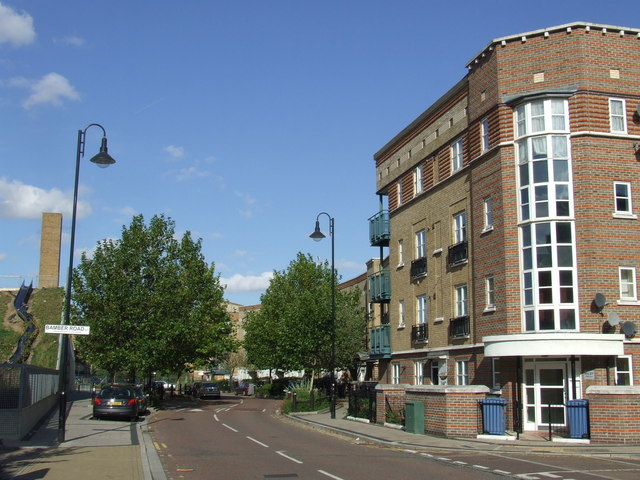
Peckham appears in the Domesday Book of 1086 as Pecheham—a small agricultural holding of two hides, held by the Bishop of Lisieux from Odo of Bayeux. For much of its medieval and early modern history, the land that would become Kelly Avenue was market garden and orchard. As recorded by British History Online, Peckham had extensive market gardens growing produce—including melons, figs and grapes—for the nearby markets of London, with the formal gardens of Peckham Manor House visible on John Rocque’s map of 1746. The workers who tended these plots lived in a scattered village a world away from the dense terraces that would follow.
1086
Domesday Entry
Peckham recorded as Pecheham — agricultural land held by the Bishop of Lisieux from Odo of Bayeux.
1746
Rocque’s Map
John Rocque’s survey shows the Peckham area as predominantly market gardens and orchards. The site of Kelly Avenue is open land.
1826
Grand Surrey Canal
The branch canal to Peckham is completed, enabling timber and materials to arrive cheaply — accelerating the building that will follow.
c. 1851
Suburban Expansion Begins
Housing spreads north and west of Peckham Rye. The land around the future Kelly Avenue shifts from agricultural to development use.
c. 1880s
Avenue Laid Out
Kelly Avenue is laid out as part of the rapid infill of Peckham’s remaining market garden land. Terraced housing follows within a decade.
1940s
Wartime Damage & Post-War Rebuilding
Like much of Peckham, the area around Kelly Avenue suffers bomb damage in the Second World War; post-war social housing replaces some Victorian fabric.
Did You Know?
In 1767, the poet William Blake visited nearby Peckham Rye and reportedly experienced a vision of angels in a tree — an episode that would shape his mystical poetry for decades. The same fields and lanes of Peckham that inspired Blake were being built over with terraces like those of Kelly Avenue less than a century later.
By the mid-nineteenth century, Peckham was undergoing the same transformation sweeping south London. In 1851, Thomas Tilling launched an omnibus service from Peckham to central London—one of the capital’s first reliable suburban bus routes. Rail and road together made Peckham commutable, and builders moved fast. The land immediately around Kelly Avenue, once given over to brick-making as well as horticulture—the London Clay beneath Peckham is ideal for bricks—was platted and sold in job lots through the 1870s and 1880s.
The street was built into a borough already wrestling with the consequences of rapid growth. Drainage, sanitation and overcrowding were persistent problems across Peckham’s new streets in this era. MOLA (Museum of London Archaeology) investigations across Southwark have documented the archaeological layering beneath streets of this type — residues of tile and brick kilns, market garden soil horizons, and the truncated remains of earlier occupation that the Victorian builder’s foundations cut through and sealed. The ground beneath Kelly Avenue almost certainly holds its own such record.