Southwark London England About Methodology
Southwark · SE5 · Peckham

Ivanhoe Road

Named for a fictional Saxon knight, this Victorian street carries the echoes of Sir Walter Scott’s medieval romance — one of the most widely read novels of the nineteenth century.

Name Meaning
Scott’s Saxon knight
First Recorded
c. 1870s
Borough
Southwark
Character
Victorian terrace
Last Updated
Time Walk

Knights in the Terraces

Ivanhoe Road sits in Peckham, one of the bands of Victorian housing that fanned out from central Southwark as the railway unlocked south London for suburban settlement. The street is wide and relatively short—its Victorian brick terraces set back behind small front gardens, retaining original bay windows, high ceilings, and corniced reception rooms that speak plainly of the 1870s and 1880s building boom. It connects to Malfort Road, Grove Hill Road, Pytchley Road, Avondale Rise, and Bromar Road, forming part of an estate laid out when fields here were still within living memory.
Historical image not found
Today
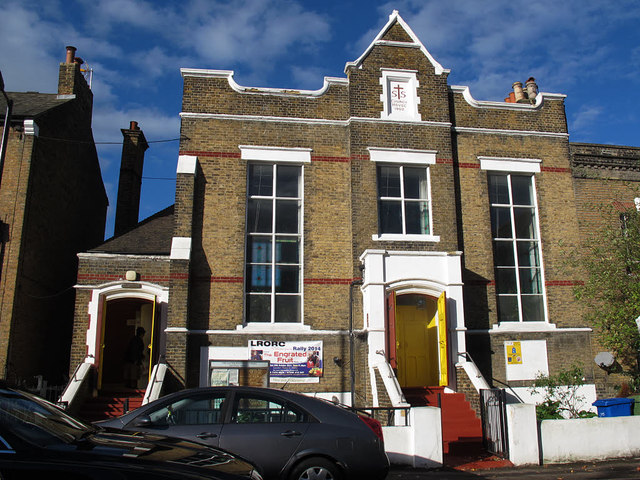
Latter Day Rain Outpouring Revival Church — near Ivanhoe Road
Geograph · CC BY-SA 2.0

The houses today are predominantly family homes and conversion flats, the period fabric largely intact. What makes the street stand out is its name—not a landowner, not a local dignitary, but a medieval knight from a novel. That choice was deliberate: Victorian developers were avid readers, and the name they chose had been thrilling readers across Britain for half a century by the time these houses went up.

✦   ✦   ✦
Name Origin

Scott’s Knight, Peckham’s Street

The name most likely derives from Ivanhoe: A Romance, published by Sir Walter Scott in December 1819. The novel tells the story of Sir Wilfred of Ivanhoe, a Saxon knight who returns from the Crusades to find England torn between Norman overlords and Saxon resistance, with Robin Hood, King Richard the Lionheart, and Rebecca of York all drawn into the conflict. As documented by British History Online, Victorian developers across south London systematically named new streets after popular literary figures, and Scott’s Waverley novels were among the most celebrated works of the era. The practice was especially common in estate developments of the 1870s and 1880s.

Scott himself took the name “Ivanhoe” from Ivinghoe, a village in Buckinghamshire, adapting the older pronunciation for his fictional Saxon knight. The novel was credited by contemporaries—Thomas Carlyle and John Ruskin among them—with inspiring a generation’s fascination with medieval England. Streets, suburbs, and even whole townships across Britain and the British Empire bear the name. Peckham’s Ivanhoe Road is one small piece of that enormous cultural legacy, planted quietly in the terraces of south London.

How the name evolved
1819 Ivanhoe (Scott’s novel)
c. 1870s Ivanhoe Road (laid out)
present Ivanhoe Road, SE5
“Scott had first turned men’s minds in the direction of the Middle Ages.”
John Henry Newman, on the cultural impact of Ivanhoe
✦   ✦   ✦
History

Fields to Terraces: Peckham’s Great Build

At the start of the nineteenth century, Peckham was still described as a quiet village surrounded by fields, with stagecoaches running with armed guards to protect travellers from highwaymen. The land around Ivanhoe Road’s present site would have been farmland or open ground. The transformation came fast and came from the railways.

Key Dates
1819
Ivanhoe Published
Sir Walter Scott publishes Ivanhoe: A Romance in December, to immediate popular acclaim. The novel’s hero gives the street its eventual name.
1865
Railway Arrives
Peckham Rye station opens, making the area accessible to London workers and triggering rapid suburban development across the surrounding fields.
c. 1870s
Street Laid Out
Ivanhoe Road is most likely laid out and named during the principal building wave in Peckham, when Victorian terrace houses filled the remaining open land.
1889
Booth Survey
Charles Booth’s poverty survey maps this part of Peckham, documenting the social character of streets in the area as predominantly working and lower-middle class.
1965
Into Southwark
The Metropolitan Borough of Camberwell is abolished. Ivanhoe Road passes into the newly created London Borough of Southwark.
Did You Know?

Sir Walter Scott took the name “Ivanhoe” from Ivinghoe, a village in Buckinghamshire. Older local residents there most likely pronounced it the same way Scott rendered it in print—meaning the name of this Peckham street descends, at three removes, from a Buckinghamshire village and a Scottish novelist’s ear for an English place name.

The railway’s arrival in 1865 was decisive. As SE1 Direct has documented in its coverage of Southwark’s Victorian expansion, the opening of south London’s suburban rail network transformed former farmland into dense residential streets within a single generation. Peckham’s artisan and clerical population swelled rapidly, and speculative developers raced to fill every available plot with the kind of bay-fronted Victorian terrace that still defines Ivanhoe Road today.

The choice of a literary name was no accident. Victorian developers naming streets after Scott’s characters were signalling aspiration—positioning their estates as the homes of educated, respectable families who knew their classics. The Waverley novels had been among the most widely read works in Europe for nearly a century, and naming a street after Scott’s most beloved English hero was a form of marketing as much as homage.

✦   ✦   ✦
Culture

The Novel That Named a Neighbourhood

Ivanhoe was the first of Scott’s novels to adopt a purely English subject, and its impact on Victorian culture was profound. Published in December 1819, it was credited by contemporaries including Carlyle, Ruskin, and John Henry Newman with inspiring the mid-century Gothic Revival and a widespread enthusiasm for chivalry, tournaments, and medieval pageantry. When Peckham developers were naming their new streets, Scott’s works were still read by virtually every literate household in Britain. As records held by Historic England illustrate, the Victorian residential estates of south London were named with a careful eye for cultural resonance—literary names conveyed respectability and learning.

A Novel’s Afterlife in Bricks
The Waverley Street-Naming Tradition

Scott’s Waverley novels inspired place names across Britain, Australia, New Zealand, and North America. Historians have noted that Scott is second only to Shakespeare for the number of places named after entirely fictional characters. Ivanhoe Road in Peckham is part of this global tradition, one of hundreds of British streets that bear the names of Scott’s heroes and heroines.

Ivanhoe Road sits within the broader Peckham neighbourhood, which itself has a rich cultural record stretching from Muriel Spark’s 1960 novel The Ballad of Peckham Rye to the television landscapes of Only Fools and Horses and Desmond’s. The street’s own literary name adds a quiet Victorian layer to that accumulated cultural geography—a reminder that the act of naming a street was once, itself, a form of literary statement.

✦   ✦   ✦
People

The Author Behind the Address

No verifiable individual with a documented connection to Ivanhoe Road itself has been traced in available records. The street’s name, however, commemorates Sir Walter Scott (1771–1832), whose fictional creation gives the road its identity. Scott was a Scottish novelist, poet, and historian, widely recognised as the founder of the historical novel as a literary form. He completed Ivanhoe in early November 1819, dictating much of it during a period of severe ill-health. His biographers record that he worked at extraordinary speed to produce the manuscript—beginning in July 1819 and finishing by November of the same year.

Excavations and documentary surveys conducted by MOLA (Museum of London Archaeology) across the Peckham and Camberwell area have found no notable archaeological features directly beneath this estate. The land was agricultural until the 1860s, and the street’s human story begins with the Victorian families who first rented and bought these terrace houses—artisans, clerks, and tradespeople drawn south by the railway. Their names fill the census returns but have left no individual mark on the street’s recorded history.

✦   ✦   ✦
Recent Times

Period Fabric, Enduring Demand

Ivanhoe Road has followed the broader arc of Peckham’s gentrification since the 1990s. Properties described by agents as “double-fronted period homes” with original cornicing and bay windows have attracted significant buyer interest, with recent sales reaching well above £800,000. The street sits in the Champion Hill ward of Southwark and falls within the constituency of Dulwich and West Norwood—a political geography that reflects its position at the meeting point of inner-city Peckham and the more leafy streets closer to East Dulwich.

The Victorian terraces have proved durable. Some rear gardens back onto land associated with the Network Rail corridor, a reminder that the railway which created the neighbourhood is still its immediate neighbour. The mix of owner-occupiers and conversion flats is typical of the area, and the street retains a residential character little changed in its outward form since it was first built.

✦   ✦   ✦
Today

Between Peckham Rye and East Dulwich

Ivanhoe Road today sits within easy reach of two of south London’s most popular green spaces and two Overground stations. East Dulwich station is approximately 470 yards away, providing direct services to London Bridge. Denmark Hill station is also within comfortable walking distance. The street’s position—between the energy of Peckham’s high street and the calmer residential blocks near East Dulwich—gives it a dual character that estate agents describe as sitting “between Peckham Rye and East Dulwich.”

The nearest green spaces reward a short walk in any direction. Peckham Rye Park and Common, roughly a mile to the south-east, is the area’s most significant open space. Telegraph Hill Park and Goose Green are both close by. The street itself is a wide, short road, quiet and predominantly residential, lined with the same brick Victorian terraces that have stood here for a century and a half.

~12 min walk
Peckham Rye Park
Formal gardens, open common land, and a popular wildlife area. One of Southwark’s largest green spaces.
~10 min walk
Goose Green
Small triangular park at the heart of East Dulwich, with mature trees and a playground.
~15 min walk
Telegraph Hill Park
Hilltop park with panoramic views over London, named for the former Admiralty semaphore telegraph station that stood here.
~8 min walk
Dog Kennel Hill Wood
Small Local Nature Reserve adjacent to Dog Kennel Hill School—ancient woodland character surviving within the urban fabric.
✦   ✦   ✦
On the Map

Ivanhoe Road Then & Now

National Library of Scotland — Ordnance Survey 6-inch, c. 1888. Hosted by MapTiler. Modern: © OpenStreetMap contributors.

✦   ✦   ✦

Frequently Asked Questions

Why is it called Ivanhoe Road?
Ivanhoe Road is most likely named after the hero of Sir Walter Scott’s enormously popular 1819 novel Ivanhoe. Victorian developers across south London frequently named newly laid streets after celebrated literary works and their characters, and Scott’s Waverley novels were among the most famous works of the era. The name Ivanhoe itself derives from Ivinghoe, a village in Buckinghamshire, which Scott adapted for his fictional Saxon knight. No primary document confirming the specific naming decision has been identified.
When were the houses on Ivanhoe Road built?
The houses on Ivanhoe Road are Victorian terraces, most likely built in the 1870s to 1890s. This was the period when Peckham underwent rapid residential expansion following the opening of Peckham Rye station in 1865, which brought artisans and clerical workers out from central London to newly developed suburban streets.
What is Ivanhoe Road known for?
Ivanhoe Road is known today as a well-preserved street of Victorian terraced houses in Peckham, Southwark. Its literary name is part of a tradition of Waverley-novel street names in Victorian south London. The street sits in the Champion Hill ward, within easy reach of East Dulwich station and Peckham Rye Park, and retains much of its original period fabric.