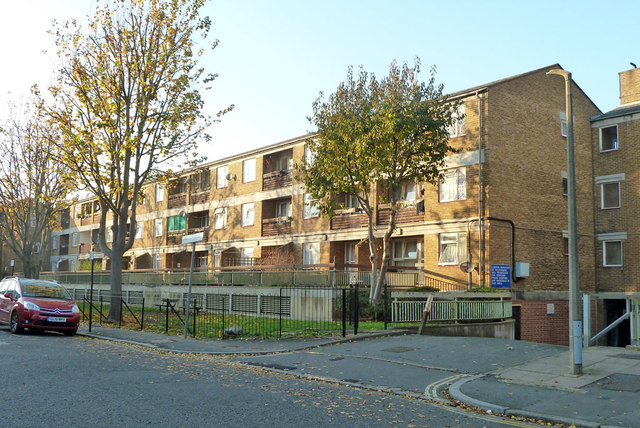
Peckham was, for most of its history, a stopping-point on the road between London and the Surrey countryside. The village was the last stopping point for many cattle drovers taking their livestock for sale in London, and the drovers stayed in local inns while the cattle were secured overnight in holding pens. The land that would eventually become Harris Street’s terraces was almost certainly agricultural or horticultural in this period—fields and gardens characteristic of a working Surrey village within sight of the City.
pre-1800
Rural Peckham
The area around what is now Harris Street was open farmland and orchards on the northern fringe of Peckham village, used in part by drovers and market gardeners.
c. 1823
River Peck Enclosed
The River Peck — from which Peckham takes its Saxon name — was enclosed and culverted, removing a significant topographic feature of the pre-suburban landscape.
1865
Railway Arrives
Peckham Rye station opened, connecting the area to the City and docks. The arrival of the railway opened Peckham to artisans and clerical workers, triggering the suburban housing boom.
c. 1865–1890
Terraces Fill the Fields
Speculative builders laid out streets of terraced housing across north Peckham. Harris Street most likely dates from this period, its name reflecting a now-unidentified local landowner or developer.
1965
Southwark Created
The Metropolitan Borough of Camberwell — which had governed Peckham — was abolished when the London Borough of Southwark was created under local government reorganisation.
Did You Know?
“Peckham” is a Saxon place name meaning “the village of the River Peck,” a small stream that ran through the district until it was enclosed in 1823. The street therefore sits within a neighbourhood whose name is more than a thousand years old — far older than any of its Victorian bricks.
The decisive moment for this part of Peckham was the arrival of the railway. With the introduction of horse-drawn trams about ten years after the railway opened, Peckham became accessible to artisans and clerical staff working in the city and the docks, and housing for this socio-economic group filled almost all the remaining fields. The streets laid out in this period were built quickly and on tight budgets, following a standard pattern of two- and three-storey brick terraces that can still be read in the fabric of the area today.
As documented by British History Online through its Survey of London volumes, the development of south London’s Victorian suburbs was driven overwhelmingly by private speculative builders working on freehold land sold off by estate owners. Streets were named at the builder’s discretion, and the chosen name was rarely recorded alongside any formal explanation. Harris Street almost certainly entered the street directory in this manner: a builder’s choice, noted in a rate book, and never explained thereafter.