Southwark London England About Methodology
The Borough · SE1

Harper Road

A street that remembers the gallows and the gaol—and hides 1,800 years of buried Roman history beneath.

Former Name
Horsemonger Lane
First Recorded
1791
Borough
Southwark
Last Updated
Time Walk

The Shadow of the Gaol

Harper Road does not announce itself with grandeur. It is a short residential street in The Borough, lined with Victorian conversion flats and the remnants of 19th-century local commerce. Few of the people who walk it today notice the ground beneath their feet, yet this modest street sits atop layers of profound historical significance.

Historical image not found
Today
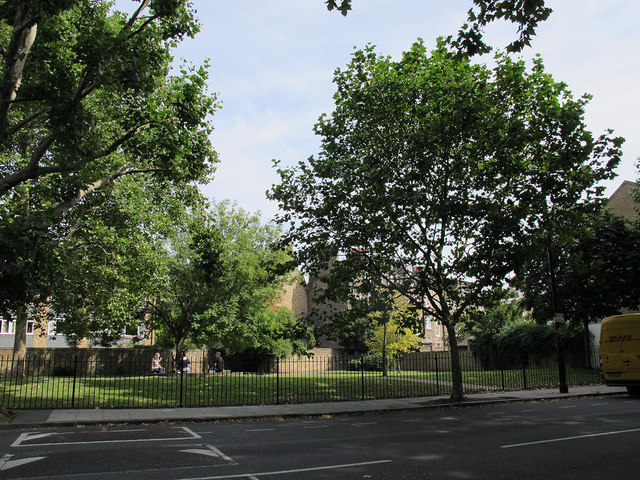
Green space on Harper Road
Geograph · CC BY-SA 2.0

What makes Harper Road remarkable is what has vanished. For nearly a century, it was Horsemonger Lane, and on this stretch stood Surrey’s most notorious prison—the place where 135 people met their deaths on the gallows, where executions were carried out in public until the practice was abolished in 1868. The name changed, the prison is gone, but the street has not forgotten.

✦   ✦   ✦
Name Origin

A Name Without a Story

The origin of the name ‘Harper’ is not recorded in available sources. What is documented is the street’s previous names and the reason for the final change. The street was originally called Horsemonger Lane, after the local horse dealers who worked in the area. This name lasted until the mid-19th century, when the surrounding area began to develop as a residential and institutional neighbourhood rather than a trading zone.

In 1906, the former Horsemonger Lane was split in two: Union Road (Borough End) and Harper Road (New Kent Road End). The decision to divide the street was practical—to avoid confusion with similarly named roads elsewhere in London. But why this particular section became Harper Road, and whether the name derives from a local person, business, or geographical feature, remains undocumented. The street inherited a name without leaving behind a record of its meaning.

How the name evolved
c. 1791 Horsemonger Lane
1856 Union Road
1906 Harper Road
✦   ✦   ✦
History

Prisons, Peasants, and Roman Roads

In 1825, fruit trees bordered Horsemonger Lane (now Harper Road) and crops of horse-radish, mint and kale grew on nearby plots of ground. The area was still agricultural then, part of the market gardens that ringed Southwark before industrial development consumed them. Horse trading happened in the lane; it was a rural path on the edge of London, serving farmers and drovers.

Key Dates
1791–1799
Horsemonger Lane Gaol Built
Designed by George Gwilt the Elder, Surrey County Surveyor. Built between 1791 and 1799, it was the largest prison in the county and adjacent to the Sessions House.
1800–1877
Executions at the Gaol
131 men and four women were executed at Horsemonger Lane between 1800 and 1877, with gallows on the flat roof of the prison's gatehouse until abolition of public executions in 1868, and then in a yard behind the walls.
1856
Name Changes to Union Road
The 1856 directory states that Horsemonger Lane had been renamed Union Road. By 1859, the gaol was no longer known as 'Horsemonger Lane' following the road's change of name to Union Road (today: Harper Road), being renamed Surrey County Gaol.
1878
Gaol Closure
Horsemonger Lane remained Surrey's principal prison and place of execution up to its closure in 1878.
1906
Street Divided
Union Road was split in half: Union Road (Borough End) and Harper Road (New Kent Road End).
2016–2017
Roman Archaeology Revealed
Archaeological excavations at the intersection of Swan Street and Harper Road took place from July 2016 to July 2017, revealing a late Roman stone sarcophagus and a previously unrecorded section of Stane Street, the London to Chichester road.
Did You Know?

Archaeological evidence from Harper Road strongly indicates that it lies on a perfect alignment to the Southwark to Ewell bearing of Stane Street, challenging the existing interpretation of Stane Street's path across Southwark's mainland.

But there is older history still. Before the Harper Road excavation, there was no direct, conclusive evidence for Stane Street in Southwark. The archaeological evidence from Harper Road strongly indicates that it lies on a perfect alignment to the Southwark to Ewell bearing. This revised course of Stane Street gains further support from archaeological evidence at Brandon House, where Stane Street crossed the Borough Channel via a small gravel island. Seven early Roman buildings align with the newly projected bearing of Stane Street from Ewell to Southwark. The street sits atop one of the great roads of Roman Britain—a fact unknown until excavators broke the modern surface in 2016.
✦   ✦   ✦
Culture

Lived Experience and Excavated Truth

Harper Road was originally called Harper Street. Harper Street School opened in 1874 and was remodelled in 1900. The street developed its character as a residential and working neighbourhood in the late 19th and early 20th centuries, when the gaol was gone and the land began to be built over with housing for the growing population. Schools, shops, and small terraces replaced the institutions of punishment.

Archaeological Significance
Roman Stane Street

The site lies in an area known as the 'Southern Cemetery' which comprises various discrete burial grounds on the outskirts of Roman occupation. Around 500 Roman burials have been discovered in London's Southern Cemetery area. Harper Road is now recognised as part of this landscape of Roman death and memory.

✦   ✦   ✦
Today

A Quiet Corner of Southwark

Harper Road today is understated. It is a residential street of converted Victorian buildings and purpose-built flats, most of them modest. The immediate area has been redeveloped in recent years, with new housing replacing older structures. Elephant & Castle station is the nearest transport hub, marking the street's location at the boundary of The Borough and Walworth, where the grandeur of historic Southwark meets the utilitarian infrastructure of modern south London.

The school that stood on Harper Street is now part of Globe Academy. The gaol is entirely gone—not even a plaque marks the site. But beneath the tarmac and new construction, the evidence remains: the ordered line of a Roman road, the memory of the condemned, the layers that archaeology has only recently begun to uncover and interpret.

4 min walk
Dickens Square Park
Small green space and community garden opposite Ellington House.
8 min walk
Archbishop Park
Larger park near Walworth Road with open green spaces and trees.
10 min walk
Borough Market
Historic food market on Borough High Street; outdoor stalls and atmosphere.
12 min walk
Thames Riverside
Access to riverfront walks and recreational paths along the river.
✦   ✦   ✦
On the Map

Harper Road Then & Now

National Library of Scotland — Ordnance Survey 6-inch, c. 1888. Hosted by MapTiler. Modern: © OpenStreetMap contributors.

✦   ✦   ✦

Frequently Asked Questions

Why is it called Harper Road?
The origin of the name 'Harper' is not recorded in available sources. The street was originally named Horsemonger Lane, after the local horse dealers who worked in the area. In 1856, it was renamed Union Road to avoid confusion with similarly named streets elsewhere. In 1906, the street was split in two: the section near Borough High Street retained Union Road, while the New Kent Road end became Harper Road. The derivation of this final name remains undocumented.
What was the Horsemonger Lane Gaol?
The Horsemonger Lane Gaol was Surrey's principal prison, built between 1791 and 1799 to designs by George Gwilt the Elder. Designed as a modern prison with 177 cells across three wings for criminals and a fourth wing for debtors, it held around 300 inmates. Between 1800 and 1877, 131 men and four women were executed there, with gallows erected on the gatehouse roof until public executions were abolished in 1868. The prison closed in 1878.
What is Harper Road known for?
Harper Road is known for its connection to the now-vanished Horsemonger Lane Gaol, where Surrey's most infamous criminals were held and executed until 1878. The street also sits on the line of Stane Street, the Roman road from London to Chichester. Recent archaeological excavations at Swan Street and Harper Road have uncovered Roman burials and evidence of the ancient road, transforming understanding of Roman Southwark's infrastructure.