Southwark London England About Methodology
The Borough · SE1

Great Maze Pond

Named for a medieval manor, this street witnessed the livestock drovers of the 16th and 17th centuries, before becoming part of Guy's Hospital.

Named After
Manor of Maze
First Recorded
14th century
Borough
Southwark
Character
Hospital Campus
Last Updated
Time Walk

Drovers and a Vanished Pond

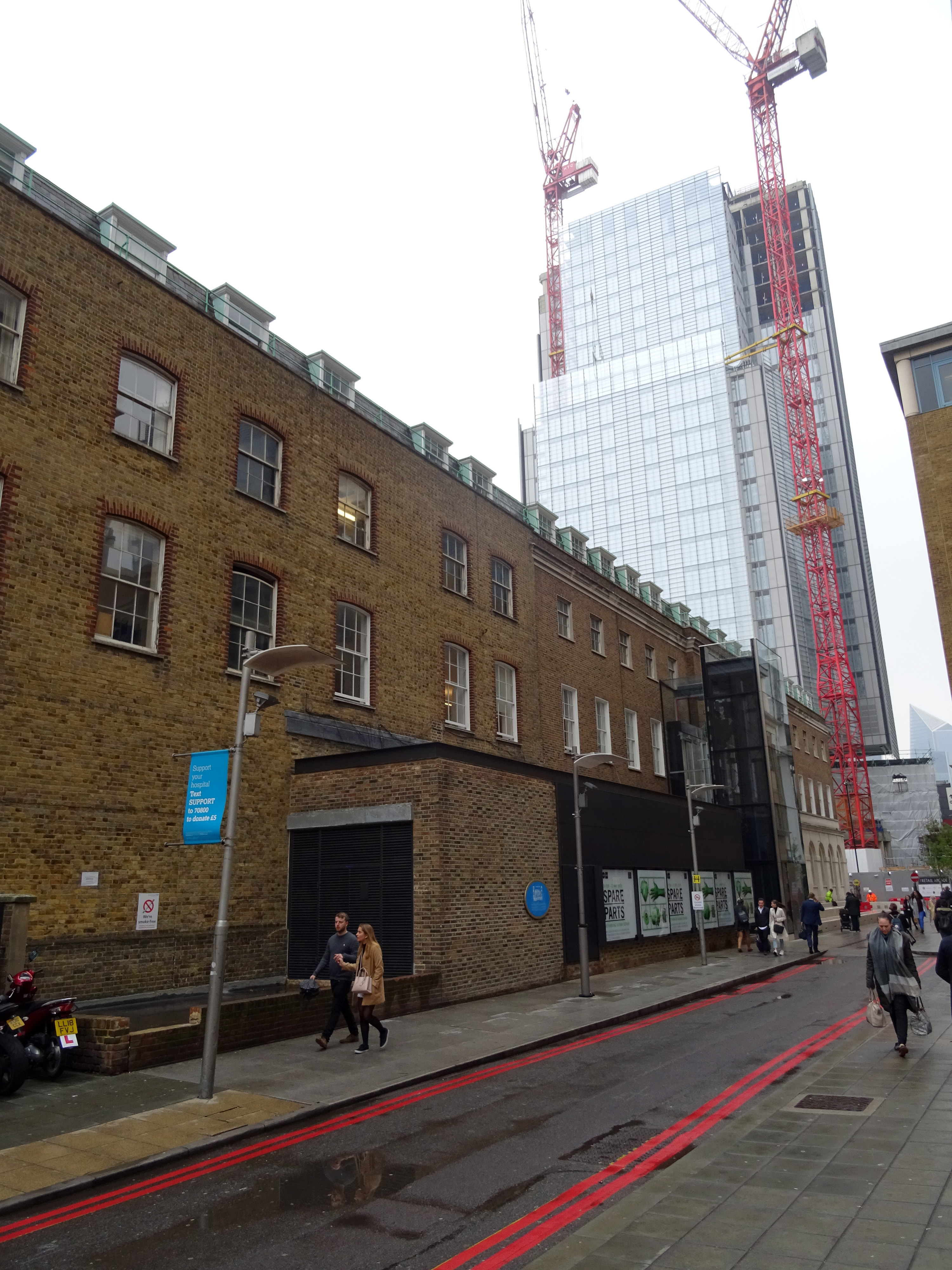
Great Maze Pond is today an internal road within Guy's Hospital’s sprawling campus, a passage between its major buildings. The street takes its character from this medical context—busy with staff and patients, its origins hidden beneath modern brick and steel. Yet the name carries a story from rural London, when this patch of The Borough was open field and grazing land.

2019
Great Maze Pond Plaque London SE1 (1)
Wikimedia Commons · CC BY-SA 4.0
2019
Great Maze Pond Plaque London SE1 (3)
Wikimedia Commons · CC BY-SA 4.0
Historical image not found
Today
Scene in Great Maze Pond at Guy's Hospital, 1996
Geograph · CC BY-SA 2.0

The street is named after the Manor of Maze, which once stood on this land and included a large pond. The pond itself has long been built over, but the street’s name remains as witness to a landscape that vanished over two centuries ago.

✦   ✦   ✦
Name Origin

The Manor that Became a Street

Great Maze Pond takes its name from the Manor of Maze, a medieval landholding that once occupied this area. The manor was in the tenure of Sir William Burcestre, knight, by 1386, and was held in dower by his widow Margaret in 1423 before passing to their son John. The property was never a true manor house with great seat; rather it was a large landholding consisting mostly of fields, pasture, and small houses.

The name's origin has been debated. John Aubrey suggested that Southwark contained a physical hedge maze which was later converted into buildings bearing that name, but Peter Cunningham argued that Maze Pond derived from the Manor of Maze itself. The more reliable historical record supports Cunningham’s interpretation. The local street-names included ‘Maze Pond,’ ‘Little Maze Pond,’ and ‘The Maze Pond,’ which subsequently became Great Maze Pond.

How the name evolved
14th century Manor of Maze
17th–18th c. Maze Pond / Little Maze Pond
present Great Maze Pond
✦   ✦   ✦
History

From Drovers’ Field to Hospital Road

The land that would become Great Maze Pond remained pastoral through the medieval period and into the early modern era. During the 16th and 17th centuries, drovers brought herds of cattle and sheep from Kent and Sussex to London to be sold at Smithfield Market, and the fields in Southwark around Great Maze Pond served as a crucial rest point where animals could rest for several days and graze on pasture before the final drive to market. The fields around the Maze Pond were a focal point where farmers from Kent and Surrey grazed and watered their cattle.

Key Dates
1386
Manor Tenure
Sir William Burcestre holds the Manor of Maze.
16th–17th c.
Droving Era
Livestock drovers use the fields around the pond as a rest stop before Smithfield Market.
1725
Guy's Founded
Thomas Guy opens his hospital on the site, acquiring the manor lands.
c. 1720s
Road Created
Great Maze Pond is laid out as a road on hospital grounds.
c. 1800s
Pond Filled
The actual pond is filled in as hospital buildings expand.
Did You Know?

The Maze Pond was fed by a tributary of the River Thames now known as Guy's Creek, and archaeological excavation of the site has uncovered an early Romano-British boat and Roman timbers edging the creek.

Guy's Hospital was founded in 1721 by philanthropist Thomas Guy, who had made a fortune as a printer of Bibles and increased it through South Sea Bubble speculation. Maze Pond was a road that lay on hospital grounds that had once been gardens belonging to the Abbot of Battle, created in the 1720s as the hospital took shape. As the hospital was built on the site in 1725, John Rocque’s 1746 Map of London still showed the pond in existence, with local street-names including ‘Maze Pond,’ ‘Little Maze Pond,’ and ‘The Maze Pond’.

✦   ✦   ✦
Culture

A Street Within a Hospital

Today, Great Maze Pond exists almost entirely within Guy's Hospital’s campus. Medical services are concentrated in buildings to the east of Great Maze Pond—Tower Wing, Bermondsey Wing, Southwark Wing, and Borough Wing—while Guy's Campus, which forms part of King's College London, stands to the west. The street functions as an internal circulation route rather than a public thoroughfare, visited mainly by hospital staff, students, and patients.

Hospital Heritage
Guy's Tower & Campus Division

Great Maze Pond divides Guy's Hospital’s historic medical complex from its academic wing. Guy’s Tower (Tower Wing), completed in 1974, was briefly the world’s tallest hospital building. The street itself has become essential infrastructure for the modern teaching hospital and medical school.

The name of the street bears witness to the days of droving near Borough High Street, long before cattle were transported by lorry or train. Though the physical landscape has been utterly transformed, the street name preserves an entire era of London’s rural hinterland and its role in feeding the city.

✦   ✦   ✦
Today

Inside the Hospital

Great Maze Pond remains a working route through one of London’s major teaching hospitals. The actual street is narrow, its character defined by adjacent hospital buildings rather than street-level commerce or residential use. The street is unusual in having no street, road, yard, court, or avenue suffix in its name, extending as far south as Newcomen Street where it has become part of the modern Guy's Hospital campus.

Walking the street today, no trace of the medieval pond or droving fields remains visible. The landscape has been comprehensively rebuilt, yet the name persists as a historical marker. The fields are no more and the pond has long since been filled in, but for anyone curious about Southwark’s pre-industrial past, the street name offers a direct link to a time when this corner of London was open pasture and grazing land.

5 min walk
London Bridge Park
Modern riverside green space overlooking the Thames, with seating and seasonal planting.
7 min walk
St Thomas Street Garden
Enclosed courtyard garden within the hospital grounds, offering respite from urban surroundings.
✦   ✦   ✦
On the Map

Great Maze Pond Then & Now

National Library of Scotland — Ordnance Survey 6-inch, c. 1888. Hosted by MapTiler. Modern: © OpenStreetMap contributors.

✦   ✦   ✦

Frequently Asked Questions

Why is it called Great Maze Pond?
The street is named after the Manor of Maze, a medieval landholding that occupied this site from at least the 14th century. The manor included a pond, which is reflected in the street’s name. While some historical accounts suggest there was a hedge maze on the site, the more reliable evidence points to the manor name as the primary source. Over time, ‘Maze Pond’ became ‘Great Maze Pond.’
How did drovers use this location?
During the 16th and 17th centuries, cattle and sheep drovers drove livestock from farms in Kent and Sussex to London’s Smithfield Market. The journey was long and exhausting for the animals, which lost weight on the road. Before reaching Smithfield, drovers rested their herds in the fields around Great Maze Pond, where they could graze and drink from the pond for several days. This allowed the animals to regain weight, which meant better prices at market.
What is Great Maze Pond known for?
Today, Great Maze Pond is known as an internal street within Guy's Hospital, dividing its medical buildings from its academic campus. Founded in 1721 by philanthropist Thomas Guy, the hospital was built on the site of the former Manor of Maze. The street is largely used by hospital staff, students, and patients rather than the general public. Its name preserves memory of Southwark’s agricultural past, when these fields fed London’s livestock markets.