Southwark London England About Methodology
Southwark · SE1

Globe Street

A modest lane in the heart of Southwark’s theatrical quarter, where Shakespeare’s legacy runs deep beneath the cobbles.

Borough
Southwark
Postcode
SE1
Nearest Station
Borough
Last Updated
Time Walk

A Fragment of the Theatrical Quarter

Globe Street is a short lane tucked into The Borough, Southwark’s medieval commercial heart. Today it remains largely residential, its name the only visible echo of the neighbourhood’s most famous landmark. The street sits mere yards from the site where Park Street now crosses the former grounds of the original Globe Playhouse.

2008
New Globe Walk
New Globe Walk
Wikimedia Commons · CC BY-SA 2.0
2010
Globe Street, Southwark
Wikimedia Commons · CC BY-SA 2.0
2010
THE GLOBE, Southwark (02)
Wikimedia Commons · CC BY-SA 3.0
Today
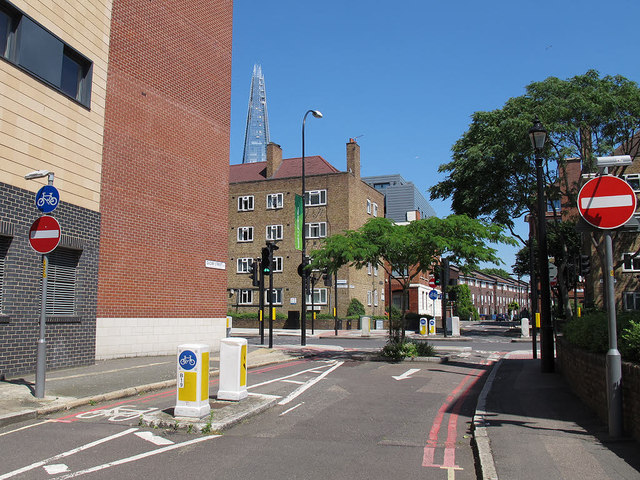
Point no-entry, Globe Street
Geograph · CC BY-SA 2.0

What makes this corner of London distinctive is not its physical character but its historical weight. The Borough has never lost touch with the Elizabethan era that made it famous. Even quiet lanes like this one carry the memory of an age when London’s entire theatrical world stood south of the Thames. But where exactly does the name come from?

✦   ✦   ✦
Name Origin

An Unrecorded Etymology

The origin of the name Globe Street is not recorded in available historical sources.

✦   ✦   ✦
History

Southwark’s Transformation

In the 16th and 17th centuries, Southwark continued to thrive. The London councillors were puritans who disapproved of plays so theatres were built in Southwark. The Rose Theatre was built in 1592 and the Globe was built in 1599. This shift transformed the Borough from a market suburb into an entertainment destination that rivalled the City itself. The material was ferried over the Thames to reconstruct it as The Globe on some marshy gardens to the south of Maiden Lane, Southwark.

Key Dates
1592
Rose Theatre Opens
Philip Henslowe builds Southwark’s first major playhouse, attracting playwrights including Shakespeare.
1599
Globe Theatre Built
The Lord Chamberlain’s Men reconstruct their theatre using timbers from the dismantled Theatre in Shoreditch, establishing it as the centrepiece of English theatre.
1613
Globe Destroyed by Fire
A theatrical cannon misfires during Henry VIII, igniting the wooden playhouse and destroying it, though no lives are lost.
1614
Globe Rebuilt
A new Globe Theatre is constructed at a cost of £1,400 with a tile roof to prevent further fire.
Did You Know?

The Globe Theatre’s site lay only a hundred yards from the congested Thames shore, yet it was situated close to farmland and open fields. The marshy ground meant a raised timber platform had to be built to protect the building from flooding at high tide.

It was pulled down in 1644–45 to make room for tenements. The playhouses that once defined Southwark’s identity were demolished or closed. By the Georgian and Victorian eras, the theatre district had given way to warehouses, markets, and modest residential streets. The names that survive—including Globe Street itself—are the chief memorials to what was lost.

✦   ✦   ✦
Cultural Landscape

Theatre, Memory, and Brick

Globe Street exists in the shadow of a reconstruction. A modern reconstruction of the theatre, named "Shakespeare's Globe", opened in 1997, with a production of Henry V. The contemporary playhouse, built approximately 230 metres from the original site, has revitalised interest in the Borough’s theatrical heritage and draws thousands of visitors annually. Yet the street itself contains no plaques, no museums, no visible markers of its nameake.

Living History
The Borough Market Legacy

Globe Street lies adjacent to Borough Market, which has operated continuously since the 12th century. The market and the street share a deep historical bond—both are medieval institutions that survived the closure of the theatres and endure to the present day.

The street’s modest present-day character masks its historical significance. Within a short walk lie fragments of palace gardens, former prison sites, and archaeological layers recording centuries of London life. Globe Street itself is less a destination than a passage through this dense historical landscape, yet its name encapsulates an entire age.

✦   ✦   ✦
Today

Quiet Lane, Loud History

Today, Globe Street is a working quarter of The Borough rather than a tourist destination. It remains primarily residential, lined with period properties from the 18th and 19th centuries. The street gives little away; few passersby pause to consider why a short lane in Southwark carries the name of the world’s most famous Renaissance playhouse.

Yet the historical weight is undeniable. To walk this lane is to cross ground that once held the hopes of playwrights, actors, and groundlings. From the 15th century on, Southwark was known for its inns, theatres, spas, country resorts, and other places of entertainment and recreation. Among the borough’s many noteworthy early theatres was Bankside’s Globe Theatre, where many of William Shakespeare’s plays were first produced. The name persists as a thread connecting modern Southwark to that vanished world.

✦   ✦   ✦
On the Map

Globe Street Then & Now

National Library of Scotland — Ordnance Survey 6-inch, c. 1888. Hosted by MapTiler. Modern: © OpenStreetMap contributors.

✦   ✦   ✦

Frequently Asked Questions

Why is it called Globe Street?
The origin of the name is not recorded in available historical sources. However, given its location in The Borough within walking distance of the original Globe Theatre site, the name likely commemorates that famous playhouse, though documentary evidence of when or how the street acquired this name has not been found.
What was Southwark’s role in Shakespeare’s time?
Southwark was London’s theatre capital in the 16th and 17th centuries. When Puritan-controlled London authorities refused to permit playhouses within the City, theatre companies moved south of the Thames to Southwark, which lay outside their jurisdiction. The Rose (1592) and Globe (1599) became the twin pillars of an entertainment district that transformed the area.
What is Globe Street known for?
Globe Street is known primarily for its name and its location. The street itself is a modest residential lane in The Borough, but its name is a direct reference to the Globe Theatre, one of the most important playhouses in the history of English drama. The street encapsulates the cultural legacy of Southwark’s greatest historical period.