Southwark London England About Methodology
Southwark · SE1

Gaza Street

A Victorian backstreet in Walworth that started life as plain Green Street — then was quietly renamed after a fallen African empire at the height of the Scramble for Africa.

Name Meaning
Uncertain — Gaza Empire or biblical Gaza
First Recorded
c. 1850s (as Green Street)
Borough
Southwark
Character
Victorian residential
Last Updated
Time Walk

A Walworth Side Street with a World-Spanning Name

Gaza Street runs off Braganza Street in Walworth, a compact terraced road of the kind that Victorian speculative builders stamped across south London by the thousand. The brick stock houses, the narrow pavement, the proximity to the Walworth Road — nothing about the street's physical fabric declares itself unusual. The name alone does that.

2025
Palestinian Flag and Anti-Palestine Graffiti in Bermondsey
Wikimedia Commons · CC BY-SA 4.0
Historical image not found
Today
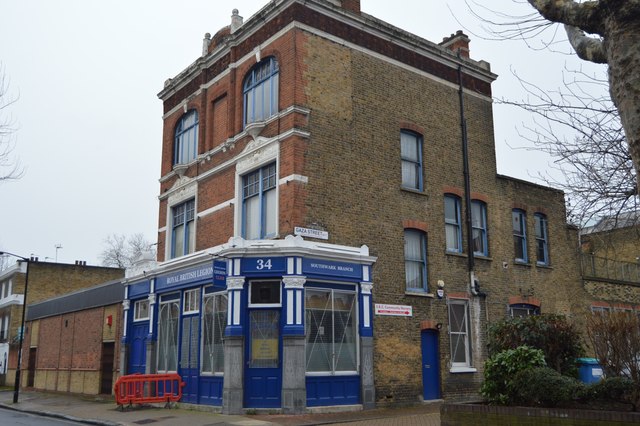
Royal British Legion, Southwark Branch — near Gaza Street
Geograph · CC BY-SA 2.0

As documented by SE1 Direct, Walworth underwent rapid suburban development during the Victorian period, its farmland and market gardens giving way to terraced housing as London's population pressed southward. Gaza Street is a product of that expansion — and its name carries a story that reaches far beyond Southwark. The question of where that name comes from has no single agreed answer.

✦   ✦   ✦
Name Origin

Green Street, Renamed for an Empire

The name is not original. The road dates from the 1850s and was originally called Green Street — a generic placeholder common across Victorian London. The name changed to Gaza Street sometime between 1875 and 1895, a window that opens directly onto one of the most dramatic episodes of the Scramble for Africa. The most probable explanation, noted by local street historians, is that the renaming references the Gaza Empire — the African kingdom founded by Soshangane in present-day Mozambique, whose last ruler, Gungunhana, was widely reported in the British press as the “Lion of Gaza” before his defeat and exile in 1895. The adjacent Braganza Street — named after the Portuguese royal dynasty — strengthens this reading: Portugal was the power that conquered the Gaza Empire.

Two alternative theories exist. In Victorian England, Gaza was best known from the biblical story of Samson, making a scriptural association entirely plausible for a period when biblical place names were sometimes applied to streets. There is also a textile connection: the word gauze derives from Gaza, just as damask derives from Damascus. No documentary primary source — council minute, estate record, or commemorative notice — has been found confirming any of these theories. The origin remains uncertain.

How the name evolved
c. 1850s Green Street
c. 1875–1895 Gaza Street
Gaza was best known in Victorian England from the Bible story of Samson — and as the origin of the word gauze.
Streetlist local street history discussion, 2021
✦   ✦   ✦
History

From Market Garden to Terraced Street

Walworth in the early nineteenth century was still partly agricultural. As British History Online records, the area was famous for its orchards and market gardens — including the celebrated Newington Peach — before the pressure of London's expanding population transformed it into a dense residential district. Gaza Street emerged from this process of suburban conversion in the 1850s, one of many short streets built on former garden land.

Key Dates
c. 1016
Walworth Manor
Edmund II grants the manor of Walworth to a court jester; the monks of Canterbury Cathedral subsequently receive the lands.
1750s
Road Building
New Kent Road and related routes established, turning Elephant & Castle into a major transport hub and accelerating suburban development southward.
c. 1850s
Green Street Laid Out
The road that would become Gaza Street is built as part of the Victorian expansion of Walworth, then known as Green Street.
1875–1895
Renamed Gaza Street
The street is renamed — most likely during the period when the Gaza Empire of southern Africa dominated British imperial news coverage.
1895
Fall of the Gaza Empire
Portuguese forces defeat and exile Gungunhana, last ruler of the Gaza Empire in Mozambique, ending Gazaland as an independent state.
1939–45
Wartime Walworth
Walworth is severely affected by Second World War bombing, with significant damage to the surrounding residential streetscape.
Did You Know?

The word gauze — the fine, translucent fabric — derives from the city of Gaza, much as damask comes from Damascus and denim from Nîmes. Victorian Londoners would have known Gaza chiefly through this textile connection and through the biblical story of Samson, long before the Middle Eastern city entered modern political consciousness.

The mid-Victorian development of Walworth was, as recorded by the Ideal Homes archive at the University of Greenwich, driven by speculative builders responding to London's surging population. Short streets like Green Street were part of estates built rapidly and let to artisans, tradespeople, and working-class families displacing from the inner city. The renaming to Gaza Street — whatever its precise motivation — occurred during a period when imperial events routinely fed back into London street nomenclature.

Walworth was badly hit during the Second World War, and much of the surrounding area was subsequently rebuilt. The Victorian fabric of Gaza Street survived, however, and the street retains its nineteenth-century domestic scale. As excavations by MOLA (Museum of London Archaeology) across the wider Walworth area have shown, the land beneath these terraces holds evidence of the market-garden and pre-urban phases that preceded the Victorian build-out.

✦   ✦   ✦
Culture

Empire in the Street Sign

Gaza Street sits within a wider pattern of Victorian street naming in which far-flung imperial events, battles, and territories were absorbed into London's domestic geography. The name cluster around Gaza Street is particularly telling: Braganza Street commemorates the Portuguese royal house, and the Gaza Empire's defeat by Portugal in 1895 was one of the final acts in the European partition of Africa. To rename Green Street “Gaza Street” at precisely this moment was, whether consciously or not, to inscribe an African kingdom's erasure into a Walworth terrace.

African Kingdom in a London Postcode
The Gaza Empire — Braganza Street Connection

Gaza Street and adjacent Braganza Street form one of London’s most historically layered name pairings. The Gaza Empire (1824–1895), founded by the Nguni chief Soshangane in present-day Mozambique, was conquered by Portugal in 1895 — and Braganza is the name of the ruling Portuguese dynasty. Whether the pairing was deliberate is unrecorded, but the coincidence is striking. Walworth’s Victorian street-namers may have embedded a geopolitical story in two adjacent signs.

Walworth itself has a long tradition of cultural and intellectual life that the street's quiet residential character belies. As documented by British History Online, the area's Georgian and early Victorian phase produced notable residents including scientists, writers, and reformers. By the time Gaza Street was laid out, Walworth was firmly working-class — a district of artisans and traders rather than merchants — and its street names reflected the popular imperial culture of the day.

✦   ✦   ✦
People

The Lion of Gaza and the Street He Inadvertently Named

No documented individual resident of Gaza Street has been found in available sources. The name, however, most probably commemorates — or at least reflects — Gungunhana, the last emperor of the Gaza Empire. Known in the European press as the “Lion of Gaza,” he reigned from around 1884 until his capture and exile in December 1895. He fought to maintain his kingdom's independence by playing European powers against one another before being defeated by Portuguese forces under Joaquim Mouzinho de Albuquerque. He died in exile on the island of Terceira in the Azores on 23 December 1906.

Walworth produced its own share of remarkable residents in adjacent streets. The surrounding area was home to figures including the early feminist Mary Wollstonecraft and the scientist Michael Faraday, both of whom were associated with the wider Walworth and Newington district in the late eighteenth and early nineteenth centuries — before Gaza Street existed. No verifiable individual connected to Gaza Street itself has been identified in the historical record.

✦   ✦   ✦
Recent Times

A Name That Acquired New Weight

For most of the twentieth century, Gaza Street in Walworth drew no particular attention. The name, long disconnected from the African empire that most probably inspired it, was simply a postal address. The Middle Eastern city of Gaza — historically part of the Ottoman Empire and then under British mandate from 1918 — was a separate entity entirely. The two “Gazas” rarely overlapped in public consciousness.

From the late twentieth century onward, as the Israeli–Palestinian conflict intensified in international coverage, the name gained a charged contemporary resonance that its Victorian renamers could not have anticipated. The street sign in Walworth now carries at least three distinct layers of association: a Victorian African empire, the ancient biblical city of Samson, and the contemporary Gaza Strip. The name has not changed; the world around it has.

✦   ✦   ✦
Today

Walworth’s Quiet Terrace, Still Asking Questions

Gaza Street remains a residential street in Walworth, running off Braganza Street. The Victorian terraced housing that defines its character survives largely intact, part of the nineteenth-century domestic fabric that distinguishes this part of Southwark from the post-war estates that replaced much of the surrounding area. The Walworth Road — the district's high street, lined with independent shops, markets, and community institutions — is a short walk away.

Walworth has seen significant regeneration since the early 2000s, including major changes at Elephant & Castle to the north. The Southwark Heritage Centre and Walworth Library, opened in 2021, now holds archive material relating to the area's development. Gaza Street, unchanged in name since the late Victorian period, sits within a neighbourhood that continues to evolve around it.

12 min walk
Burgess Park
Southwark’s largest park, with a lake, tennis courts, and open meadow on former industrial and residential land.
8 min walk
Geraldine Mary Harmsworth Park
Home to the Imperial War Museum; a green space with mature trees and formal lawns on the former Bethlem Royal Hospital grounds.
14 min walk
Kennington Park
A historic Victorian park with heritage status, gardens, and a notable past as a site of Chartist gatherings in the 1840s.
5 min walk
St Mary’s Churchyard Garden
A redeveloped churchyard park near Elephant & Castle, restored as part of the wider Walworth regeneration scheme.
✦   ✦   ✦
On the Map

Gaza Street Then & Now

National Library of Scotland — Ordnance Survey 6-inch, c. 1888. Hosted by MapTiler. Modern: © OpenStreetMap contributors.

✦   ✦   ✦

Frequently Asked Questions

Why is it called Gaza Street?
The street was originally called Green Street when it was laid out in the 1850s. It was renamed Gaza Street sometime between 1875 and 1895. The most probable explanation is a connection to the Gaza Empire — the African kingdom in present-day Mozambique whose last ruler, Gungunhana, was known to British newspaper readers as the “Lion of Gaza” before his defeat by Portugal in 1895. The adjacent Braganza Street, named after the Portuguese royal dynasty that conquered the Gaza Empire, strengthens this reading. Biblical associations with Samson’s Gaza, and the derivation of the word gauze from the city of Gaza, are also possible inspirations. No primary source confirming any specific reason has been found.
What was Gaza Street originally called?
Gaza Street was originally called Green Street — a generic Victorian street name that appears in records from the 1850s. The name was changed to Gaza Street at some point between 1875 and 1895, most likely in the 1880s or early 1890s when the Gaza Empire of southern Africa was regularly in the British news.
What is Gaza Street known for?
Gaza Street is a Victorian residential street in Walworth, Southwark, notable chiefly for its intriguing and contested name. It is one of the few streets in London whose renaming appears to reference the Gaza Empire of southern Africa rather than the better-known Middle Eastern city. The street sits within a well-preserved Victorian terraced streetscape and is part of a neighbourhood that has seen significant regeneration since the early 2000s. Its proximity to Braganza Street — named after the Portuguese dynasty that conquered the Gaza Empire — makes the name pairing one of the more historically layered in Southwark.