Southwark London England About Methodology
Southwark · SE1

Frederick Road

A short Walworth side street planted on ground that was open Canterbury manor farmland less than two centuries ago — and whose name no surviving record has yet explained.

Name Meaning
Uncertain
First Recorded
19th century
Borough
Southwark
Character
Victorian residential
Last Updated
Time Walk

A Sliver of Victorian Walworth

Frederick Road is one of Walworth’s shortest streets — approximately 37 metres from end to end — tucked into the Victorian residential grid that spreads east of Walworth Road. The surrounding neighbourhood retains much of the compact, working-class terraced character it acquired in the second half of the nineteenth century, when fields and market gardens were rapidly paved over and built upon. As covered by SE1 Direct, Walworth remains one of inner south London’s most persistently dense and diverse communities.

1942
A Church Rises From the Ashes- Bomb Damage To St George's Cathedral, Southwark, 1942 D6728
Wikimedia Commons · Public domain
2012
Rotherhithe Street by Frederick Square
Wikimedia Commons · CC BY-SA 2.0
c. ?
Cariboo Road
Cariboo Road — near Frederick Road
Wikimedia Commons · Public domain
Today
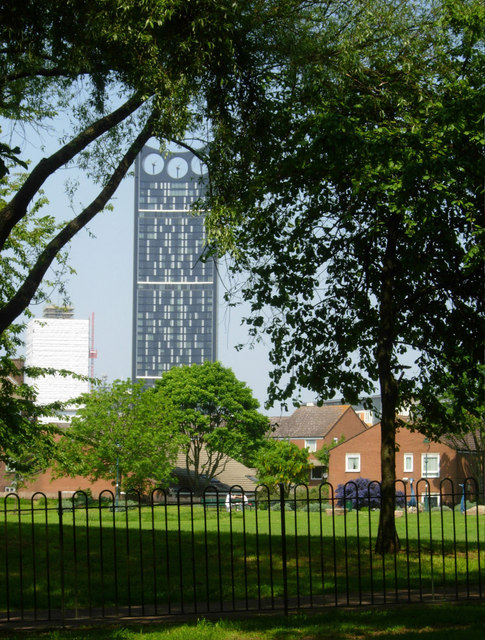
Pasley Park — near Frederick Road
Geograph · CC BY-SA 2.0

The street sits within the Newington ward of Southwark, within easy walking distance of the Elephant & Castle interchange. Its brevity makes it easy to overlook on any map, but its name carries a question that the historical record has yet to answer cleanly.

✦   ✦   ✦
Name Origin

A Name Without a Paper Trail

The origin of the name Frederick Road is not recorded in available historical sources.

✦   ✦   ✦
History

From Canterbury’s Fields to Working-Class Terraces

Walworth was farmland for most of its recorded history. As British History Online records in the Survey of London, Walworth and Newington were still marked as separate rural hamlets on the 1681 plan of Walworth Manor, and maps of the 1780s depicted the area as “a pleasant country neighbourhood” with only a few newly-formed roads stretching across gardens and fields. The land that Frederick Road now occupies formed part of the vast Walworth Manor estate held by the Dean and Chapter of Canterbury, whose monks had possessed Walworth since the eleventh century.

Key Dates
1086
Domesday Record
Walworth appears in the Domesday Book as Waleorde, held from Archbishop Lanfranc of Canterbury. The manor would remain in ecclesiastical hands for centuries.
1681
Manor Plan Drawn
A detailed plan of Walworth Manor is made. The ground that would become Frederick Road is open agricultural land, part of the Dean and Chapter’s estate.
c.1808
Elegant Mansions
David Hughson describes Walworth Road as “lined by elegant mansions.” Suburban development was beginning to push south from the Elephant & Castle.
1820s
Rapid Expansion
Building leases granted by the Dean and Chapter open up Walworth to systematic housing development. The side streets begin to fill in with terraced housing.
1984
Postcode Assigned
The postcode SE17 3QJ — covering Frederick Road — was formally introduced on 30 September 1984 as part of the rationalisation of London postcodes.
Did You Know?

The land beneath Walworth’s Victorian terraces was a source of brick earth as early as the 13th century. The Survey of London records several 13th-century deeds referring to a field in Walworth known as “Claylonde,” and clay pits are visible on the 1681 manor plan — meaning the very material of the neighbourhood’s buildings may have been dug from beneath it.

By the mid-nineteenth century the pace of development was intense. The Dean and Chapter routinely granted building leases to individual builders who erected rows of two- and three-storey terraced houses across the former fields and orchards. The character of the whole district — dense, working-class, Irish-influenced — was largely set by the 1880s. Charles Dickens had already immortalised Walworth in Great Expectations, where Mr Wemmick kept his eccentric “castle” in the neighbourhood; real Walworth residents, however, lived in far more ordinary circumstances than Wemmick’s Gothic retreat.

✦   ✦   ✦
Culture

Manor Ground, Literary Neighbours

Walworth’s literary claim rests largely on Charles Dickens, who set Mr Wemmick’s home in Great Expectations in this neighbourhood — a comic-Gothic “castle” surrounded by a moat, drawbridge, and miniature cannon, all within sight of streets precisely like Frederick Road. It was a joke about urban claustrophobia: a man so squeezed by city work that his home had to become an absurd fortress of private freedom. The streets around Frederick Road provided Dickens with the visual grammar of cramped working respectability.

Canterbury’s Invisible Hand
The Dean and Chapter’s Estate

The ground beneath Frederick Road and much of surrounding Walworth was for centuries controlled by the Dean and Chapter of Canterbury Cathedral. As documented by British History Online in the Survey of London, the monks of Christ Church obtained possession of Walworth in the eleventh century and remained its landlords — shaping every building lease, every street layout, every terrace — right through the Victorian era. The rhythms of Canterbury’s estate management are inscribed in the brick geometry of every street in this block.

The broader Walworth area was also home to a remarkable flowering of Nonconformist religion in the early nineteenth century. The Survey of London records chapels and meeting houses springing up among the newly-formed streets from the 1790s onwards, serving a rapidly growing population of tradespeople and artisans. By the time Frederick Road was built, Walworth was a neighbourhood of working households: tanners, tailors, market traders, and the families who served the East Street market, which has been running in some form since 1880.

✦   ✦   ✦
People

A Neighbourhood of Ordinary Lives

No verifiable individual has been found who lived or worked specifically on Frederick Road, and no blue plaque marks the street. This is not unusual for a short Walworth side street whose residents were almost entirely working-class — the kind of people whose names appear in census schedules and trade directories rather than in biographies. The wider Walworth neighbourhood, however, produced two of Britain’s most celebrated scientists. Michael Faraday, pioneer of electromagnetism, and Charles Babbage, widely credited as the father of modern computing, were both born in the Walworth and Newington area in 1791 — a remarkable coincidence of genius in a single south London parish.

The painter Samuel Palmer was born in 1805 at what is now No. 42 Surrey Square, a short distance from Frederick Road. Palmer later recalled Walworth as a “leafy” childhood setting — a description that would have seemed darkly ironic to the working families who crowded its terraces half a century later, as documented in the Survey of London published on British History Online.

Maps of the 1780s depict Walworth as a pleasant country neighbourhood with a few newly-formed roads stretching across the gardens and fields.
Survey of London, Volume 25 — British History Online
✦   ✦   ✦
Recent Times

Regeneration at the Gates

The Walworth that surrounds Frederick Road has been under sustained pressure from regeneration since the 2000s. The demolition of the Heygate Estate and the Elephant & Castle Shopping Centre, and the construction of Elephant Park and the Strata tower, have redrawn the skyline immediately north of the neighbourhood. Southwark Council opened the new Southwark Heritage Centre and Walworth Library in May 2021 — a facility that, according to SE1 Direct, houses the borough’s extensive heritage collection alongside a working library.

The short streets running off Walworth Road — Frederick Road among them — have remained largely intact through these changes, their Victorian bones still visible beneath replacement windows and painted render. Property sales in the SE17 3QJ postcode, which covers Frederick Road, reached a recent high of £280,000 in August 2022, reflecting the rising pressure on this historically affordable pocket of inner London.

✦   ✦   ✦
Today

Walworth’s Grain, Still Intact

Frederick Road remains a publicly maintained residential street within Southwark Council’s jurisdiction. The nearest Underground and rail interchange is Elephant & Castle, approximately 0.6 miles to the north-west — the same hub that has shaped this part of south London since the turnpike era. The East Street Market, one of London’s oldest surviving street markets, lies within easy walking distance to the south.

The green spaces nearest to Frederick Road offer a striking contrast to the dense Victorian streetscape. Burgess Park, the largest open space in Southwark, lies to the south — a former canal and industrial landscape transformed into 56 acres of parkland. Elephant Park, the new green space delivered as part of the Elephant & Castle regeneration, provides lawns and planting to the north. The neighbourhood’s archaeological interest is captured in work by MOLA (Museum of London Archaeology), whose investigations across the wider Southwark area have traced this land’s transition from Roman and medieval activity to the Victorian city.

~10 min walk
Burgess Park
Southwark’s largest park: 56 acres of open grassland, a fishing lake, tennis courts, and barbecue areas on a former industrial and canal site.
~8 min walk
Elephant Park
New parkland delivered as part of the Elephant & Castle regeneration, with lawns, trees, and public space on the former Heygate Estate footprint.
~6 min walk
Walworth Square
A small green public space on Walworth Road, one of the neighbourhood’s pocket parks amid the dense Victorian terraced streets.
~12 min walk
St Mary’s Churchyard Park
A historic churchyard off Newington Butts, currently being redeveloped as a new public park as part of Elephant & Castle improvements.
✦   ✦   ✦
On the Map

Frederick Road Then & Now

National Library of Scotland — Ordnance Survey 6-inch, c. 1888. Hosted by MapTiler. Modern: © OpenStreetMap contributors.

✦   ✦   ✦

Frequently Asked Questions

Why is it called Frederick Road?
The origin of the name Frederick Road is not recorded in available historical sources. The name “Frederick” was commonly applied to Victorian streets, often in honour of Prince Frederick, Duke of York and Albany (1763–1827), the second son of King George III. Several other streets in Southwark carry names connected to this prince. However, no primary source — deed, estate record, or council minute — has been found that specifically confirms this connection for Frederick Road in Walworth.
When was Frederick Road developed?
Walworth was largely open fields and orchards until the early nineteenth century. The Survey of London records that rapid residential development occurred from the 1820s onwards, as the Dean and Chapter of Canterbury granted building leases across the Walworth Manor estate. Frederick Road, as a short side street characteristic of this expansion, was most likely laid out and built upon during the mid-to-late Victorian period.
What is Frederick Road known for?
Frederick Road is a short residential street in the Walworth neighbourhood of Southwark, part of the Victorian working-class terraced grid that spreads east of Walworth Road. It sits within one of London’s oldest manorial districts — recorded in the Domesday Book of 1086 — whose ground was controlled by the Dean and Chapter of Canterbury for nearly a thousand years. The surrounding neighbourhood is known for its historic East Street Market, the Pullens Buildings Victorian live–work yards, and ongoing regeneration centred on the Elephant & Castle.