Southwark London England About Methodology
Southwark · SE1 · Walworth

Fleming Road

Named after a Victorian barrister who governed eleven colonies — a Walworth street carrying the imperial footprint of Sir Francis Fleming, Colonial Secretary of Hong Kong.

Named After
Sir Francis Fleming
First Recorded
Late 19th century
Borough
Southwark
Character
Residential
Last Updated
Time Walk

A Walworth Road Running on Imperial Time

Fleming Road sits quietly in Walworth, one of south London’s most distinctly working-class neighbourhoods, whose Victorian grid of streets grew so fast that by 1901 it held more than 122,000 people crammed into terraced rows where open fields had stood barely a century before. The road lies within the SE1 postcode, close to Kennington Park and the bustle of the Walworth Road, whose long trading history stretches from ancient market to modern high street.

2008
Metro Central Heights Alexander Fleming House
Wikimedia Commons · CC BY 2.0
2009
MetroCentralHeights1
Wikimedia Commons · CC0
Historical image not found
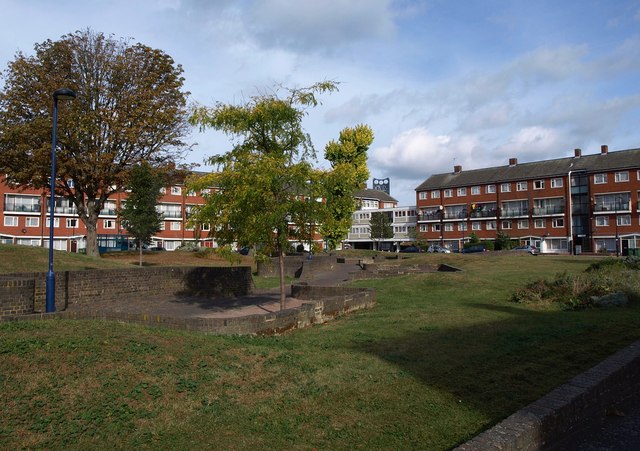
Today
Forsyth Gardens SE17 — near Fleming Road
Geograph · CC BY-SA 2.0

The street carries the name of a man few local residents would recognise today — a Victorian lawyer who spent his career administering a string of British colonies on the far side of the world. The question of why he ended up here, on a modest Walworth road, leads directly into the naming conventions of Victorian street-builders and one remarkable imperial career.

✦   ✦   ✦
Name Origin

Eleven Colonies, One Walworth Street

The name comes directly from Sir Francis Fleming. As documented by British History Online, Walworth’s streets were largely laid out by the Brandon Trustees, the Dean and Chapter of Canterbury, and other landowners during a rapid mid-to-late Victorian building campaign — and it was common practice to honour prominent imperial figures in the naming of new streets. Fleming was a natural candidate: SE1 Direct records this part of Southwark as a neighbourhood whose Victorian street pattern reflects exactly that era of confident imperial commemoration.

Sir Francis Fleming (31 July 1842 – 4 December 1922) was a British barrister who studied law at the Middle Temple and was called to the bar in 1866. He served as Colonial Secretary of Hong Kong between 1890 and 1892 — one of eleven colonial appointments across his career. The name “Fleming Road” is verified as honouring him directly: a road in Wan Chai, Hong Kong was also named after him, cementing his place in the imperial street-naming record of the British Empire.

How the name evolved
c. late 19th century Fleming Road
present Fleming Road
“By 1880 the whole area was closely packed with streets of working-class houses.”
Survey of London, Vol. 25 — British History Online
✦   ✦   ✦
History

From Open Field to Victorian Terrace

Walworth was still largely open countryside in the 1780s. As British History Online’s Survey of London records, maps of that decade depict the area as “a pleasant country neighbourhood with a few newly-formed roads stretching across the gardens and fields.” The surge of Thames-bridge building and improved turnpike roads then made the district attractive to merchants and tradespeople who could commute into the City — and the population exploded.

Key Dates
1086
Domesday Record
Walworth, recorded as “Waleorde,” appears in the Domesday Book as a manor belonging to the Archbishop of Canterbury.
c. 1780
First Streets Laid
East Street and early roads on the east side of Walworth Road are laid out; the area remains largely agricultural.
1842
Fleming Born
Sir Francis Fleming is born on 31 July 1842; he will later serve as Colonial Secretary of Hong Kong.
c. 1880
Full Urbanisation
The Survey of London records that the whole Walworth area is by now closely packed with streets of working-class houses, shops, and railway infrastructure.
1890–92
Fleming in Hong Kong
Sir Francis Fleming serves as Colonial Secretary of Hong Kong, the role that brought him lasting commemoration in street names on two continents.
1922
Fleming Dies
Sir Francis Fleming dies on 4 December 1922, having held appointments across eleven British colonies during a career spanning more than five decades.
Did You Know?

In 1801 the population of Walworth stood at around 14,800. By 1901 it had risen to more than 122,000 — making it one of the fastest-growing urban districts in nineteenth-century London, and the context in which Fleming Road and hundreds of similar streets were built and named.

When development came to this part of Walworth it followed the pattern described throughout the Survey of London: streets were built along old field boundaries, often under the auspices of ecclesiastical and aristocratic landowners with little attempt to create coherent urban plans. The London, Chatham and Dover Railway, running parallel to the Walworth Road up towards the Elephant and Castle, added further pressure to the district, accelerating its transformation from genteel suburb to dense working-class neighbourhood in a matter of decades.

✦   ✦   ✦
Culture

The Man Behind the Name: Barrister, Magistrate, Governor

Sir Francis Fleming’s career was a portrait of Victorian imperial administration at full stretch. He studied law at the Middle Temple and was called to the bar in 1866; three years later he sailed for Mauritius as an acting magistrate. Over the following decades he moved from colony to colony — Mauritius, Sierra Leone, Hong Kong, the Leeward Islands — accumulating titles and responsibilities across eleven separate postings. In Hong Kong between 1890 and 1892, he acted as Officer Administering the Government when the Governor was absent, and in that capacity he laid the foundation stone of the Gap Rock Lighthouse on 1 September 1890.

Imperial Naming Convention
A Name on Two Continents

Fleming Road in Walworth and Fleming Road in Wan Chai, Hong Kong both carry Sir Francis Fleming’s name. The Hong Kong road was built on land reclaimed from the harbour in 1921 — nearly three decades after Fleming’s tenure there. Victorian and Edwardian street-namers on both sides of the world drew from the same pool of honoured colonial servants, meaning a single career could leave its mark on the street maps of cities thousands of miles apart. As Historic England’s records of the Walworth conservation area show, streets of this vintage carry layers of civic and imperial memory that are not always legible from the pavement.

After Hong Kong, Fleming went on to serve as Governor-in-Chief of Sierra Leone from 1892, where in November of that year he witnessed what is recorded as the first systematic strike of 800 labourers — an early flash of the labour politics that would eventually reshape the empire he had spent his career administering. He was knighted, awarded the CMG and later the KCMG, and died in December 1922 at the age of eighty.

✦   ✦   ✦
People

The Colonial Secretary and a Neighbourhood of Dickens

Sir Francis Fleming never lived in Walworth — his adult life was spent moving between colonial postings across four continents. But the neighbourhood whose streets carry his name had its own literary shadow. Charles Dickens set Mr Wemmick’s eccentric miniature castle in Walworth in Great Expectations, and also mentioned the district in Sketches by Boz — a fictional record of the same working-class streets that were being built and named around the time Fleming was making his name in the colonies.

Two of Britain’s greatest scientists were also connected to the wider neighbourhood. Michael Faraday and Charles Babbage, pioneers respectively of electromagnetism and computing, were both born in the Walworth and Newington area in 1791 — a generation before Fleming’s road existed, but whose legacy still shapes the district today through the Faraday Room at the Southwark Heritage Centre on Walworth Road.

✦   ✦   ✦
Recent Times

Regeneration at the Edges, Continuity at the Core

Walworth has been the subject of sustained regeneration since the early 2000s, with the demolition of the Heygate and Aylesbury Estates and the complete redevelopment of the Elephant and Castle Shopping Centre reshaping the northern fringe of the neighbourhood. As SE1 Direct has reported extensively, these changes have created new public spaces, brought the Southwark Heritage Centre and Walworth Library into being, and restored the historic Walworth Town Hall — all within easy reach of Fleming Road.

The street itself, removed from the major development zones, has followed the quieter arc common to inner Walworth’s residential roads: gradual gentrification, rising property values reflecting the neighbourhood’s proximity to central London, and the arrival of a younger, more mixed demographic drawn by relatively affordable housing stock compared with adjacent postcodes.

✦   ✦   ✦
Today

Green Space and a Grid That Remembers Empire

Fleming Road today is a residential street embedded in the Victorian grid of Walworth — a neighbourhood whose Saxon name, meaning “farm of the Britons,” now houses some of Southwark’s most diverse communities. The street sits within walking distance of several significant green spaces that give the otherwise dense neighbourhood some breathing room.

8 min walk
Kennington Park
A large Victorian park with sports facilities, a rose garden, and a history as a site of Chartist mass meetings in the 1840s.
12 min walk
Burgess Park
Southwark’s largest park, created from post-war cleared land and canals; features a lake, BMX track, and community gardens.
15 min walk
Elephant Park
A new urban green space created as part of the Elephant and Castle regeneration, with mature trees and public art installations.
18 min walk
St Mary’s Churchyard Garden
A restored historic churchyard being developed as a new park as part of the wider Elephant and Castle masterplan.

Archaeology across this part of Southwark — documented by MOLA in excavations connected to the Elephant and Castle regeneration — has revealed the deep pre-urban layer beneath these Victorian streets: Roman field systems, medieval drainage channels, and the physical evidence of the farmland that Fleming Road’s name-bearer would have recognised as “Walworth” in its oldest, most literal sense.

✦   ✦   ✦
On the Map

Fleming Road Then & Now

National Library of Scotland — Ordnance Survey 6-inch, c. 1888. Hosted by MapTiler. Modern: © OpenStreetMap contributors.

✦   ✦   ✦

Frequently Asked Questions

Why is it called Fleming Road?
Fleming Road in Walworth takes its name from Sir Francis Fleming (1842–1922), a British barrister and colonial administrator who served as Colonial Secretary of Hong Kong between 1890 and 1892. Fleming held appointments across eleven British colonies and was knighted for his service. Victorian street-builders in Walworth regularly commemorated senior imperial officials in road names, and Fleming was a prominent candidate — his name was also given to a road in Wan Chai, Hong Kong, confirming the deliberate nature of the commemoration.
When was Fleming Road built?
Fleming Road was laid out as part of the late Victorian expansion of Walworth, which saw the area transform rapidly from open fields into densely packed streets of working-class housing. The Survey of London, as recorded by British History Online, notes that by 1880 the whole Walworth area was closely packed with streets of this character — built along old field boundaries by the Brandon Trustees, the Dean and Chapter of Canterbury, and other landowners with little overall planning.
What is Fleming Road known for?
Fleming Road is a residential street in the Walworth neighbourhood of Southwark, lying in the SE1 postcode within walking distance of Kennington Park. Its primary distinction is its name: it preserves the memory of Sir Francis Fleming, a Victorian colonial administrator whose career spanned four continents and eleven colonial appointments. The same name was given to a major road in Wan Chai, Hong Kong — one of the most prominent thoroughfares on Hong Kong Island — making Fleming Road in Walworth part of a rare double commemoration across the former British Empire.