Southwark London England About Methodology
Bermondsey · SE1

English Grounds

A short lane named for railway workers who forged London’s transport network in the industrial age.

Named After
Railway Workers
Borough
Southwark
Postcode
SE1
Character
Court & Lane
Last Updated
Time Walk

Judges and the Built Past

Southwark Crown Court opened at English Grounds near London Bridge in 1964, transforming this modest lane into a hub of judicial authority. Yet the street’s true character lies not in its present function but in its origin. This corner of Bermondsey emerged from an era when construction boomed, when thousands of labourers arrived to carve new infrastructure from the Thames-side marshes and shape London into a modern metropolis.

2011
English Grounds SE1 (5679438166)
Wikimedia Commons · Public domain
2012
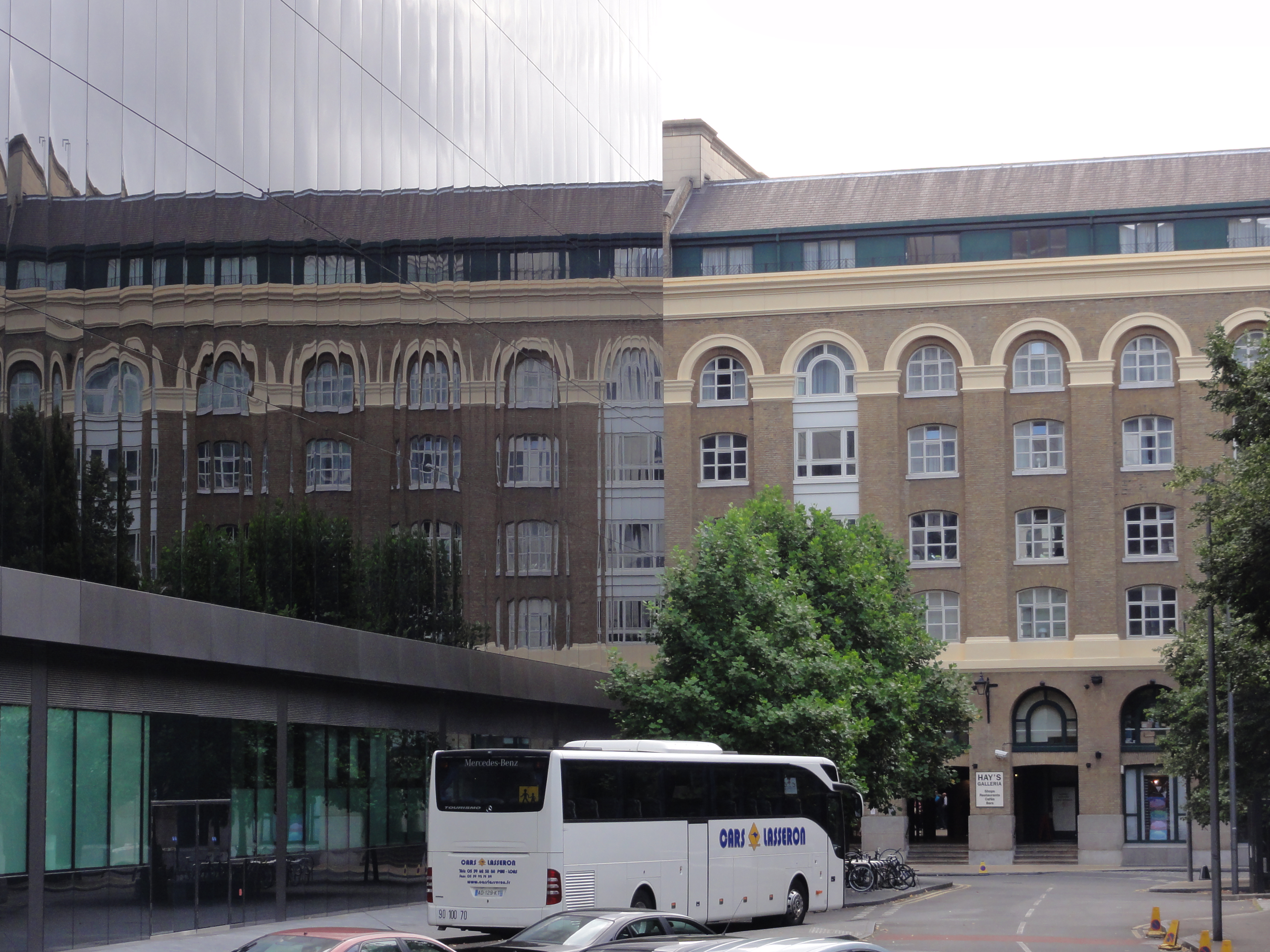
Building reflection
Building reflection
Wikimedia Commons · CC BY-SA 3.0
Historical image not found
Today
More London Place — near English Grounds
Geograph · CC BY-SA 2.0

Today, English Grounds is a quiet, short road overshadowed by the transport interchange of London Bridge. The street name itself, however, carries a vivid memory of that industrial moment when men of different nations worked side by side—and were kept deliberately separate.

✦   ✦   ✦
Name Origin

The Mark of Railway Men

English Grounds is thought to be named after the English workers here during the railway boom, who were kept separate from the Irish ones nearby at Irish Grounds. The name captures a social fact as much as it marks geography. During the 19th century, Bermondsey was built up into an industrial and warehousing area in the 18th and 19th centuries, driven by dock construction and railway expansion. The massive labour required to hack new lines through London, to lay viaducts and shunt yards, drew immigrants and native workers alike. That they were separated by origin—English here, Irish there—and that the division was literal enough to be encoded in street names, speaks to the anxieties and prejudices of Victorian London. What appears as a simple toponym is in fact a social map written into brick and pavement.

✦   ✦   ✦
History

From Marshland to Courtroom

Bermondsey’s transformation from rural island to industrial powerhouse unfolded across three centuries. Monks from the abbey began the development of the area, cultivating the land and embanking the riverside, and turned an adjacent tidal inlet at the mouth of the River Neckinger into a dock, named St Saviour’s Dock after their abbey. Medieval piety gave way to modern commerce. Bermondsey was a centre for leatherworking in the Middle Ages and was granted a virtual monopoly of the trade in 1703. The tanneries clung to the waterside for centuries, drawing hides downriver and releasing pungent effluent back. By the 18th century, warehouses and wharves joined the tanneries.

Key Dates
1081
Bermondsey Abbey
Founded by Alwin Childe, a London citizen. Monks begin systematic cultivation and development of the marshy riverbank.
1703
Leather Monopoly
Bermondsey granted virtual monopoly of leather production, establishing the dominant industry for the next two centuries.
c.1850–1890
Railway Era
London Bridge and South Eastern railways expand. Labourers of English, Irish, and Scottish origin arrive. Segregation into separate quarters reflects social tensions and workplace divisions.
1964
Crown Court Opens
Southwark Crown Court established at English Grounds, formalising the street’s institutional role in the borough’s civic life.
Did You Know?

Irish Grounds, the neighbouring street, marks the mirror of English Grounds’ social geography. The two names are silent evidence of labour segregation during railway construction—a practice common in Victorian Britain, where migrant workers were housed separately by origin.

The courtroom’s arrival signalled a shift in the street’s character from industrial to civic, but the earlier meaning endures in its name. The railway boom that created English Grounds faded as road transport displaced rail freight. Yet the street name preserves the moment when London was reshaped by the muscle of thousands of ordinary men, divided and catalogued by origin, working the docks and viaducts of south London.

✦   ✦   ✦
Culture

The Courthouse Lane

Judicial Landmark
Southwark Crown Court

The Crown Court that opened on English Grounds in 1964 serves as the principal criminal court for Southwark. The building stands as a monument to mid-20th-century judicial architecture and remains one of the most significant institutional presences in the Bermondsey street plan.

English Grounds today is almost entirely defined by its function as a judicial address. Unlike streets that retain mixed commercial or residential use, or those that preserve visible traces of their historical industry, this lane has been wholly absorbed into the bureaucratic landscape of modern London. The Crown Court dominates the street’s character, yet the name itself is a living archive of something far older and more human: the labour that built the railways, and the prejudices that shaped how that labour was organised.

✦   ✦   ✦
Today

A Lane of Justice

English Grounds is a street located in Bermondsey with a length of approximately 93 metres. It remains one of the shortest and least known streets in the Southwark area, yet it carries significance far beyond its physical dimensions. The street links Borough High Street to the Crown Court complex, functioning primarily as a judicial approach rather than a commercial or residential thoroughfare.

The street sits in the shadow of London Bridge and the transport interchange that dominates the immediate area. The postcode is within the London Bridge & West Bermondsey ward, which is in the constituency of Bermondsey and Old Southwark. Few pedestrians linger here, fewer still perhaps know the name’s origin. Yet English Grounds remains a palimpsest: beneath the modern courtroom lies the railway age, and beneath that, the medieval abbey and the tanneries that made Bermondsey a centre of English craftsmanship for seven centuries.

10 min walk
Southwark Park
London’s first municipal park, opened in 1869. 63 acres of open space with gardens, lake, and recreational facilities.
7 min walk
Thames Riverfront
St Saviour’s Dock and riverside promenade provide views across the water and access to pedestrian paths along the Thames.
✦   ✦   ✦
On the Map

English Grounds Then & Now

National Library of Scotland — Ordnance Survey 6-inch, c. 1888. Hosted by MapTiler. Modern: © OpenStreetMap contributors.

✦   ✦   ✦

Frequently Asked Questions

Why is it called English Grounds?
The street takes its name from English workers who laboured during London’s railway boom in the 19th century. They were housed separately from Irish workers, who lived in the adjacent Irish Grounds. The division, though brutal, is preserved in the street names themselves.
What was the railway boom's impact on Bermondsey?
The construction of railway lines and goods yards transformed Bermondsey from a marshland dominated by tanneries into a major transport and industrial hub. The influx of labour, including significant Irish and Scottish migration, reshaped the area’s demography and social structure.
What is English Grounds known for?
English Grounds is best known today as the location of Southwark Crown Court, which has served the borough’s judicial system since 1964. Historically, the street name memorialises the railway workers of the 19th century, evidence of labour segregation practices during London’s industrial expansion.