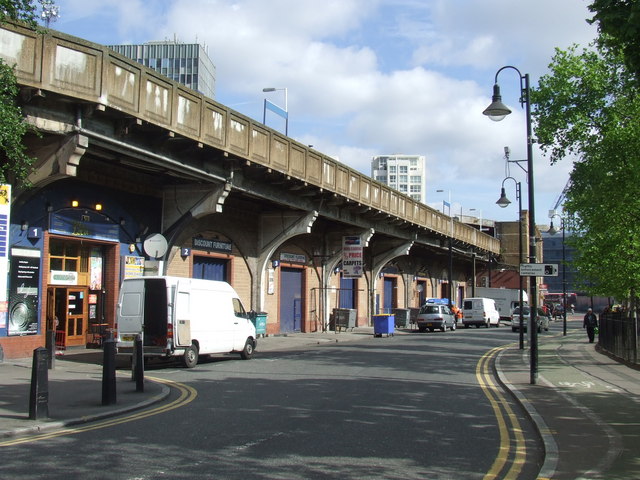
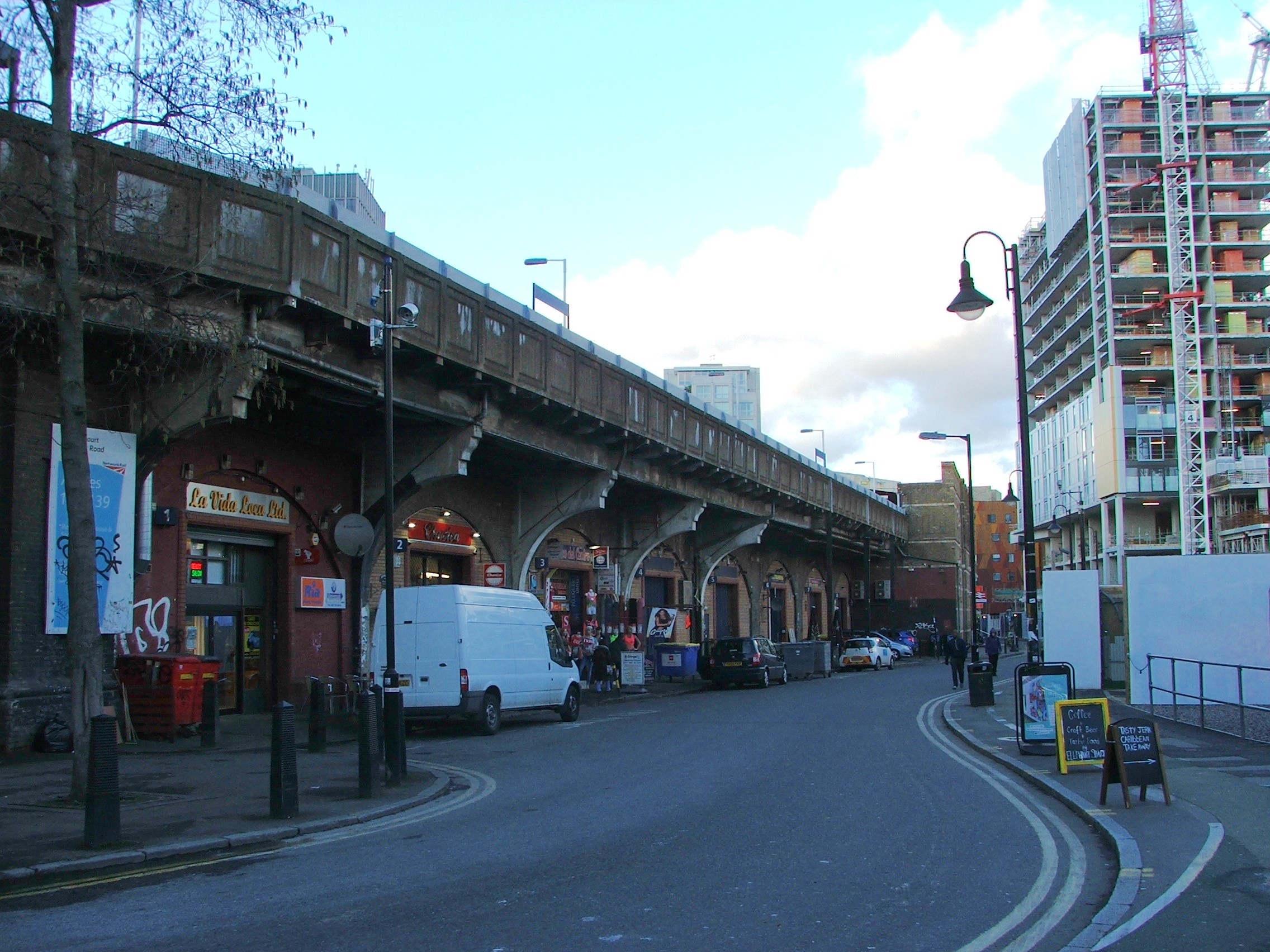
The ground beneath Elephant Road was, for most of recorded history, part of Walworth’s agricultural common — a district famous in the eighteenth century for its market gardens and peach orchards. As the Survey of London records in material accessible via British History Online, Walworth was “famous for its peaches and its gardens” and very little affected by its proximity to London until the mid-eighteenth century. The formation of new roads after 1754 — most critically the creation of New Kent Road in 1751 by the Turnpike Trust — transformed the crossroads into one of the busiest junctions in south London.
1641
The Blacksmith’s Plot
John Flaxman, a blacksmith, receives permission from the Lords of the Manor to build a workshop on waste ground at the future Elephant and Castle junction — the earliest documented structure at this crossroads.
1751
New Kent Road Created
The Turnpike Trust upgrades a local footpath into New Kent Road, establishing the northern boundary of what will become Elephant Road and transforming the junction into a major traffic hub.
1765
Inn Named in Court Records
The Court Leet Book of the Manor of Walworth records a meeting held at “Elephant and Castle, Newington” on 21 March — the earliest surviving documentary evidence of the inn’s name at this junction.
1863
Railway Arrives
The London, Chatham and Dover Railway opens Elephant & Castle station. Its viaduct runs parallel to Walworth Road, and the brick arches that still line Elephant Road’s western flank are built at this time.
1880
Working-Class Streets
By 1880 the whole area around Elephant Road is closely packed with streets of working-class houses, as recorded in the Survey of London. The London, Chatham and Dover Railway adds to what the Survey calls “the jumble of bricks and mortar which Walworth had then become.”
1974
Heygate Estate Completed
The Brutalist Heygate Estate, designed by Tim Tinker, is completed on land from Elephant Road to Rodney Place, housing more than 3,000 people in slab blocks that replaced Victorian terraces and post-war bombsites.
2014
The Artworks Opens
A shipping-container precinct called The Artworks opens in February at the corner of Walworth Road and Elephant Road, hosting small start-up businesses and a community library.
2010s
Elephant Park Regeneration
The Heygate Estate is demolished. The Elephant Road Industrial Estate and the former UK’s largest used Volvo showroom are cleared for the Elephant Park development, reshaping the entire block.
Did You Know?
Shakespeare may have name-checked the Elephant. In Twelfth Night, written around 1601, Antonio says “In the south suburbs, at the Elephant, is best to lodge.” The theatres of Shakespeare’s day were all in Southwark, and many historians believe he was pointing his audience towards a real local hostelry at what is now the Elephant and Castle junction — more than 160 years before the coaching inn was formally recorded.
The mid-Victorian era transformed Elephant Road’s character decisively. The London, Chatham and Dover Railway built its viaduct through Walworth in 1863, and as the Survey of London records, the railway “running parallel to the Walworth Road up to the Elephant and Castle Station, added to the jumble of bricks and mortar which Walworth had then become.” The arches that resulted from that viaduct construction are the street’s most enduring physical legacy.
The twentieth century brought destruction and rebuilding in equal measure. Enemy bombing in the Second World War damaged much of the surrounding district, and 50 acres were subsequently identified for post-war redevelopment. High-density slab-block estates and a gyratory road system replaced Victorian terraced streets. Where the Heygate Estate once housed 3,000 people in what the Survey describes as flats initially “thought light and spacious,” there now stands Elephant Park — a mixed development whose creation involved demolishing the adjacent Elephant Road Industrial Estate entirely.