Southwark London England About Methodology
Southwark · SE1 · Walworth

Elephant and Castle

A major junction named after an eighteenth-century coaching inn, transformed from the ‘Piccadilly of South London’ into a centre of regeneration.

Name Meaning
Coaching Inn
First Recorded
21 Mar 1765
Borough & Postcode
Southwark, SE1
Last Updated
Time Walk

A Junction Reborn

Elephant and Castle is one of London’s busiest and most transformed road junctions, where major routes from Kent and the south converge beneath the Northern and Bakerloo lines. What makes the name peculiar is that it comes not from ancient history but from a now-vanished coaching inn, whose sign depicted an elephant bearing a castle on its back—a heraldic image far more exotic than most pub names of the era.

2012
Elephant and Castle leisure centre
Wikimedia Commons · CC BY-SA 2.0
2013
Elephant and Castle SE1
Wikimedia Commons · CC BY-SA 2.0
Historical image not found
Today
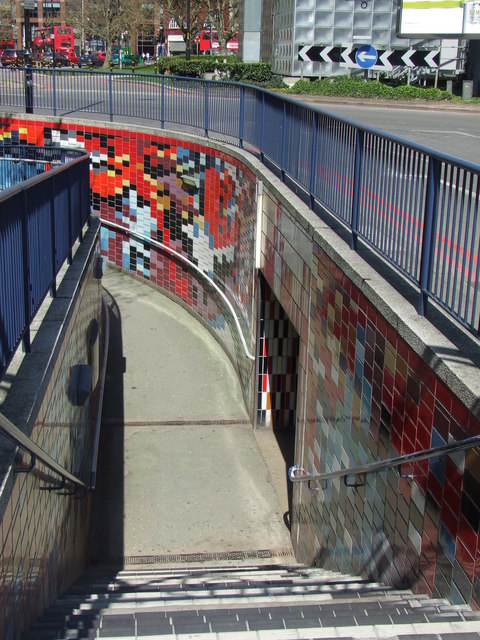
Elephant & Castle pedestrian subway — near Elephant and Castle
Geograph · CC BY-SA 2.0

The street has undergone more radical change than almost any other in South London. Once the ‘Piccadilly of South London’, bustling with theatres and department stores, it suffered catastrophic bombing in the Second World War and was rebuilt as a brutalist precinct in the 1960s. Today, the demolition of that shopping centre and the Heygate Estate has opened the way for Elephant Park and mixed-use redevelopment that is reshaping the entire quarter. The real story lies not in what it is now, but in where the curious name came from.

✦   ✦   ✦
Name Origin

The Elephant’s Howdah

The name “Elephant and Castle” derives from a pub and coaching inn located at this major crossroad. The earliest surviving record of this name in relation to this area appears in the Court Leet Book of the Manor of Walworth, which met at “Elephant and Castle, Newington” on 21 March 1765. The inn, originally a blacksmith’s premises converted into a tavern, adopted a pub sign depicting an elephant bearing a multitowered structure—interpreted as a ‘castle’—on its back, a visual motif that became synonymous with the locality as it grew into a major junction. The sign’s design likely drew from established heraldic conventions, where the ‘castle’ represents a howdah, the carriage mounted on war elephants in historical Asian and African contexts, symbolising strength and exotic trade goods. The popular and enduring idea that the inn itself derives its name from an English corruption of the phrase La Infanta de Castilla, as a reference to Eleanor of Castile, has been debunked by local historian Stephen Humphrey in his 2013 book Elephant and Castle, a History.

Prior to the public house’s appearance in the records in 1765, John Flaxman had been allowed to build a workshop on the site around 1642. Stephen Humphrey describes him as a smith or farrier. Thirty years later another farrier is cited as lessee of the site, which is now known as the White Horse. The Elephant and Castle pub existed without doubt from 1765 and may have been founded under that name by George Frost as early as 1754. The pub’s sign was not invented to honour the Cutlers’ Company but was instead likely a random choice—yet it endured, gave its name to the junction, and ultimately to the whole quarter.

How the name evolved
c. 1642 The White Horse
1754–1765 Elephant and Castle Inn
present Elephant and Castle
✦   ✦   ✦
History

From Newington Villages to Metropolitan Hub

Elephant and Castle has been an important junction since Roman times. Old Kent Road and Newington Causeway, two of the main roads which converge at the Elephant, roughly follow the path of two Roman routes—Watling Street and Stane Street—which led into Londinium via an early incarnation of London Bridge. For much of its life, the settlements either side of this junction were two separate villages, Newington and Walworth, set among market gardens, fields and open marshland.

Key Dates
1765
Coaching Inn Opens
The Elephant and Castle established at the junction as a staging post for coach traffic to and from South London.
1861
Metropolitan Tabernacle
Charles Haddon Spurgeon’s Baptist chapel completed to a design by William Willmer Pocock; dedicated 18 March.
1890s–1940s
‘Piccadilly of South London’
The area flourished as a major entertainment and shopping district, home to theatres, music halls, and department stores.
1941
Blitz Damage
Elephant and Castle became the centre of the target zone for German air raids on 10 May, suffering raging fires and extensive destruction.
1960s
Post-War Reconstruction
Shopping centre opened in March 1965—Europe’s first covered shopping mall. Brutalist housing and roundabouts replaced terraced streets and bombsites.
Did You Know?

The original Elephant and Castle coaching inn was demolished in 1959 after suffering war damage. The current pub, opened in the 1960s, stands at the junction of New Kent Road and Newington Causeway—not on the exact site of the historic inn, yet it keeps the name alive.

During the eighteenth century, as new bridges were built across the Thames, the area was transformed into a fashionable Georgian commuter suburb and by the Victorian period, industry and transport had led to a population increase. Between the 1890s and the 1940s, Elephant and Castle really came to life, earning its reputation as the ‘Piccadilly of the South’. Residents had top quality entertainment on their doorstep: the Elephant and Castle Theatre, the Trocadero and the 4,000-seater South London Palace of Varieties all played host to the stars of the day such as Dan Leno and Marie Lloyd. Bombing destroyed much of the area during the Second World War. Afterwards, 50 acres were identified for redevelopment. High density, slab-block estates and a large gyratory road system replaced terraced streets and bombsites.

✦   ✦   ✦
Culture & Architecture

Brutalism, Faith, and New Beginnings

The Metropolitan Tabernacle, rebuilt after war damage, stands as a monument to Victorian religious ambition. The nationally famed Baptist preacher Charles Haddon Spurgeon built the Metropolitan Tabernacle here. The building, designed by William Willmer Pocock, was finished in 1861 and dedicated on 18 March. The portico and basement survived bombing, and the church was rebuilt to a smaller scale in 1957. Nearby, Alexander Fleming House (1959), now Metro Central Heights, exemplifies the Hungarian modernist architect Ernő Goldfinger’s vision for post-war London—a bold, austere tower that shaped the area’s visual identity for decades.

In the early 1960s, the Elephant and Castle shopping centre was built, the first of its kind in Europe and became one of the defining aspects of the district. In 1974 the Brutalist Heygate Estate, designed by Tim Tinker, was completed. It was home to more than 3,000 people. The estate was once a popular place to live, the flats being thought light and spacious, but the estate later developed a reputation for crime, poverty and dilapidation. It was demolished in the 2010s and replaced with the Elephant Park development, which, the developer claimed, includes “the largest new green space to be created in London for 70 years.”

📖 Literature
Twelfth Night
William Shakespeare · c.1601
Antonio references lodging 'in the south suburbs, at the Elephant' as a London location.
A Room of One's Own
Virginia Woolf · 1929
Woolf imagines Shakespeare's fictional sister buried 'opposite the Elephant and Castle.'
🎬 Film
Champagne Charlie
Alfred Goulding · 1944
Characters visit the Elephant and Castle pub in opening scenes of musical film.
📺 TV
Up the Elephant and Round the Castle
Jim Davidson · 1983-1985
ITV sitcom set in Elephant and Castle, with the title referencing the area.
🎵 Music
Come on Eileen
Dexys Midnight Runners · 1982
Music video filmed on Brook Drive and Hayles Street in the area.
✦   ✦   ✦
Today

Transformation Under Way

Elephant and Castle remains a major transport interchange. The Northern and Bakerloo Underground lines serve the station; National Rail and Thameslink services add further connectivity. The short road of the same name is part of the A3, forming part of the London Inner Ring Road. Demolition of the shopping centre, Hannibal House and the Coronet theatre started in January 2021. New residential towers are rising—One the Elephant, Highpoint, and others continue to reshape the skyline.

In November 2023, Elephant Park was the winner of the Public Space – Building Beauty Award, handed out by the Royal Fine Art Commission Trust. The 35-acre park and surrounding developments signal a shift from brutalist density towards mixed-use neighbourhoods with green space, cultural venues, and affordable housing. The area that suffered most in the London Blitz is being systematically reinvented as an inner-city hub for the 2020s.

5 min walk
Elephant Park
35-acre mixed-use development with landscaped green space, water features, and community facilities.
12 min walk
Geraldine Mary Harmsworth Park
Historic park home to the Imperial War Museum and the subterranean River Neckinger.
8 min walk
St Mary’s Churchyard
Historic open space with medieval church remains and a few surviving gravestones.
15 min walk
The Cuming Museum
Local history collections housed on Walworth Road, documenting the area’s character and social story.
✦   ✦   ✦
On the Map

Elephant and Castle Then & Now

National Library of Scotland — Ordnance Survey 6-inch, c. 1888. Hosted by MapTiler. Modern: © OpenStreetMap contributors.

✦   ✦   ✦

Frequently Asked Questions

Why is it called Elephant and Castle?
The name comes from a coaching inn established in 1765 at this major junction. The inn's sign depicted an elephant with a howdah (a carriage or castle-like seat) on its back—a heraldic motif representing strength and wealth. The pub became famous, the name stuck to the junction, and eventually to the whole area. Popular myths claiming the name derives from "Infanta de Castilla" (a Spanish princess) have been thoroughly debunked by historians.
Was Elephant and Castle always a major junction?
The junction's importance dates back to Roman times, when Watling Street and Stane Street converged here on their way into Londinium. However, the area remained rural, with two separate villages—Newington and Walworth—until the 18th century. The coaching inn of 1765 and subsequent improvements to bridges across the Thames transformed it into a commercial and transport hub. By the 1890s, it had become the entertainment and shopping centre of South London.
What is Elephant and Castle known for today?
Today, Elephant and Castle is known for its ongoing regeneration. Once the 'Piccadilly of South London' in the Victorian era, it was heavily bombed in World War II and rebuilt with brutalist architecture. The 1960s shopping centre and the Heygate Estate have now been demolished, replaced by Elephant Park—a major mixed-use development with residential towers, public green space, cultural facilities, and transport connections. It remains a vital interchange for London's underground and rail networks.