Southwark London England About Methodology
Southwark · SE5 · Camberwell

Edmund Street

Named in all probability after Sir Edmund Bowyer — the Camberwell manor lord whose family shaped this corner of south London from Tudor times — this street has since been remade twice over by canal, council housing, and demolition.

Name Meaning
Bowyer Estate
First Recorded
c. 19th cent.
Borough
Southwark
Character
Residential & Mixed
Last Updated
Time Walk

Towers, Canal & the Park Next Door

Edmund Street runs through Camberwell with Burgess Park—the largest open space in Southwark at 56 hectares—filling its eastern horizon. The modern streetscape is defined by relatively recent residential development: purpose-built blocks and townhouses completed from 2016 as part of the Camberwell Fields scheme, which replaced the old Elmington Estate tower blocks that once dominated this end of the neighbourhood.

2011
Wasteland between Sorthampton Way and Edmund Street, Peckham
Wikimedia Commons · CC BY-SA 2.0
2015
Southeast on Edmund Street, Camberwell
Wikimedia Commons · CC BY-SA 2.0
Historical image not found
Today
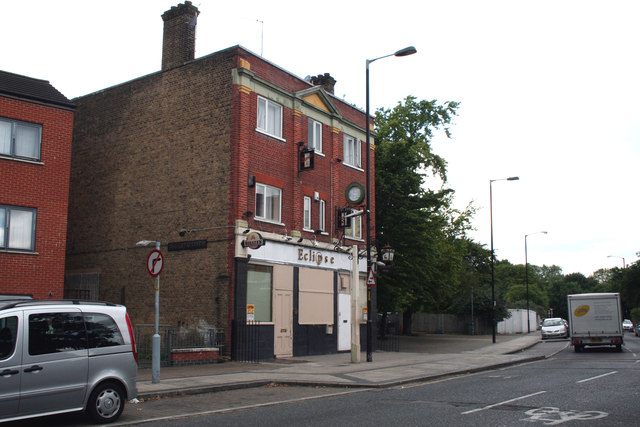
Southwark:  The 'Eclipse', Southampton Way — near Edmund Street
Southwark: The 'Eclipse', Southampton Way — near Edmund Street
Geograph · CC BY-SA 2.0

The mixture of new-build flats, older Victorian terraces on side streets, and the broad green expanse of Burgess Park gives Edmund Street an unusual dual character—part city regeneration project, part inherited suburb. That proximity to the park is recent history; before the 1970s, a working canal and dense industrial housing stood where the grass now grows. The name on the street sign, though, is considerably older than any of it.

✦   ✦   ✦
Name Origin

The Melancholy Seat of Edmund Bowyer

That name on the street sign most likely carries the memory of Sir Edmund Bowyer, one of the most prominent landowners in Camberwell from the Tudor period onward. As recorded by British History Online, the Bowyer family settled in Camberwell in the time of Henry VIII and built the manor-house of Camberwell-Buckingham on the road from London to Camberwell Green. The diarist John Evelyn visited in 1657, writing that he had called upon “Sir Edmund Bowyer at his melancholie seate at Camerwell.” The Bowyer estate encompassed extensive land across this part of south London, and streets in the surrounding area were commonly named after the families who held such ground.

The name Edmund was carried by at least one prominent member of the Bowyer line, making it the probable origin of the street name. No documentary record directly confirming the naming has been found in available sources, so the connection must be treated as probable rather than verified. The personal name Edmund itself derives from the Old English ead (wealth, fortune) combined with mund (protection)—a name in use across England since the Anglo-Saxon period and borne by an early martyred king of East Anglia.

How the name evolved
pre-1657 Bowyer Estate Land
c. 19th cent. Edmund Street
present Edmund Street
✦   ✦   ✦
History

From Manor Fields to Canal-Side Streets

Until around 1800, the land around what would become Edmund Street was farming countryside on the edge of a village. As recorded on British History Online, Camberwell was still a rural settlement visited by Londoners for its mineral springs and fresh air. The Bowyer family’s manor-house stood nearby, surrounded by oak groves and yew hedges. Development came only after the opening of the Grand Surrey Canal, which cut through this part of south London in the early nineteenth century, drawing industry and working-class housing into the fields.

Key Dates
c. 1657
Bowyer Estate
John Evelyn visits Sir Edmund Bowyer at the family’s Camberwell manor. The Bowyer land extended across much of this part of Camberwell.
c. 1800s
Urbanisation Begins
The Grand Surrey Canal and railway expansion transforms Camberwell from a farming village into a dense urban district.
1943
Abercrombie Plan
The London County Council’s Abercrombie Plan designates the canal-side land adjacent to Edmund Street for clearance and conversion to open space—the future Burgess Park.
c. 1955
Elmington Estate Built
The LCC constructs the Elmington Estate off Edmund Street, including four large slab tower blocks and standard LCC housing blocks in “Poets Corner.”
1973
Burgess Park Named
The park created from former canal and housing land is named after Councillor Jessie Burgess, Camberwell’s first female mayor.
1999
Elmington Demolition Agreed
Southwark Council agrees to demolish and redevelop parts of the Elmington Estate, beginning a phased regeneration programme.
2016
Camberwell Fields
The first phases of the Camberwell Fields development—279 new homes replacing the Elmington tower blocks—complete on and around Edmund Street.
Did You Know?

Burgess Park—now Edmund Street’s vast green neighbour—was carved almost entirely out of existing streets, houses, and industrial buildings. Unlike most London parks, it has no historical precedent as open space: virtually every acre was once built upon, including an R. White’s ginger beer factory and the course of the Grand Surrey Canal.

The arrival of the railway in the 1860s completed the transformation of the area into a working urban district. By the twentieth century, heavy wartime bombing and decades of wear on the Victorian housing stock created the conditions for wholesale post-war redevelopment. The LCC’s Elmington Estate brought a new, monumental scale to Edmund Street’s neighbourhood—slab towers rising above rooflines that had barely changed since Victoria’s reign.

The Grand Surrey Canal, which had threaded through land just east of the street, was closed in the early 1970s. Its filled channel became the spine of Burgess Park—a public open space assembled piecemeal from cleared land since the 1940s Abercrombie Plan. MOLA (Museum of London Archaeology) has conducted numerous excavations across this part of Camberwell as redevelopment has exposed the layered evidence of earlier occupation, from post-medieval building foundations to canal infrastructure.

✦   ✦   ✦
Culture

The Butterfly, the Canal & the Walk

Edmund Street features on the Camberwell Black History Walk, a community heritage trail that passes along the street and by Sam King Walk—named after Sam King MBE, the pioneering Jamaican-born mayor of Southwark who arrived in Britain on the Empire Windrush in 1948. The route connects the street to a broader story of Caribbean settlement and community-building in Camberwell from the post-war period onwards. As tracked by SE1 Direct, Southwark’s south London communities have long shaped the cultural character of streets running between Camberwell Road and Burgess Park.

Heritage Walk
Sam King Walk & the Windrush Connection

Sam King Walk, which meets Edmund Street, is named after Sam King MBE—one of the Empire Windrush passengers of 1948 and later Mayor of Southwark. The junction is a stopping point on the Camberwell Black History Walk, tracing the Caribbean community’s presence in Camberwell from the 1940s to the present day.

The neighbourhood around Edmund Street carries another piece of natural history: the Camberwell Beauty butterfly. Two specimens of Nymphalis antiopa were first identified on Coldharbour Lane in 1748, giving the species its common English name. Though rarely seen in Britain today, this part of Camberwell gave the butterfly its identity—an invisible but permanent mark on the area’s character. Historic England’s records for the wider Camberwell area document the survival of several Victorian and Edwardian buildings in the streets adjacent to Edmund Street, even as the immediate streetscape was transformed by post-war clearance.

✦   ✦   ✦
People

From the Manor Lord to the Windrush Mayor

Sir Edmund Bowyer was the landowner whose name, in all probability, gave the street its title. The Bowyer family held the manor of Camberwell-Buckingham from the time of Henry VIII, and Sir Edmund was notable enough for John Evelyn—one of the seventeenth century’s most celebrated diarists—to make a personal visit in September 1657. Evelyn described the estate as a “melancholie seate,” though he also noted its grove of oaks and hedges of yew. The Bowyer family retained a considerable portion of the Camberwell estate long after Sir Edmund’s time.

Sam King (1926–2016), after whom Sam King Walk meets Edmund Street, arrived in Britain aboard the Empire Windrush on 22 June 1948. He settled in Camberwell, became a postman and community activist, and was elected Mayor of Southwark in 1983—the first Black mayor of a London borough. His connection to this immediate street corner is one of the most significant biographical anchors in the neighbourhood’s recent history.

✦   ✦   ✦
Recent Times

Towers Down, Camberwell Fields Up

The defining event of Edmund Street’s recent history was the demolition of the Elmington Estate tower blocks. In December 1999, Southwark Council’s Housing Committee agreed to clear and redevelop the estate—four mid-1950s slab blocks off Edmund Street, alongside older LCC blocks at Poets Corner and 1960s maisonettes. The council’s masterplan proposed 250 new council homes alongside private and housing association units in a phased rolling programme.

The replacement development—branded Camberwell Fields and delivered by Notting Hill Housing and Ardmore—completed its first phases in 2016, bringing 279 apartments, duplexes, and townhouses to the site. The regeneration was not without controversy: resident groups raised concerns about the proportion of genuinely affordable homes and the dispersal of existing tenants across Southwark and beyond. The Camberwell Fields scheme is now substantially complete, and the street presents a reshaped face to Burgess Park.

✦   ✦   ✦
Today

New Build, Old Name, Green Horizon

Edmund Street today is a mixed residential street in Camberwell, bordered to the east by Burgess Park—at 56 hectares, the largest park in the London Borough of Southwark. The park’s Chumleigh Gardens world garden, canal-bridge survivals, and the Lynn Boxing Club (housed in the former canal-side baths) are all within a short walk. New-build housing has made this part of Camberwell more visible to the wider housing market, with the area’s zone-2 location drawing buyers and renters who might previously have looked further north.

Immediately adjacent
Burgess Park
56-hectare park carved from canal and housing land; includes a world garden, cycle track, and wildlife areas.
5 min walk
Brunswick Park
Local park and community garden off Picton Street, with nature planting beds and children’s facilities.
10 min walk
Camberwell Green
The historic village green at Camberwell’s crossroads; site of a fair recorded since 1279.
15 min walk
Ruskin Park
Victorian park on Denmark Hill, named after critic and Camberwell resident John Ruskin; bandstand and formal gardens.

Denmark Hill station (Overground and Thameslink) is the nearest rail connection—roughly a ten-minute walk. Camberwell Green itself, with its dense bus connections into central London, is within comfortable walking distance. The street’s modest historical footprint contrasts with the scale of the changes it has witnessed: from the Bowyer estate’s oaks and yews, through Victorian terraces, post-war concrete towers, and now a twenty-first-century development facing a park that did not exist fifty years ago.

✦   ✦   ✦
“I visited Sir Edmund Bowyer at his melancholie seate at Camerwell.”
John Evelyn, Diary, 1 September 1657
✦   ✦   ✦
On the Map

Edmund Street Then & Now

National Library of Scotland — Ordnance Survey 6-inch, c. 1888. Hosted by MapTiler. Modern: © OpenStreetMap contributors.

✦   ✦   ✦

Frequently Asked Questions

Why is it called Edmund Street?
The street is most likely named after Sir Edmund Bowyer, the Camberwell landowner whose family held the manor of Camberwell-Buckingham from the time of Henry VIII. The diarist John Evelyn recorded visiting “Sir Edmund Bowyer at his melancholie seate at Camerwell” in September 1657. The Bowyer family owned extensive land across this part of Camberwell, and the street’s name is believed to preserve his memory. No primary document directly confirming the naming has been located in available sources, so the connection is probable rather than definitively verified.
What was the Elmington Estate on Edmund Street?
The Elmington Estate was a large London County Council housing development built off Edmund Street from the mid-1950s. It included four large slab-like tower blocks, standard LCC housing at Poets Corner, and 1960s maisonettes. Southwark Council voted to demolish and redevelop parts of the estate in December 1999. The tower blocks were cleared and replaced by the Camberwell Fields development, completed in phases from 2016, bringing 279 new homes to the site.
What is Edmund Street known for?
Edmund Street in Camberwell is known today for its proximity to Burgess Park—the largest park in Southwark at 56 hectares—and as the site of the former Elmington Estate, whose post-war tower blocks defined this part of the neighbourhood for decades. The street also meets Sam King Walk, named after the Empire Windrush passenger and first Black Mayor of Southwark, Sam King MBE. It is a street that has been remade several times over—from Tudor manor land to Victorian terraces, post-war council housing and a twenty-first-century regeneration scheme.