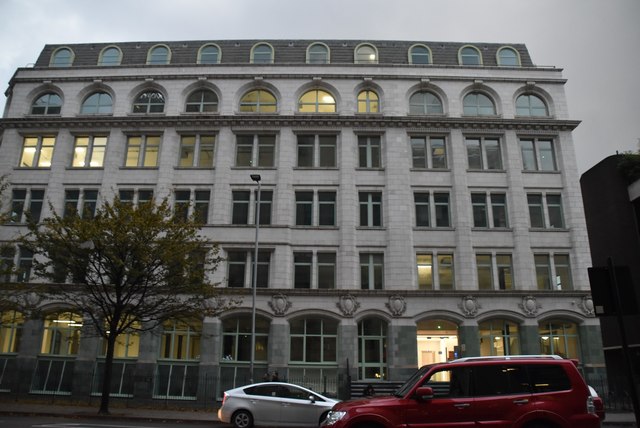
The street was built across the open fields shown as “tenter grounds” on Rocque’s maps, on part of what became known as Brown’s Estate. The formation of George Street was part of the rapid development of the area which followed the erection of Blackfriars Bridge. That bridge, completed in 1769, transformed Southwark’s southern reaches from pastoral fringe to urban expansion zone. Within seven years, the first houses rose; by 1780, the street was established enough to appear in official rate books.
1769
Blackfriars Bridge Erected
The new crossing triggers rapid development across Southwark.
c. 1776
George Street Formed
Street layout established across former tenter grounds of Brown’s Estate.
1780
First Documentary Record
Street appears in sewer rate books with houses completed and tenanted.
1787
Mary Wollstonecraft Arrives
The writer lodges at No. 45 and begins her most productive years.
1835
Notorious Criminal Case
James Pratt and John Smith arrested for sodomy at the run-down lodging house.
1911
Street Renamed
George Street becomes Dolben Street, honouring Archbishop John Dolben.
Did You Know?
In 1835, the street gained notoriety for a crime that made its way to the Old Bailey. Lodgers at the decrepit No. 45 were arrested for sodomy—a case that today serves as a stark reminder of how English law once criminalised the lives of queer people.
From 1787 onwards, the street became indelibly linked with one of English literature’s most influential voices. Mary Wollstonecraft decided to become a writer and came to London, contacting her friend Joseph Johnson, a publisher and leading figure in the radical movements of the time. Johnson found her lodgings at 45 George Street, Southwark, now called Dolben Street. It was from here that she launched her career, firstly through publishing her novel, Mary: A Fiction, and her works on the education of children, but mostly through meeting radical thinkers at the dinners given by Joseph Johnson. Her time at Dolben Street, Southwark was the furnace of her intellectual development, and the site of her most intensely creative years.
The street’s character through the nineteenth and twentieth centuries settled into one of modest commerce and working-class habitation. The houses have been occupied by small tradesmen, chandlers, bakers, etc., and by artisans. This remained largely true until recent decades, when Southwark’s shift from industrial to cultural and residential regeneration began to reshape the wider Borough.