Southwark London England About Methodology
The Borough · SE1

Dirty Lane

A street name revived from the 1740s now runs beneath Victorian railway arches, connecting the Thames to Borough Market in a lane restored to its frank medieval character.

Named After
Physical Character
First Recorded
c. 1740
Borough
Southwark
Character
Modern Retail Alley
Last Updated
Time Walk

A Passageway Beneath the Railway

Dirty Lane today is a modern development that creates a lane through a series of railway arches built in the 1860s to extend the railway over the Thames to Cannon Street, with spaces between the arches filled with retail shops. The site was redeveloped as Borough Yards, with a new passageway punched through the middle of the railway arches to create a new Dirty Lane. It opens pedestrian routes between Clink Street and Park Street, serving the rapidly changing neighbourhood at the foot of London Bridge.

2023
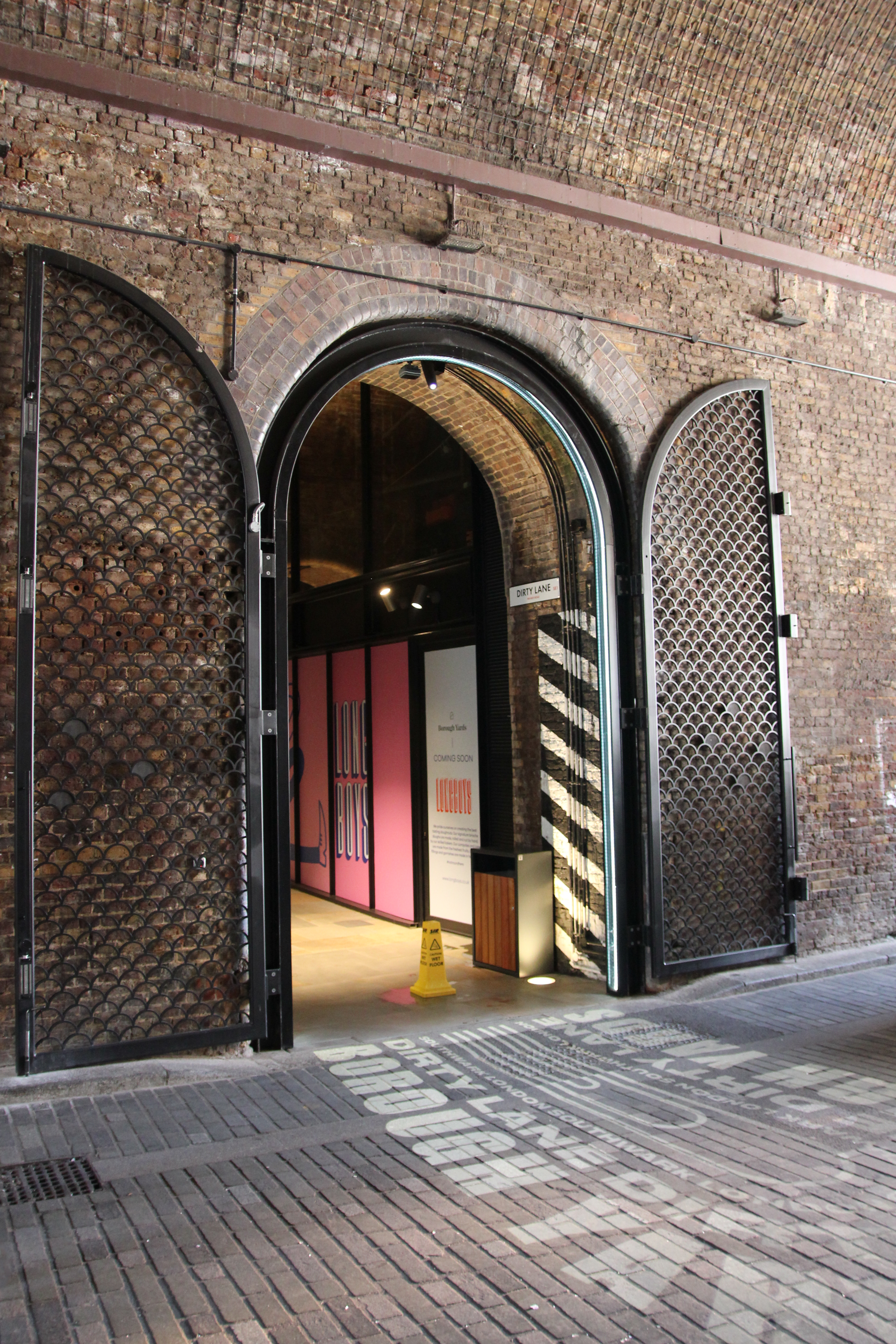
Dirty Lane Gate
Dirty Lane Gate
Wikimedia Commons · CC BY 2.0
2024
Borough Yards, Dirty Lane
Wikimedia Commons · CC BY-SA 2.0
Historical image not found
Today
Borough Market — near Dirty Lane
Geograph · CC BY-SA 2.0

The name, however, belongs to the past. This alley revives a street that thrived centuries before the railways came—and the story begins in an earlier Borough altogether.

✦   ✦   ✦
Name Origin

Frank Naming of a Filthy Place

The origin of the name Dirty Lane is not recorded in available historical sources.

✦   ✦   ✦
History

From Timber Yard to Railway Arches

Dirty Lane emerged as part of The Borough’s dense cluster of small streets during the early 18th century. By the 1740s, the area was fully developed with a large timber yard in the middle and loads of narrow alleys and streets with wonderful names. The street occupied The Borough’s busy riverside zone, where craftspeople, merchants, and labourers crowded into tight lanes bearing names that reflected their uses or condition.

Key Dates
c. 1740
First Maps
Dirty Lane appears on John Rocque's map of London, Southwark, and Westminster.
1800s
Associated Places
Lane bordered Finch's Grotto Garden and was near the King's Bench prison and Winchester Palace site.
1860–61
Railway Transformation
South Eastern Railway extended to Cannon Street, building railway arches that obliterated the original street.
2015–2021
Redevelopment
Borough Yards created, reviving Dirty Lane name through the Vinopolis redevelopment.
Did You Know?

The neighbouring street Dead Mans Place still survives as a road but was later renamed the more polite Park Street—a symbol of Victorian prudishness replacing Elizabethan frankness. Dirty Lane escaped that renaming and was restored by developers who valued its colourful history.

The arrival of the railways and the wide set of railway arches built by the South Eastern Railway (SER) when they extended their railway across the river to Cannon Street in the early 1860s transformed the area from lots of smaller buildings into one dominated by the railway and its arches, which were rented out for warehouses. The new street became a Victorian industrial corridor—no longer muddy lanes but brick vaults. For more than a century and a half, the original Dirty Lane existed only on old maps and in local memory.

✦   ✦   ✦
Culture

Market, Cinema, and New Retail

A new street to be called 'Dirty Lane' was at the centre of plans for the redevelopment of the Vinopolis complex, with several historical local street names revived including Dirty Lane, Soap Yard and Clink Yard. The new Dirty Lane runs from Clink Street in the north and emerges next to Thames House in Park Street. The revived name carries symbolic weight: it honours The Borough’s pre-industrial character at a moment when the area is rapidly gentrifying.

Street Character
Beneath the Arches

Dirty Lane runs through preserved 1860s railway arches, now housing independent retailers, restaurants, and offices. The passageway creates an atmospheric pedestrian route that feels both historic and contemporary—brick vaults restored to retail spaces, connecting medieval market streets above with modern commerce below.

The Everyman Borough Yards cinema opened on 21st December 2021, with Screen 1 having 103 seats and Screen 2 having 90 seats. The lane anchors a mixed-use development designed to compete with Borough Market as a destination. Its position steps back from the river but puts visitors minutes from London Bridge, Tate Modern, and the Thames Path.

✦   ✦   ✦
Today

A Pedestrian Spine for the Borough

Dirty Lane today is a functional modern alley serving a development that sits at the geographic and commercial heart of Southwark. Borough Yards' imaginative engineering reinstates the evocatively named Dirty Lane, a revived 18th century thoroughfare that leads foot traffic from Tate Modern and South Bank to this new hub and through to London Bridge station in a matter of minutes. The lane is privately owned but open to the public, and is designed for pedestrian circulation rather than vehicular traffic—a contemporary use echoing the intimate medieval alley it revives.

The nearest railway station is London Bridge, approximately 570 yards away. Visitors approach Dirty Lane from the north via Clink Street or from the south via Park Street. The alley passes beneath restored brick arches in a sequence that feels enclosed yet well-lit by ground-floor shop windows and restaurant frontage. Borough Market sits immediately to the west, making the lane a secondary route for the millions who visit annually.

2 min walk
Borough Market
Historic food and produce market, immediate neighbour to Dirty Lane, accessible via direct exit.
5 min walk
Thames Path
Riverside walking route with views of Tower Bridge, St. Paul's, and London Bridge.
✦   ✦   ✦
On the Map

Dirty Lane Then & Now

National Library of Scotland — Ordnance Survey 6-inch, c. 1888. Hosted by MapTiler. Modern: © OpenStreetMap contributors.

✦   ✦   ✦

Frequently Asked Questions

Why is it called Dirty Lane?
The name comes from its physical character as an unpaved, unsanitary alley. Medieval and early modern London streets were named frankly after their conditions—muddy lanes, filthy streets and drainage channels got the names to match. Dirty Lane first appeared on maps by the 1740s as one of several colourfully named alleys in The Borough, alongside Dead Mans Place, Dye House, and Potts House.
What happened to the original Dirty Lane?
The railway transformed the area. When the South Eastern Railway extended its line to Cannon Street in the early 1860s, it built railway arches across the site. This obliterated the original street. The current Dirty Lane is a modern recreation, opening in 2015 as part of the Borough Yards redevelopment, punching a new passageway through those same Victorian arches.
What is Dirty Lane known for today?
Dirty Lane is now a modern shopping and dining alley set beneath Victorian railway arches, part of the Borough Yards development. It runs from Clink Street to Park Street and serves as a north-south pedestrian link between Tate Modern, Borough Market, and London Bridge. The street revives an 18th-century name and character while creating contemporary retail and office space within the restored brick arches.