Time Walk
A short street with little left to see


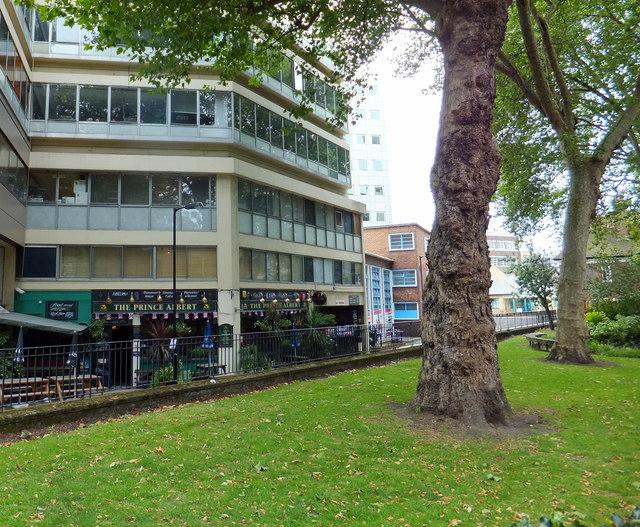
The documented record for Colombo Street is thin and almost entirely historical rather than present-day. What survives are references to a run of cottages — Nos. 72–80 — that stood here from the late 17th century until the mid-20th, and to the lane's shifting names before it settled as Colombo Street. There is nothing in the record describing the street as it looks now, so this account is necessarily a history of what once stood here rather than a guide to what remains.
Name Origin
From Green Walk to Colombo Street
In the 18th century, the Survey of London records, the lane that became Colombo Street formed part of a continuous route called Green Walk, running from Hopton Street across to the road now known as Burrell Street. By 1823 the cottages standing here were addressed as Nos. 49–53 Collingwood Street West, and the numbering was altered twice more, to 1–5 in 1842 and to 80–72 in 1886, before the street finally took the name Colombo Street in 1937. The Survey of London gives no reason for that final choice of name. Sheila Fairfield's The Streets of London (1983) does: the street is named, it says, after Alexander Colombo, a 19th-century bailiff of the local manor of Paris Gardens.
History
Cottages on the Brown Estate
The earliest firm date attached to the site is 1706, when Charles Hopton purchased the land forming the Brown Estate; Green Lane, the Survey of London notes, was already laid out by then, with a number of tenements on its south side probably including the cottages that would later become Nos. 72–80 Colombo Street. Those cottages were timber-framed and weatherboarded, and appear architecturally to date from the late 17th century. From 1823 they were occupied by small tradesmen and artisans, a use that seems to have continued for over a century. Locally the row was known as the Fishermen's Cottages, though the Survey of London is explicit that this name "seems to have been of recent application and not to have had any historical foundation." No. 80 was pulled down before 1939, and the remaining cottages were shattered by bomb blast and demolished in 1948 as irreparable — bringing to an end a building line that had stood, under successive names, for around two and a half centuries.
Culture
The "Fishermen's Cottages" that weren't
Beyond that debunked nickname, the pack offers little on cultural life along the street itself — no theatres, songs, or literary references survive in the record. What it does preserve is the physical character of the place: a row of late-17th-century timber cottages, weatherboarded and modest, standing in continuous use as small workshops and homes for well over a century before their destruction.
"known locally as the Fishermen's Cottages"... though the name "seems to have been of recent application and not to have had any historical foundation"Survey of London, Volume 22
People
A single named figure
The record names only one individual connected to the site: Charles Hopton, who purchased the land forming the Brown Estate in 1706. By that date, the Survey of London notes, Green Lane was already laid out with tenements along its south side, probably including the buildings that would later be numbered as Nos. 72–80 Colombo Street. No other named residents, builders, or owners survive in the sources for this street, and the People section is correspondingly brief — the surviving record concerns the buildings far more than the people who lived and worked in them.
Recent Times
Renaming and destruction within a decade
The street's most recent documented changes came in quick succession. It was renamed Colombo Street in 1937, and within little more than a decade its old building stock was gone: No. 80 was demolished before 1939, and the rest of the row, Nos. 72–80, was shattered by bomb blast and pulled down in 1948 as irreparable. The Survey of London's account effectively ends there, leaving no record of what replaced the cottages or how the street developed afterwards.
The cottages that stood on Colombo Street carried at least three different addresses in little over a century — Collingwood Street West in 1823, renumbered twice more, before finally becoming Colombo Street in 1937, just eleven years before they were destroyed.
Today
A gap in the record
Nothing in the available sources describes Colombo Street as it stands today. The documented history stops with the 1948 demolition of its last historic cottages, and no later account of the street's redevelopment or current character has survived in the record consulted here. This page should be read as an account of what is known to have once stood on the street, not a description of the present-day thoroughfare.
On the Map
Colombo Street Then & Now
Frequently Asked Questions
Why is it called Colombo Street?
The street was renamed Colombo Street in 1937, replacing the earlier name Collingwood Street West. The Survey of London, the source for this history, records the date of the change but not the reason. Sheila Fairfield's The Streets of London (1983) says the street is named after Alexander Colombo, a 19th-century bailiff of the manor of Paris Gardens.
What is Colombo Street known for?
Historically, it is known for a row of late-17th-century timber cottages, Nos. 72–80, locally but inaccurately nicknamed the Fishermen's Cottages, which were destroyed by bomb blast in 1948 after housing small tradesmen and artisans since at least 1823.
What was Colombo Street called before it had that name?
In the 18th century it formed part of a longer lane called Green Walk, running from Hopton Street to Burrell Street. By 1823 its cottages were addressed as Collingwood Street West, before the street was renamed Colombo Street in 1937.