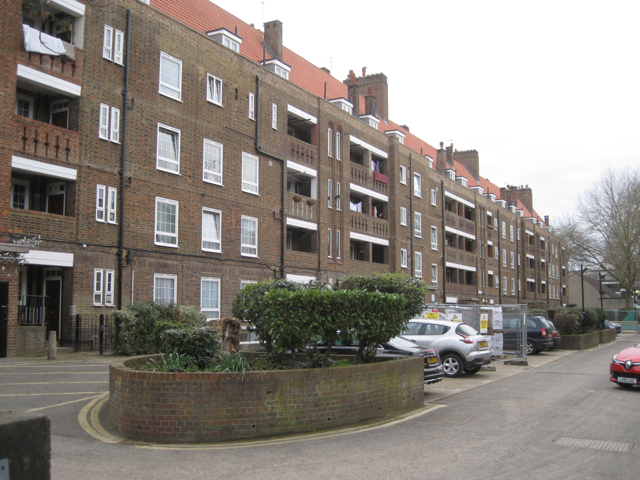
The land beneath Brunswick Park has been documented since the Norman Conquest. According to the Domesday survey of 1086, there were 63 acres of meadows owned by the parish church of St Giles as part of the glebe, and that meadow land included the site of what is now Brunswick Park. As recorded by British History Online, Peckham in this period was a rural hamlet within the ancient parish of Camberwell—the meadow would have been worked to support the church, its character unchanged for centuries.
1086
Domesday Glebe
The Domesday Book records 63 acres of meadow belonging to St Giles’ parish church, including the future park site.
1842
Still Fields
Maps of the area show the land still as open fields, largely undeveloped.
1847
Hudson’s Development
Developer W. J. Hudson purchases the land and lays out a housing estate with a private garden square named Brunswick Square.
1875
Workhouse Infirmary
The Camberwell Workhouse Infirmary—later St Giles’ Hospital—is completed nearby, with a landmark circular tower added in 1890.
1901
Compulsory Purchase
The Metropolitan Borough of Camberwell acquires the private garden by compulsory purchase, with funding from the London County Council.
1907
Public Opening
After being laid out as a public park, Brunswick Park opens to residents of Peckham.
1931
Statutory Protection
The park is scheduled under the London Squares Preservation Act 1931, securing it against future development.
Did You Know?
The land on which Brunswick Park was built was still fields as late as 1842—just five years before W. J. Hudson moved in and transformed it into a Victorian housing estate with a royal name at its centre.
The Metropolitan Borough of Camberwell acquired the garden by compulsory purchase in 1901, with the London County Council providing some of the funding. The garden had been divided by a road, which was then incorporated into the new park; after being laid out as a public park, it opened in 1907. The surrounding terraces, built in the decades after Hudson’s 1847 development, gave the street its Victorian character—brick-fronted, orderly, and enclosing a green that was never meant for the public but eventually became one.
The park’s immediate neighbour, the former St Giles’ Hospital, anchors the area’s institutional history. As Historic England records, the hospital’s administration building—a Victorian structure of considerable character—is among the listed buildings on the surrounding streets. The hospital had its origins in the Camberwell Workhouse Infirmary, which was completed in 1875; a large circular tower was added in 1890 and further ward blocks in 1903.