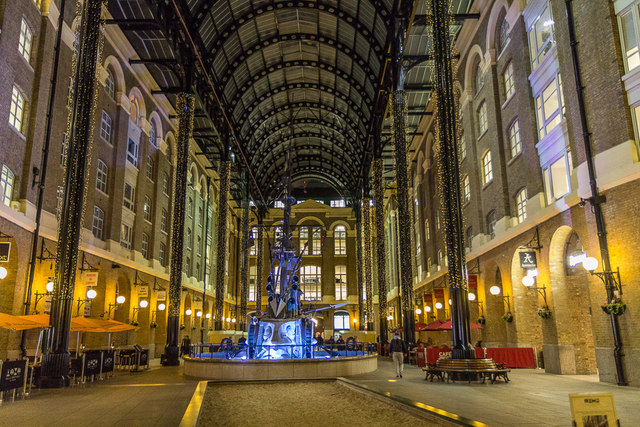
The Bridge House yard originates in the twelfth century with Peter de Colechurch’s reconstruction of London Bridge. De Colechurch established not only the bridge itself but also the administrative infrastructure to maintain it—a building and yard adjacent to St Olave’s church, where a community of bridge keepers lived and worked. This was not a minor outbuilding; it was the operational nerve centre of London’s principal crossing, managing funds, materials, repairs, and the labour force required to keep the bridge passable.
c. 1176–1209
Bridge Reconstruction
Peter de Colechurch rebuilds London Bridge in stone, establishing the Bridge House as the maintenance and administrative centre.
1284
Bridge House Estates Founded
The City of London establishes the Bridge House Estates as a formal charitable trust to manage the bridge, originating from de Colechurch’s original yard.
1676
Southwark Fire
A major fire devastates northern Southwark, destroying much of the neighbourhood, though the Bridge House yard endures.
1819–1831
New London Bridge
John Rennie’s new London Bridge is built, replacing the medieval structure, yet the Bridge House Estates continue their management role.
Did You Know?
The Bridge House Estates, which originated in this medieval yard, remains an active charitable trust overseen by the City of London Corporation. It owns and maintains not only London Bridge but also the Tower Bridge, Millennium Bridge, and other Thames crossings—a direct line of responsibility stretching back 750 years to Peter de Colechurch.
By the late medieval period, the Bridge House Estates had become one of the wealthiest and most powerful institutions in London, deriving revenue from bridge tolls and property endowments. The yard itself remained the symbolic and functional centre of this enterprise. Even as the medieval bridge was dismantled and replaced—first by John Rennie’s elegant stone crossing in the 1820s, then by the modern concrete bridge of 1973—the Bridge House Estates persisted, and the yard retained its historical significance as the birthplace of bridge governance in London.