Explore London England Scotland Wales About API
Southwark · SE1

Braidwood Street

A street named after the man whose death changed London’s approach to fire service forever—a tragedy that forged the Metropolitan Fire Brigade.

Named After
James Braidwood
First Recorded
c. 1861
Borough
Southwark
Last Updated
Time Walk

The Keeper of Memory

Braidwood Street forms the goods entrance to the More London development, a narrow thoroughfare branching off Tooley Street near the London Bridge Hospital. The street carries a name loaded with historical weight—one that honours not a landowner or a merchant, but a public servant whose loss fundamentally reshaped the emergency services for an entire city.

2010
2010-10-13-london-by-RalfR-083
Wikimedia Commons · FAL
2023
Memorial to James Braidwood
Wikimedia Commons · CC BY 2.0
Historical image not found
Today
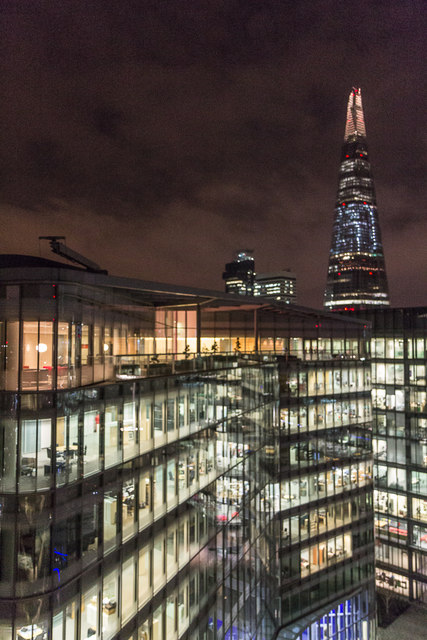
View from the Balcony, City Hall, London SE1
Geograph · CC BY-SA 2.0

Today the street is easy to overlook, tucked behind modern redevelopment. Yet it stands as a permanent record of how one death prompted institutional change. The name arrived in the aftermath of 1861, when a catastrophic fire revealed the flaws of a system and the heroism of the man who died trying to fix it.

✦   ✦   ✦
Name Origin

The Name Born from Fire

Braidwood Street is named in honour of James Braidwood, the pioneering superintendent of the London Fire Engine Establishment. Braidwood lost his life on 22 June 1861 when a wall collapsed on him while tackling the fire at Cotton's Wharf on Tooley Street. Braidwood had founded the world's first municipal fire service in Edinburgh after the Great Fire of Edinburgh in 1824, and later became superintendent of the London Fire Engine Establishment, which brought together ten independent insurance company brigades in 1833.

Braidwood's death and the cost of the Tooley Street fire, which took two weeks to extinguish and cost an estimated £2 million in 1861, led to the founding of the Metropolitan Fire Brigade, under which firefighters would attend blazes at every building, regardless of whether they had fire insurance. The street name is a direct commemorative choice, acknowledging Braidwood's sacrifice and the systemic reform it catalysed.

How the name evolved
c. 1861 Braidwood Street
present Braidwood Street
✦   ✦   ✦
History

From Catastrophe to Reform

The Great Fire of Tooley Street burned for two weeks in 1861. This fire happened at a time when the fire brigade, formally known as the London Fire Engine Establishment, was still run by insurance companies. It began on 22 June 1861 in a warehouse at Cotton's Wharf in Tooley Street and raged for two days, destroying many nearby buildings.

Key Dates
22 Jun 1861
The Great Fire Begins
Fire breaks out at Cotton's Wharf on Tooley Street. James Braidwood and crews from multiple insurance-run brigades respond to the blaze.
22 Jun 1861
Braidwood Killed
A wall collapses on James Braidwood. He is the only superintendent the LFEE has ever had, and his death represents the loss of London's most experienced fire commander.
Jun–Jul 1861
Two Weeks of Fire
The fire continues to burn for fourteen days, consuming warehouses and causing an estimated £2 million in damage—an unprecedented loss.
1865
Metropolitan Fire Brigade Act
Parliament passes legislation creating the Metropolitan Fire Brigade, replacing the insurance-company system with a publicly funded, centrally managed fire service.
c. 1861
Street Named
Braidwood Street is named in honour of James Braidwood, ensuring his legacy as the foundational figure in modern London fire service.
Did You Know?

A memorial to James Braidwood is located on the corner of Braidwood Street on a building that is part of the London Bridge Hospital, placed where his sacrifice became known to all who pass nearby.

The Metropolitan Fire Brigade Act was passed in 1865 and led to a publicly funded fire service—the first real London fire brigade. This transformation, directly triggered by Braidwood's death and the scale of the disaster, marked the end of the insurance-driven model and the beginning of fire service as a public responsibility. The street name preserves the memory of the man whose sacrifice proved that fire protection could no longer be a commodity.

✦   ✦   ✦
Street Origin Products

Your listing has a better story than it’s telling

Braidwood Street carries the legacy of institutional reform. Here’s how to put that story to work—and why it converts.

Professional Edition
Street Pack
“Why this address matters.”

Buyers pay more for addresses with a story. The Street Pack gives estate agents and developers brochure-ready copy, prestige framing and a name origin panel—everything needed to make this address feel significant before a viewing is booked.

  • Brochure copy—100 & 200 word versions
  • Prestige framing version
  • Name origin panel
  • Timeline strip
  • Buyer persona framing
For estate agents, developers & property portals
From £19
Get the Street Pack
Street Social Kit
“Why this place feels interesting.”

Airbnb guests choose atmosphere as much as amenities. The Social Kit gives you five ready-to-post tiles, story templates, captions, hooks and a Reel script—all built from this street’s actual history. Done for you, in minutes.

  • 5 ready-to-post social tiles
  • 3 Story templates
  • 5 captions & 3 hooks
  • 1 Reel script
  • Hashtag clusters
For Airbnb hosts, boutique landlords & small agents
From £9
Get the Social Kit
✦   ✦   ✦
Culture & Character

Memory Embedded in Stone

Memorial Plaque
James Braidwood Memorial

On the corner of Braidwood Street on a building that is part of the London Bridge Hospital is a memorial to James Braidwood who died in the fire of 1861. The plaque stands as a public acknowledgement of his sacrifice and the pivotal moment that changed fire service in London forever.

The street itself, though modest in scale, is part of the More London development—a modern redevelopment of the Tooley Street riverfront. Yet the name persists as a link to 1861, reminding those who know the story of how one superintendent’s death transformed policy and created the framework that has protected London for over 150 years. The street is a physical anchor point for a piece of fire service history that is otherwise easy to overlook.

✦   ✦   ✦
Today

The Quiet Entrance

Braidwood Street is a narrow service road leading off Tooley Street near the London Bridge Hospital, functioning as the goods entrance to the More London complex. It is not a street where one lingers—it serves primarily as an access route to basement car parks and service areas of the modern development. Passersby are few, and few of them would know why the street bears the name it does.

Yet standing on Braidwood Street and looking back towards Tooley Street, you are standing in the shadow of events that reshaped London. The Great Fire raged along this waterfront 165 years ago. The loss of James Braidwood was absolute. His name on this street, seemingly incidental to the modern office development, is a permanent record of a principle: that fire protection is a public trust, not a commercial commodity. The name has outlasted the insurance-run fire companies, outlasted the Victorian wharves, and will outlast the current buildings. That is the meaning of memorialisation in a street name.

3 min walk
More London The Scoop
Amphitheatre and public gathering space with views towards the Thames and London Bridge.
5 min walk
St. Thomas Street Green
Small urban green space providing respite from the commercial development of the Bridge district.
8 min walk
South Bank Riverside Path
The Thames Path offers walking access along the river, with views of Tower Bridge and Westminster.
10 min walk
London Bridge Park
Restored urban park with seating, plantings, and direct waterfront access on the South Bank.
✦   ✦   ✦
On the Map

Braidwood Street Then & Now

National Library of Scotland — Ordnance Survey 6-inch, c. 1888. Hosted by MapTiler. Modern: © OpenStreetMap contributors.

✦   ✦   ✦

Frequently Asked Questions

Why is it called Braidwood Street?
Braidwood Street is named after 19th century fireman James Braidwood. He died on 22 June 1861 when a wall collapsed on him while fighting the fire at Cotton's Wharf on Tooley Street. The street was named in his honour as a memorial to his sacrifice.
What was James Braidwood's most important achievement?
James Braidwood founded the world's first municipal fire service in Edinburgh after the Great Fire of Edinburgh in 1824. He later became superintendent of the London Fire Engine Establishment, which brought together ten independent insurance company brigades in 1833. His legacy was the professionalisation and unification of fire services.
What is Braidwood Street known for?
Braidwood Street is known for its association with the Great Fire of Tooley Street and its commemorative memorial to James Braidwood, London's most influential fire service pioneer. The street connects directly to the London Bridge Hospital, where a plaque honours Braidwood and marks the location of one of London's most significant fire disasters. Today it serves as a goods entrance to the More London development, but its name ensures the memory of 1861 is preserved.