Southwark London England About Methodology
The Borough · SE1

Boyfield Street

Named for an 18th-century clothmaker whose family gave their surname to the very ground they worked.

Named After
Josiah Boyfield
First Recorded
18th century
Borough
Southwark
Character
Residential
Last Updated
Time Walk

A Quiet Corner of the Medieval Borough

Boyfield Street sits in The Borough, the heart of medieval Southwark where pilgrims once gathered and merchants traded for centuries. Today it is a residential street of modern flats and social housing, far removed from the bustle of nearby Borough Market and the Market Hall. The street takes its character from its location in one of London’s oldest quarters, where the footprint of the 12th-century street plan still shapes the cityscape.

2018
Clandon House, Boyfield Street Estate 2
Wikimedia Commons · CC BY-SA 4.0
2018
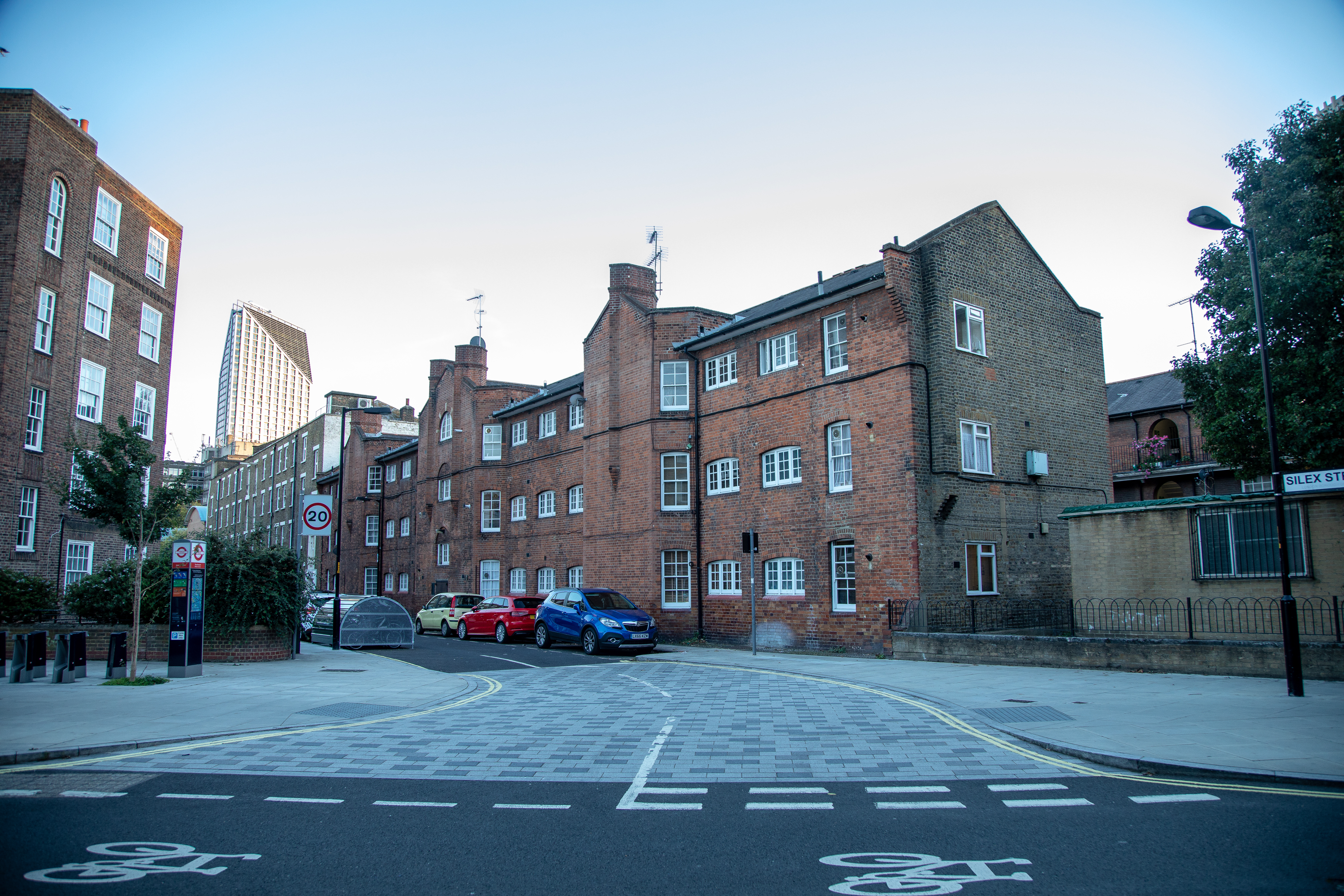
Clandon House, Boyfield Street Estate
Wikimedia Commons · CC BY-SA 4.0
Historical image not found
Today
Albury House, Boyfield Street
Geograph · CC BY-SA 2.0

Walk here and you walk across ground owned and shaped by a man whose name survives in stone and street signs. But who was Josiah Boyfield, and when did this street first claim his family name?

✦   ✦   ✦
Name Origin

From Norfolk Fields to a London Street

Boyfield Street takes its name from Josiah Boyfield, a local landowner and clothmaker. The Boyfield surname itself has deeper roots. It probably originates from the village of Bayfield in Norfolk, a place first recorded in the Domesday Book of 1068 as “Baiafelda”. Families displaced from their rural homes during England’s enclosure movements migrated to London, carrying their village names with them as surnames. In Southwark, one such family left their mark, and British History Online records references to Boyfield, Josiah in the historical sources for Southwark, confirming his significance to the area’s 18th-century development.

The street itself emerged as Southwark developed from a medieval settlement into an 18th-century residential quarter. By naming a street after a prosperous local figure, Southwark authorities immortalised a clothmaker whose property holdings shaped the immediate topography. Unlike streets named after distant nobility or ancient churches, Boyfield Street commemorates a tradesman—a man whose occupation was cloth, whose wealth lay in property, and whose name became a landmark.

How the name evolved
c. 1780–1800 Boyfield Street
present Boyfield Street
✦   ✦   ✦
History

From Estate to Urban Neighbourhood

Southwark in the 18th century was entering a period of transformation. The medieval Borough, long famous for its inns and markets, was beginning to sprawl beyond Borough High Street. As properties were subdivided and new streets laid out, local landowners like Josiah Boyfield sold parcels of land for residential development. The street that would bear his name emerged from what may have once been part of his holding, a pattern repeated across the parish as the great estates of Southwark fragmented.

Key Dates
1068
Domesday Record
Bayfield, Norfolk (origin of the Boyfield surname) first recorded in the Domesday Book as “Baiafelda”.
c. 1560
Early London Records
Thomas Baifeild recorded in church documents for St Thomas le Stocks, City of London—rural migrants adopting the village name as surname.
c. 1780
Street Named
Boyfield Street emerges as Southwark expands. Josiah Boyfield’s property ownership is commemorated in the street name.
1980
Modern Postcode
The SE1 postcode system introduced. Boyfield Street falls within SE1 0SD and SE1 0SB.
Did You Know?

The Boyfield Street Estate includes two Grade II listed buildings—Clandon House and Albury House—preserving Victorian-era architecture in the heart of modern Southwark.

In the 20th century, Boyfield Street evolved into a social housing neighbourhood. Like much of inner Southwark, the street became home to council flats and mixed-tenure housing, reflecting London’s post-war commitment to housing provision. The Boyfield Street Estate itself, built around preserved historic structures, now accommodates hundreds of residents in one of London’s most densely packed postcodes.

✦   ✦   ✦
Culture

Heritage in Brick and Preservation

The listed buildings on Boyfield Street Estate stand as markers of Victorian heritage preservation. These structures date from a period when Southwark was consolidating its identity as a working-class residential quarter, distinct from both the markets and leisure venues of Borough High Street and the genteel squares of Kennington. The architecture reflects mid-19th-century standards for both working-class housing and institutional buildings, with clean brickwork and functional design.

Listed Buildings
Clandon House & Albury House

Both buildings on the Boyfield Street Estate are Grade II listed, recognized for their architectural and historical merit. They preserve the material record of Victorian-era residential and social provision in the Borough.

The street itself is part of The Borough neighbourhood, an area with medieval roots that remain visible in the alignment of streets and the fragmentary survival of 16th-century buildings elsewhere. Walking Boyfield Street places you in a continuum stretching from the pilgrimage routes of the Canterbury Tales to modern, diverse urban life.

✦   ✦   ✦
On the Map

Boyfield Street Then & Now

National Library of Scotland — Ordnance Survey 6-inch, c. 1888. Hosted by MapTiler. Modern: © OpenStreetMap contributors.

✦   ✦   ✦
Today

A Street Redrawn

Boyfield Street today is a modest residential thoroughfare within a dense housing estate. The street serves residents and is part of the St George’s ward in Southwark, located within the Bermondsey and Old Southwark parliamentary constituency. The area consists predominantly of flats and contains a higher-than-average level of social housing, making it representative of post-war urban housing patterns across inner London.

The nearest railway station is London Waterloo East, approximately 650 yards away, placing the street within comfortable walking distance of the mainline terminus and the transport hub at Waterloo. The street sits close to Borough Market and the cultural institutions of The Borough, yet maintains its own quiet, residential character. For those curious about street names, it offers a case study in how merchants, landowners, and traders of the 18th century left their legacies inscribed in London’s urban fabric.

2 min walk
Borough Market
Historic covered market, trading for 1,000 years. Food, flowers, and community gathering place.
8 min walk
Archbishop Park
Green space with mature trees and walking paths, serving the residential neighbourhood.
✦   ✦   ✦

Frequently Asked Questions

Why is it called Boyfield Street?
The street is named after Josiah Boyfield, an 18th-century local landowner and clothmaker who held property in the area. His name was chosen to commemorate his role in the development of this part of Southwark. The Boyfield surname itself derives from Bayfield, a village in Norfolk documented in the 1068 Domesday Book.
When was Boyfield Street named?
The street emerged during the late 18th century (c. 1780–1800) as Southwark expanded beyond the medieval Borough High Street. As estates were subdivided for residential development, new streets were laid out and named after prominent local landowners and property holders of the period.
What is Boyfield Street known for?
Boyfield Street is known as a residential street in The Borough, Southwark’s historic medieval neighbourhood. It is home to the Boyfield Street Estate, which includes Grade II listed Victorian buildings (Clandon House and Albury House). The street exemplifies modern inner-London housing patterns and sits near Borough Market, one of London’s most famous marketplaces with a history spanning over 1,000 years.