Explore London England Scotland Wales About API
Southwark · SE1

Black Swan Yard

A Bermondsey alley named for a Tudor inn, now a creative quarter in one of London’s most vibrant neighbourhoods.

Name Meaning
Black Swan Inn
First Recorded
c. 16th century
Borough
Southwark
Character
Industrial & Creative
Last Updated
Time Walk

From Tavern Yard to Creative Quarter

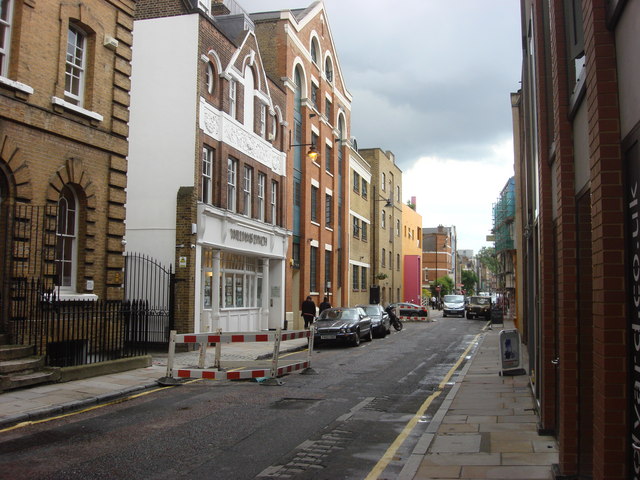
Black Swan Yard is no longer a hidden court off Bermondsey Street but rather a destination. The converted warehouse spaces house design studios, event venues, and restaurants, and the yard sits metres from the Fashion & Textile Museum and White Cube Gallery. It has transformed from a working industrial site into one of London’s most sought-after creative addresses.

2016
Black Swan Yard SE1 (27446930586)
Wikimedia Commons · Public domain
2023
W. H. and H. LeMay Hop Factors archway, White Hart Yard, Borough, March 2023 — near Bla...
Wikimedia Commons · CC BY-SA 4.0
Historical image not found
Today
A2205 Bermondsey Street — near Black Swan Yard
Geograph · CC BY-SA 2.0

Yet beneath this modern identity lies a much older name, one rooted in the age of coaching inns and taverns. The street takes its character from something that vanished centuries ago—but its name endures.

✦   ✦   ✦
Name Origin

The Sign of the Black Swan

Black Swan Yard takes its name after a former inn here of this name. Like many London streets in medieval and Tudor Southwark, this yard derived its identity from a tavern sign. The bird on the inn’s painted sign became the street’s permanent designation. Swan imagery was common in London inn nomenclature—the majestic white (or black, in Australia) swan gives its name to many street names by way of inn signs. Whether the Black Swan was named for the colour of the bird itself or for some particular heraldic or decorative reason is now lost to time.

The pattern is distinctive to Southwark. The borough holds multiple streets named after former inns: Swan Street, Tabard Street, and others all preserve this tradition of tavern nomenclature. The inn yards themselves, once bustling with travellers and merchants, eventually developed into the narrow courts and alleys that give Bermondsey its particular urban texture today.

How the name evolved
c. 16th century Black Swan Inn
17th–19th century Black Swan Yard
present Black Swan Yard
✦   ✦   ✦
History

Taverns and Tenements

Southwark’s geography shaped its role as an inn quarter. Situated south of London Bridge, the borough became the natural halt for travellers arriving from the coast or the Continent. Tudor records confirm that inns lined the main streets, their yards serving as coaching stations. The Black Swan would have followed this pattern, offering lodging, stabling, and drink to merchants and pilgrims. Over time, the inn yard developed into a maze of tenements and lodging houses, a common evolution in London’s densest parishes.

Key Dates
c. 1500s
Black Swan Inn
The inn is established as a lodging house and tavern on what is now Bermondsey Street, serving travellers and merchants.
1600s–1700s
Tenement Development
Tenements and cottage dwellings are built within and around the inn yard, creating a dense residential and working court.
1800s
Industrial Era
Bermondsey becomes a leather-working and industrial centre. The yard transitions to warehouses and light industrial use.
2000s–present
Creative Regeneration
Victorian warehouses are converted into design studios, galleries, and event spaces, making the yard a destination for London’s creative industries.
Did You Know?

Bermondsey was once England’s leather capital, with dozens of tanneries lining the riverside. The street names reflect the trade—and the presence of water pumps for the tanning process. The remnants of this industrial heritage still shape the neighbourhood’s character and building stock today.

By the 19th century, the inn itself had long disappeared. The yard had become a tightly packed industrial corner of a neighbourhood renowned for leather and metalwork. As late as the early 2000s, Black Swan Yard housed light manufacturing and warehousing. The conversion to creative and hospitality use represents not a return to the original tavern function, but a new chapter in the street’s use of space.

✦   ✦   ✦
Street Origin Products

Your listing has a better story than it’s telling

Black Swan Yard has transformed from a Tudor inn yard to a creative hub. Here’s how to put that story to work.

Professional Edition
Street Pack
“Why this address matters.”

Buyers pay more for addresses with a story. The Street Pack gives estate agents and developers brochure-ready copy, prestige framing and a name origin panel — everything needed to make this address feel significant before a viewing is booked.

  • Brochure copy — 100 & 200 word versions
  • Prestige framing version
  • Name origin panel
  • Timeline strip
  • Buyer persona framing
For estate agents, developers & property portals
From £19
Get the Street Pack
Street Social Kit
“Why this place feels interesting.”

Airbnb guests choose atmosphere as much as amenities. The Social Kit gives you five ready-to-post tiles, story templates, captions, hooks and a Reel script — all built from this street’s actual history. Done for you, in minutes.

  • 5 ready-to-post social tiles
  • 3 Story templates
  • 5 captions & 3 hooks
  • 1 Reel script
  • Hashtag clusters
For Airbnb hosts, boutique landlords & small agents
From £9
Get the Social Kit
✦   ✦   ✦
Culture

A Living Archive of Making

Black Swan Yard exists at the intersection of Bermondsey’s past and present. The Fashion & Textile Museum sits just metres away, documenting the garment trades that once filled the streets. The yard itself has become a node in London’s creative ecosystem—the converted warehouses now serve as studios for designers, makers, and craftspeople. This continuity of ‘making’ across centuries is not accidental. Bermondsey has always been a place where things are created and transformed.

The name itself carries this legacy forward. Long after the Black Swan ceased to serve travellers, the word ‘yard’ remained—a reminder that the street was once a bounded space, a court off a main thoroughfare, defined by the walls of a tavern. That sense of enclosure and community persists in the current use of the space as an events and cultural venue.

✦   ✦   ✦
On the Map

Black Swan Yard Then & Now

National Library of Scotland — Ordnance Survey 6-inch, c. 1888. Hosted by MapTiler. Modern: © OpenStreetMap contributors.

✦   ✦   ✦
Today

Warehouses and Galleries

Black Swan Yard opens from Bermondsey Street and is characterized by converted industrial buildings with high ceilings, exposed brick, and large windows typical of Victorian warehouses. The yards and alleyways retain their historic sense of enclosure—a quality that once defined the inn yard now makes the space attractive to galleries, studios, and event venues. The street is lined with independent shops, restaurants, and cultural institutions within a ten-minute walk.

The nearest transport link is London Bridge Station, approximately six minutes away on foot, making the area accessible from across the capital. The surrounding neighbourhood buzzes with activity, particularly around nearby Maltby Street Market and Borough Market. Black Swan Yard itself functions as both a working address for creative professionals and a destination for those seeking design, culture, and food.

3 min walk
Bermondsey Square
Historic antiques market, open Fridays. Once a place of illicit trading, now a genteel gathering space.
8 min walk
Potters Fields Park
Riverside green space overlooking the Thames and Tower Bridge. Seating, sculpture, and seasonal plantings.
10 min walk
The Scoop (Open-Air Theatre)
Sunken amphitheatre near City Hall. Free outdoor cinema and live events in summer months.
12 min walk
South Bank Green
Stretch of landscaped riverside with walking paths, restaurants, and cultural venues including the Tate Modern and Globe Theatre.
✦   ✦   ✦

Frequently Asked Questions

Why is it called Black Swan Yard?
The yard takes its name from the Black Swan, an inn that formerly stood on this site. Like many London streets in medieval and Tudor Southwark, it derived its identity from a tavern sign. The bird on the inn’s sign became the street’s permanent designation, a naming pattern common across the borough.
Was the Black Swan a coaching inn?
Yes. Located south of London Bridge, the Black Swan would have served as a lodging house and tavern for travellers arriving from the coast or the Continent. The inn yard provided stabling, storage, and eventually developed into a dense cluster of tenements and working buildings around its original boundaries.
What is Black Swan Yard known for?
Black Swan Yard is now a creative hub in Bermondsey, home to design studios, galleries, event venues, and restaurants. The converted Victorian warehouses have made the yard a destination for London’s cultural and creative industries, while its proximity to the Fashion & Textile Museum and White Cube Gallery reinforces its role in contemporary artistic practice. The name persists as a reminder of the street’s centuries-old function as a meeting place and centre of activity.