Southwark London England About Methodology
Bermondsey · SE1

Black Horse Court

An alley named after a historic inn that has served locals for over two centuries.

Named After
Historic Inn
Character
Georgian Alley
Borough
Southwark
Postcode
SE1
Last Updated
Time Walk

The Alley and the Inn

Black Horse Court is a modest alley in Bermondsey, anchored by the Black Horse pub—one of the oldest continuously licensed public houses in the neighbourhood. The court itself is brief, barely over fifty metres long, yet its existence is defined entirely by the inn that stands at its corner. Today, the pub faces Great Dover Street with Tabard Street running parallel, marking the court as a quiet junction between larger thoroughfares. What makes the address memorable is not its physical character but its longevity. This is not a recently discovered heritage treasure; it is simply a working street with an unbroken licensing history stretching back to the Georgian era.

2010
The Black Horse, off Great Dover Street
Wikimedia Commons · CC BY-SA 2.0
2016
The Black Horse Student bar-05-2016
Wikimedia Commons · CC BY-SA 4.0
Historical image not found
Today
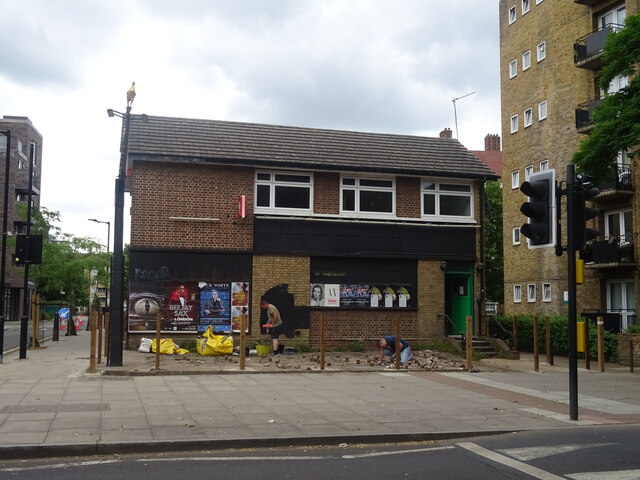
Former Black Horse public house on Great Dover Street — near Black Horse Court
Geograph · CC BY-SA 2.0

The name tells the whole story. Before street signs bore formal designations, London alleys took their identity from the buildings they contained, and the Black Horse was such a building—recognisable by its sign, reliable as a landmark, and important enough to lend its name to the space around it. That name has persisted through centuries of change.

✦   ✦   ✦
Name Origin

From Innkeeper's Sign to Street Name

Black Horse Court takes its name from a former inn here of this name. The Black Horse was one of hundreds of similar establishments that dotted London's neighbourhoods in the 18th and 19th centuries. Public houses were not merely places to drink—they served as landmarks, meeting points, and reference markers in a city where street names were often fluid or confusing. An inn's sign, painted or carved with its namesake beast, became as much a geographical feature as any street post.

Records show that a victualler has occupied the site since at least 1790, and the current building dates from 1965 but the pub heritage extends back over 230 years. The Georgian publican who first licensed the premises would have had no notion that their inn sign would become the permanent name for the alley itself. Yet that is what happened—not by formal ordinance, but through the simple weight of habit and local usage.

How the name evolved
c. 1790 Black Horse Inn
present Black Horse Court
✦   ✦   ✦
History

Two Centuries of Publican Life

The Black Horse emerged in the Georgian period as part of the dense infrastructure of inns and alehouses that grew up around Southwark. Bermondsey was already a centre of commerce, with tanneries, leather workshops, and warehouses clustered along the Thames and its tributaries. Workers needed shelter, food, and drink. The Black Horse provided all three, and like thousands of pubs across London, it became a fixed point in the neighbourhood's social and economic life.

Key Dates
c. 1790
Victualler
First recorded evidence of a victualling establishment at the site, marking the beginning of nearly two and a half centuries of continuous pub operation.
1965
Courage Rebuild
The current building constructed for Courage brewery, replacing the earlier Georgian and Victorian structures that had stood on the site.
2023
Modern Redevelopment
Planning approval for redevelopment of the Black Horse site, including a new pub facing Great Dover Street and retail space facing Tabard Street.
Did You Know?

The Black Horse operated continuously for over 230 years before its recent redevelopment—longer than many Southwark institutions. This makes it a survivor of the neighbourhood's pre-industrial commercial era, a rare anchor to Bermondsey's working-class Georgian heritage.

Bermondsey's character shifted over the 19th and 20th centuries. Industrial expansion gave way to urban decline, which in turn gave way to gentrification and heritage awareness. Yet the pub endured. By the 1960s, when Courage brewery acquired the site and built the current structure, the Black Horse was already an institution. The mod building, though architecturally modest, marked a commitment to maintaining the pub use. That use continues today, making Black Horse Court one of the few genuinely historic commercial alleys in the neighbourhood.

✦   ✦   ✦
Culture

A Pub That Still Serves Its Purpose

The Black Horse represents something increasingly rare in London—a commercial establishment with a documented history stretching unbroken into the Georgian era. It is not a museum piece or a themed recreation; it is simply an old pub that never closed. Its cultural significance lies precisely in this continuity. It is a living record of Bermondsey's commercial life, of the neighbourhoods that fed the city, and of the institutions that bound working-class communities together.

Historic Pub Licence
230+ Years of Operation

The Black Horse holds one of Bermondsey's most enduring pub licences, with records of continuous victualling use stretching back to c. 1790. This longevity makes it a material witness to the neighbourhood's transformation from industrial centre to contemporary mixed-use district.

Today, the pub functions much as it always has—as a gathering place, a local anchor, and part of the street's identity. The alley that bears its name reflects this: narrow, functional, and tied entirely to the building that created it. That is not a small thing in a city where such relationships are constantly erased.

✦   ✦   ✦
Today

A Working Alley in Transition

Black Horse Court today remains a working street in an area that is itself in transition. Bermondsey has emerged as one of London's most sought-after residential neighbourhoods, yet it retains pockets of its industrial character. The court itself is brief and narrow, serving primarily as a connection between Great Dover Street and Tabard Street. Its principal occupant remains the Black Horse, which continues to operate under planning approval for ongoing use and redevelopment.

The alley is not a destination in itself; it is known by and for the pub that gave it its name. This is typical of London's older commercial streets, where the architecture of identity is built from buildings rather than vistas. For residents and locals, Black Horse Court is simply the turning where the pub is. For historians, it is a direct line back to Georgian Bermondsey—a street whose name preserves the memory of a place that shaped the neighbourhood for two and a half centuries.

5 min walk
Bermondsey Spa Gardens
A small urban pocket park with seating, restored heritage gardens, and heritage listing as former spa site.
8 min walk
River Thames Path
Riverside walk with views towards Tower Bridge and Butlers Wharf; tree-lined approach to Shad Thames.
✦   ✦   ✦
On the Map

Black Horse Court Then & Now

National Library of Scotland — Ordnance Survey 6-inch, c. 1888. Hosted by MapTiler. Modern: © OpenStreetMap contributors.

✦   ✦   ✦

Frequently Asked Questions

Why is it called Black Horse Court?
The court is named after the Black Horse, a former public house that has occupied the site since at least 1790. Like many London alleys, the street inherited its name from the inn sign—in this case, the painted or carved image of a black horse that would have hung outside the pub and served as a local landmark.
How long has the pub been operating?
The Black Horse has over 230 years of documented victualling history, with records showing continuous operation since c. 1790. The current building dates from 1965, constructed by Courage brewery, but the pub use has never ceased. This makes it one of Bermondsey's oldest licensed establishments.
What is Black Horse Court known for?
Black Horse Court is known as a historic alley anchored by the Black Horse pub, one of Bermondsey's oldest continuously operated licensed houses. The court represents a surviving fragment of the neighbourhood's Georgian and Victorian commercial heritage, a direct link to Bermondsey's working-class past.