Southwark London England About Methodology
Bermondsey · SE1

Bartholomew Street

A Georgian terrace built on the grounds of a medical institution, its name honours the London hospital that laid out this quiet street.

Named After
St Bartholomew’s Hospital
Character
Georgian Terrace
Borough
Southwark
Last Updated
Time Walk

From Lock Hospital to Respectable Street

Bartholomew Street is a mixed commercial and residential street whose Georgian heritage masks a singular purpose: it was created entirely by a hospital to develop its Southwark property. After the formation of Great Dover Street, the Governors of St Bartholomew’s decided to develop the remainder of their Southwark property. A road was laid out running diagonally from the end of Great Dover Street to the New Kent Road and the ground on either side was granted on building lease to George Davis of Dover Place in the Kent Road and Francis Hoad and John Wadey of Prospect Place, Southwark.

2010
Bartholomew Street, Southwark
Wikimedia Commons · CC BY-SA 2.0
2010
Bartholomew Street , London SE1
Wikimedia Commons · CC BY-SA 2.0
Historical image not found
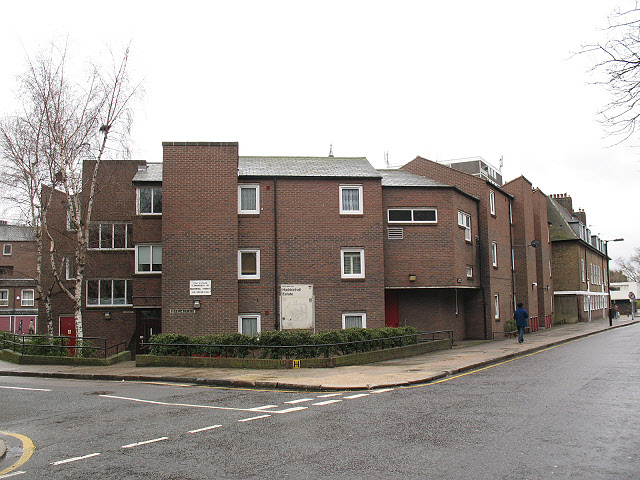
Today
Haddonhall Estate, Potier Street — near Bartholomew Street
Geograph · CC BY-SA 2.0

In accordance with the agreement to build fifteen houses there of the third rate, the terrace known first as Portland Place and now as Nos. 1–19 Bartholomew Street, was erected in 1818–19. Warner Street was renamed Bartholomew Street, though it had previously been known as Carter Street. The street carries the name of its creator’s institution not by accident, but by design.

✦   ✦   ✦
Name Origin

St Bartholomew’s Hospital’s Development

The road is named for St Bartholomew’s Hospital which owned the land on which it stands. They had acquired this in connection with their management of the Lock Hospital. The Lock Hospital was a medical institution that operated from early in the 18th century and treated infectious diseases. When the hospital closed, the governors saw an opportunity to develop the land into a respectable residential street. The name Bartholomew itself derives from the Aramaic ‘son of Talmai’, and became widespread in medieval England after the apostle Saint Bartholomew was martyred by flaying and gained popularity as a saint, causing the name to become common in England during the Middle Ages.

Street naming conventions in Georgian London often reflected institutional ownership and prestige. By naming the new street after the hospital rather than after a landowner or a place, the Governors of St Bartholomew’s were making a statement about respectability and institutional permanence. This was not a public street built by the vestry or the parish, but a private development by one of London’s oldest medical charities.

How the name evolved
pre-1818 Carter Street
c. 1869 Warner Street
present Bartholomew Street
✦   ✦   ✦
History

Building a Hospital’s Estate

Among the records of the Surveyor of St Bartholomew’s Hospital is an elevation and plan of the Lock Hospital made just before its closure. The main buildings, consisting of the chapel, parlour, hall, kitchen and surgery, abutted directly on Kent Street, a little to the north of the bridge over the Lock Stream. When the hospital closed and the site was released for development, the governors possessed one of the most valuable pieces of medical real estate in Southwark—land with water access and proximity to major routes.

Key Dates
1792
Lock Hospital Closure
The Lock Hospital ceases operations; St Bartholomew’s inherits the land and buildings.
1813
Great Dover Street Formed
The formation of this new thoroughfare opens up the hospital’s remaining property to development.
1818–19
Terrace Construction
Fifteen Georgian houses built on the site, initially known as Portland Place, establishing the street’s character.
1940
World War II Bombing
The northern end of Bartholomew Street suffers severe bomb damage; the Beehive pub is struck multiple times.
Did You Know?

St Bartholomew’s Hospital, which developed Bartholomew Street, is one of London’s oldest teaching hospitals, founded in 1123. Its involvement in property development and estate management was a common practice for wealthy medieval institutions seeking to generate revenue beyond their charitable functions.

The street was rebuilt and restored after wartime destruction. The Beehive was hit twice in separate air-raids during WW2 and at least eight people were killed, it was reopened and later rebuilt. The pub on the corner with Great Dover Street, possibly called The Virginia Plant, was destroyed by a V2 rocket in December 1944. The recovery of the street demonstrates both the resilience of South London communities and the durability of Georgian building stock—original houses on the south-east side survived the war and remain standing today.

✦   ✦   ✦
Character

A Street Shaped by Institution and War

The surviving Georgian terraces on Bartholomew Street represent a rare example of houses with semibasements where the entrances are approached from a raised paved way, the space beneath being used as storage vaults. This architectural detail, typical of early 19th-century London speculative building, is particularly visible on the south-east side of the street where two houses, now numbered 233 and 235 New Kent Road, are left. As documented by British History Online, these houses represent the standardised third-rate housing that made up much of the street’s original stock.

Wartime History
Second World War Bombing

The Beehive public house on Bartholomew Street became a symbol of local resilience after being struck multiple times during the Blitz. Though damaged, it reopened and was later rebuilt, continuing to serve the community.

Today, the street bears the marks of post-war rebuilding alongside its Georgian core. The area containing Bartholomew Street consists predominantly of flats, which is common in inner cities, student neighbourhoods and poorer suburban settings. The institutional character that shaped the street’s origins—as the creation of a hospital developer—has given way to a characteristically mixed London neighbourhood.

✦   ✦   ✦
Today

A Living Georgian Street

Bartholomew Street runs between New Kent Road and Great Dover Street in the Bermondsey neighbourhood of Southwark. The nearest railway station is Elephant & Castle, approximately 790 yards away. The street remains predominantly residential, with commercial uses interspersed throughout. Original Georgian houses sit alongside later infill and post-war reconstruction, creating the visual collage typical of central London streets that have survived fire, bombs, and urban change.

5 mins walk
Southwark Park
Victorian public park with tree-lined avenues, formal gardens and water features.
10 mins walk
Bermondsey Street
Historic street with antique markets and galleries, tree-planted pavements nearby.
8 mins walk
River Thames Path
Green corridor along the river embankment with Thames-side parks and recreation grounds.
12 mins walk
Burgess Park
Landscape-style park with wetlands, woodland, and open grassland.

The street’s institutional origins remain its defining feature. Unlike streets named after landowners, politicians, or geographical features, Bartholomew Street is the creation of a specific act of development by an identifiable institution. Walking its length today, that administrative act from 1818 remains visible in the ordered Georgian terraces that front the pavement, survivors of war and the passage of two centuries.

✦   ✦   ✦
On the Map

Bartholomew Street Then & Now

National Library of Scotland — Ordnance Survey 6-inch, c. 1888. Hosted by MapTiler. Modern: © OpenStreetMap contributors.

✦   ✦   ✦

Frequently Asked Questions

Why is it called Bartholomew Street?
The street is named after St Bartholomew’s Hospital, which owned the land and developed it in 1818–19. The hospital had acquired the property in connection with managing the Lock Hospital, a medical institution that previously occupied the site. When the hospital closed, the governors laid out this street as part of their estate development strategy.
What happened to the original buildings on Bartholomew Street?
The first terrace of fifteen houses (known initially as Portland Place) was erected in 1818–19, but not all has survived. However, the original houses on the south-east side, with their distinctive semi-basements and raised entrances, remain intact as examples of Georgian third-rate housing. The street suffered severe bomb damage during World War II, particularly in 1940, but has been rebuilt and restored.
What is Bartholomew Street known for?
Bartholomew Street is known as a Georgian-era mixed residential and commercial street in Bermondsey, Southwark. It is distinctive for being developed entirely by St Bartholomew’s Hospital rather than by speculative builders or public authorities. The street retains original Georgian terraces alongside post-war reconstruction and remains an active neighbourhood with local businesses and residents.