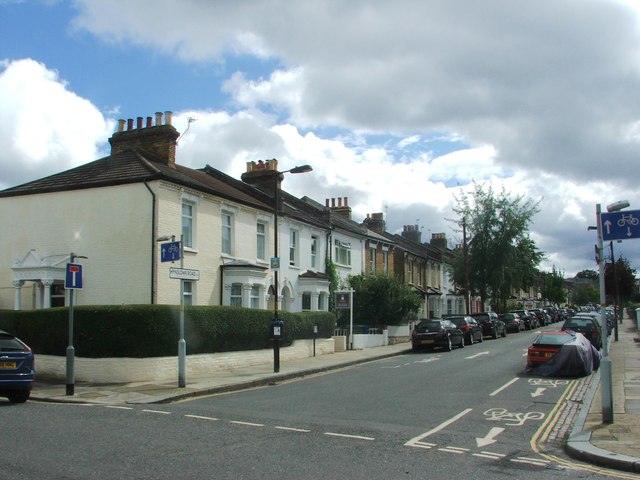
When Barry Road was named in 1867, East Dulwich was still largely open land. The area had been fields and grazing pasture well into the 1860s — Friern Manor Farm, which occupied much of the land between Peckham Rye and East Dulwich, was a significant milk supplier to central London. The street it honoured, and the terraces that would eventually line it, belonged to the next decade.
1830
Sir Charles Barry Appointed
Sir Charles Barry becomes architect and surveyor to the Dulwich College Estate. His principal work there is the Old Grammar School, built in 1840.
1834
Palace Fire
The Houses of Parliament are destroyed by fire. Barry wins the competition to design the new Palace of Westminster in 1836, securing his national reputation.
1858–59
Charles Barry Jr. Takes Over
Sir Charles retires from the Dulwich Estate; his son Charles Barry Jr. succeeds him as Estate Architect and Surveyor, a post he will hold until 1900.
1860
Sir Charles Barry Dies
Sir Charles Barry dies on 12 May 1860. The road that will bear his name does not yet exist.
1867
Road Named
Barry Road is formally named in commemoration of Sir Charles Barry, seven years after his death — at this point still an unbuilt street on largely open ground.
1870s–80s
Street Built Out
Barry Road is developed with terraced housing under Charles Barry Jr.’s oversight as Estate Architect. The housing is aimed at the lower middle classes — clerks and small tradesmen moving out from central London.
1890s
Local Churches Built
The churches serving the East Dulwich terraces are constructed during this decade, completing the residential infrastructure of the new suburb.
Did You Know?
It was Charles Barry Jr., not his famous father, who oversaw the development of most of East Dulwich during the 1860s–1900 as Estate Architect and Surveyor. He also designed the current Dulwich College buildings (1866–70) and the Burlington House façade in Piccadilly. The road is named for the father; the suburb was shaped by the son.
The housing on Barry Road reflects its era and its intended occupants. East Dulwich in the 1870s and 1880s was not the prosperous enclave that parts of Dulwich Village or Herne Hill represented — it was a suburb built for the lower middle classes, the clerks, small shopkeepers, and tradesmen who needed affordable terraced housing within reach of the railway. The churches came last, in the 1890s, once the population was large enough to sustain them.
Charles Booth’s investigators walked Barry Road in December 1899 as part of their survey of London life and labour, and their notebook captures the street mid-development. Near Underhill Road they recorded two- and two-and-a-half-storey semi-detached houses with good gardens front and back, home to a publican, a broker, an organ-builder and others — all judged ‘comfortable’, keeping a servant or at least a girl. The street’s character graded as it ran south: grander double-fronted houses near Silvester Road gave way to smaller terraces, then grew large again near the church by Goodrich Road. Even that late in the century, building work was still under way on the western side near Etherow Street.