The Street Over Time
A Victorian street named after an English manor that briefly belonged to one of Shakespeare’s greatest contemporaries.
Aysgarth Road runs through Camberwell, a corner of south London entirely shaped by the Dulwich Estate. The street itself is unremarkable — a quiet residential terrace of late Victorian and early Edwardian houses, built at a time when this part of London was transforming from rural village to suburban sprawl. What gives it distinction is its name, which reaches back four centuries to an Elizabethan actor who became one of the richest and most influential men in London.
The name does not commemorate a local landowner or an accident of geography. Instead, it honours a place in Yorkshire that Edward Alleyn briefly held as an estate, a tangible link to the charity he founded in 1619 that still owns and manages Dulwich today. To understand Aysgarth Road is to understand how one man’s ambitions shaped the character of an entire neighbourhood.
According to the Dulwich Society, Aysgarth Road was named in 1896 after a Yorkshire parish where Edward Alleyn held an estate. Aysgarth is a parish in the North Riding of Yorkshire, a landscape of moorland and fell that could not be more different from the suburban streets of Camberwell. Why a street developer would choose such a name is a puzzle resolved only by Alleyn’s connection to it.
Alleyn (1566–1626) was among the most celebrated actors of the Elizabethan stage and built his fortune through theatrical enterprise and shrewd property dealings. After acquiring the Manor of Dulwich in 1605, he became Lord of the Manor and used his wealth to establish the College of God’s Gift in 1619 — a charitable foundation that continues to own land and exercise authority in the area to this day. Sometime during his later years, Alleyn acquired a Yorkshire estate; the street name preserves the memory of that distant property, and by extension, the man whose vision created Dulwich as we know it.
Before the street existed, this land formed part of the Dulwich Estate, manor land that had belonged to the College of God’s Gift since its foundation in 1619. The Estate exercised strict control over development in the area, which explains the relatively ordered suburban growth that followed the arrival of railways in the 1860s. Development accelerated throughout the Victorian period, with the Dulwich Society recording that expensive detached villas were erected in the 1860s and the population more than doubled in the succeeding decade.
Edward Alleyn is buried in the chapel of the College of God’s Gift, where his memorial stone can still be seen. More significantly, he left no direct children — his “descendants” are defined in his will as the scholars and pupils of his foundation and the inhabitants of Dulwich itself.
By the 1890s, when Aysgarth Road received its name, Dulwich had transformed from a quiet village of large country houses into a respectable suburb of terraced villas. The street represents the third wave of that transformation — not the grand houses of the 1860s, but the more modest terraced properties that housed middle-class professionals and clerks in the new suburban era.
Aysgarth Road sits within the Dulwich Ward, governed by the same Estate Governors who manage Alleyn’s foundation. This is not a coincidence of administration but a continuous thread: the Dulwich Estate, the charity established by Edward Alleyn, remains one of London’s largest private landowners, with responsibility for approximately 1,500 acres. The street and its residents live under a management regime that stretches back to the 17th century, though adapted to modern needs.
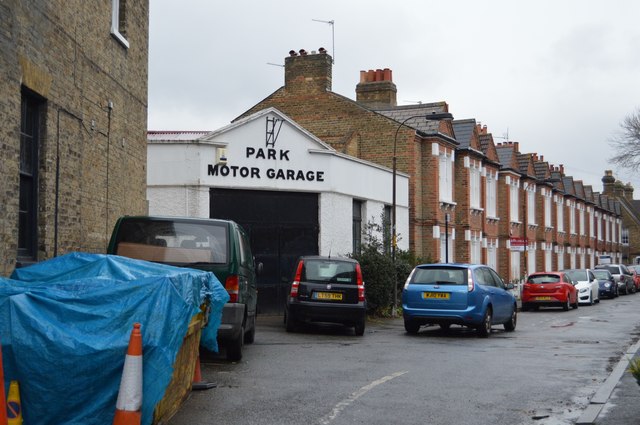
The road itself is characterized by solid Victorian terraced housing, popular with families and professionals who value proximity to Dulwich Village, the Picture Gallery, and the numerous schools in the area. The nearest station is North Dulwich, a short walk away, which connects the area to central London via the Thameslink and South Eastern Railway lines. Trees line the street, and despite its suburban character, something of the ordered, planned quality that Edward Alleyn himself imposed on his manor survives in the care taken with public spaces.
National Library of Scotland — Ordnance Survey 6-inch, c. 1888. Hosted by MapTiler. Modern: © OpenStreetMap contributors.