Southwark London England About Methodology
Peckham · SE22

Archdale Road

Named in 1871 after a castle in distant Fermanagh, this quiet Victorian terrace reflects an era when London’s suburbs reached across borders to find their names.

Name Origin
Castle Archdale
First Recorded
1871
Borough
Southwark
Last Updated
Time Walk

A Quiet Victorian Terrace

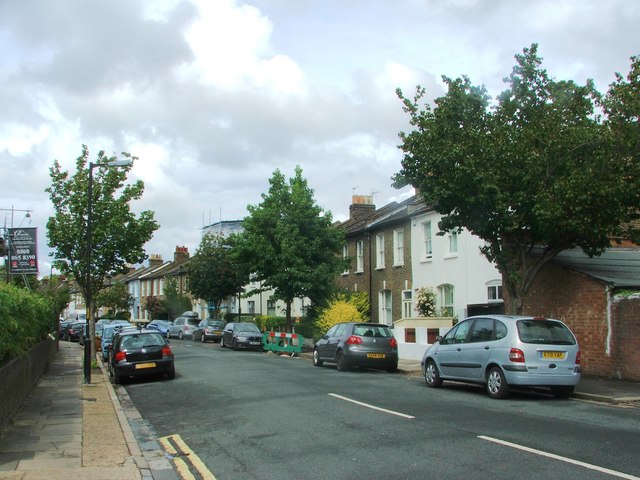
Archdale Road today is a residential street of solid Victorian terraced housing, characteristic of the East Dulwich streetscape that developed in waves from the 1870s onwards. The street remains largely unchanged from that era—brick frontages, slate roofs, and the measured rhythm of period townhouses create a cohesive neighbourhood with strong heritage fabric. Its nearness to East Dulwich station and Peckham Rye marks it as one of the more accessible corners of south London, yet it has retained the quieter, residential character of a side street rather than a thoroughfare.

1988
Tower Block UK photo l37-28
Wikimedia Commons · CC BY 4.0
2015
Archdale Road, East Dulwich
Wikimedia Commons · CC BY-SA 2.0
Today
Archdale Road, East Dulwich
Geograph · CC BY-SA 2.0

But the street’s name carries a story from much farther away. When this row of houses was being built, the developers and planners were reaching not to local landmarks or living benefactors, but to an Ulster estate across the Irish Sea. The naming would have spoken to Victorian tastes—a certain romance for distant, established places. It reveals how an era of suburban expansion sometimes drew its vocabulary from beyond the capital itself.

✦   ✦   ✦
Name Origin

An Irish Castle Remembered in London

Archdale Road takes its name directly from Castle Archdale, a historic estate in County Fermanagh, Northern Ireland. The street was formally named in 1871, the same year a notable schoolhouse was erected at the southern end of the road. At that time, Peckham was still in the grip of intensive suburban development—land was being parcelled into building plots, streets were being laid out on fields, and developers and estate managers were searching for distinctive names to brand their new districts. Irish estates held particular appeal: they carried associations with established landed families, history, and a genteel distance from the industrial sprawl of London itself.

The choice of ‘Archdale’ rather than something more obviously London—a royal name, a local saint, a civic figure—almost certainly reflects the pattern of estate development in this pocket of East Dulwich. Nearby streets were being named with equal eclecticism, and the cluster of Irish and literary references suggests a developer or surveyor who drew names from an older, more established geography. No documentary evidence survives to explain the choice further, but the fact that the name arrived in 1871 and took hold permanently signals that this was an intentional, formal act of christening rather than local usage that accumulated over time.

How the name evolved
1871 Archdale Road
present Archdale Road
✦   ✦   ✦
History

From Field to Suburb

Before 1871, the ground occupied by Archdale Road was open land on the southern margin of Peckham, a parish that had remained agricultural and sparsely settled well into the 19th century. The 1860s brought a turning point: railways and horse-tram lines began to spider southward from central London, making the hinterland suddenly commutable. Peckham, once a village surrounded by fields and market gardens, transformed within a decade into a building site. Developers moved in quickly, acquiring land cheaply and laying out streets in a grid pattern. Archdale Road was part of this second wave of suburban expansion, emerging from what had been Friern Manor farmland and common grazing ground.

The street takes on particular architectural interest because 1871 also saw the construction of what is now St. Clement’s Yard, a Victorian schoolhouse near its southern end. The building survives today, repurposed as residential apartments, a sturdy brick structure that anchors the street’s Victorian identity. By the 1880s and 1890s, the terraces that define Archdale Road today were complete—modest but well-built, with slate roofs and brick frontages that still stand intact. The street never attracted grand mansions or industrial works; it settled into being what it remained: a respectable, working-class to middle-class residential street, neither fashionable nor neglected.

Key Dates
1823
River Enclosed
The River Peck, which gave Peckham its name, was enclosed (piped underground) as the area began to develop.
1865
Railway Arrives
Peckham Rye railway station opens, catalysing suburban development southward and eastward.
1871
Archdale Road Named
The street is formally laid out and named after Castle Archdale in Fermanagh. A Victorian schoolhouse is built at the southern end.
1880s–1890s
Terraces Complete
The majority of the street’s Victorian terraced housing is constructed, completing the street’s residential character.
Did You Know?

The schoolhouse at St. Clement’s Yard, built in 1871, was preserved when Victorian and Edwardian housing swept through the surrounding area. It was later sensitively converted into residential apartments, making it one of the street’s most distinctive heritage features today.

In the 20th century, Archdale Road experienced the common fate of south London streets: solid, unremarkable, gradually ageing. No major events marked it, no famous residents elevated its profile. It benefited from proximity to Dulwich and its cultural institutions (the Dulwich Picture Gallery, Dulwich College), and it rode the waves of property development cycles that have periodically refreshed interest in Victorian terraces. Today it stands as a modest but complete Victorian streetscape, valued by residents who appreciate its quietness and architectural integrity, and by heritage observers who see in its brick and slate the genuine fabric of late 19th-century suburban London.

✦   ✦   ✦
Culture

Heritage Building in Daily Use

The street’s most significant cultural landmark is the former schoolhouse now converted into St. Clement’s Yard. Built as a primary school in 1871, the structure survives as a reminder of Victorian educational provision in a rapidly expanding suburb. The conversion to residential use, rather than demolition, represents a broader Victorian heritage consciousness in Peckham. The building’s brick and stone architecture is characteristic of period school design—functional but dignified, with sufficient scale and solidity to communicate institutional importance to the local community.

Historic Building
St. Clement’s Yard Schoolhouse

Built 1871. A Victorian primary school, now sensitively converted to apartments. The building exemplifies the institutional architecture that accompanied suburban expansion, serving the new residential populations of Peckham and East Dulwich.

Archdale Road sits within a broader cultural context of south London heritage. The street is close to Peckham Rye Park and the Dulwich Picture Gallery, both significant public institutions that shape the area’s character. Local engagement with the street’s heritage takes place at the level of individual stewardship—residents maintaining their period properties, respecting original architectural features, and contributing to the conservation of the streetscape as a whole. No major cultural events are associated with the street itself, but it functions as part of the social fabric of a residential neighbourhood that values quiet, stability, and connection to the past.

✦   ✦   ✦
Today

Preserved Suburb

Archdale Road remains a largely intact Victorian residential street, home to owner-occupiers and rental tenants in period terraced houses. The architectural character has changed little since the 1890s—brick frontages, sash windows, slate roofs, and front gardens with modest fencing define the visual rhythm. Property values reflect the area’s desirability for families and professionals seeking south London heritage streets with good transport links and proximity to Dulwich’s cultural amenities.

The street benefits from its location in the orbit of East Dulwich, a conservation-conscious neighbourhood where period properties are actively maintained rather than abandoned or radically altered. Archdale Road itself has no formal conservation area designation, but the preservation ethos of the surrounding area spills over. The street experiences relatively little through-traffic; it functions primarily as a destination for residents and their visitors, which has helped preserve its quiet character across generations.

5 min walk
Peckham Rye Park
Large public park with tree-lined walks, meadow, and lake. Historic common land purchased to preserve greenery as the suburb developed.
10 min walk
Dulwich Park
Landscaped Victorian park with lake, woodland, and sports facilities. Part of the Dulwich estate’s heritage infrastructure.
✦   ✦   ✦
On the Map

Archdale Road Then & Now

National Library of Scotland — Ordnance Survey 6-inch, c. 1890. Hosted by MapTiler. Modern: © OpenStreetMap contributors.

✦   ✦   ✦

Frequently Asked Questions

Why is it called Archdale Road?
The street was named in 1871 after Castle Archdale, a historic estate in County Fermanagh, Northern Ireland. During the rapid suburban expansion of south London in the late 19th century, developers often named new streets after established estates and places, particularly Irish ones, which carried associations with heritage and genteel authority.
When was Archdale Road built?
The street was formally laid out and named in 1871. The majority of the Victorian terraced housing that defines the street was constructed in the 1880s and 1890s, following the arrival of the railway at Peckham Rye in 1865, which made the area commutable to central London.
What is Archdale Road known for?
Archdale Road is known as a quiet, well-preserved Victorian residential street in East Dulwich. Its principal heritage landmark is St. Clement’s Yard, a schoolhouse built in 1871 and now converted to apartments. The street is valued for its intact Victorian character, proximity to Peckham Rye Park and Dulwich’s cultural institutions, and good transport connections via East Dulwich station.