Time Walk
A Street Built Twice by the Same Landlord


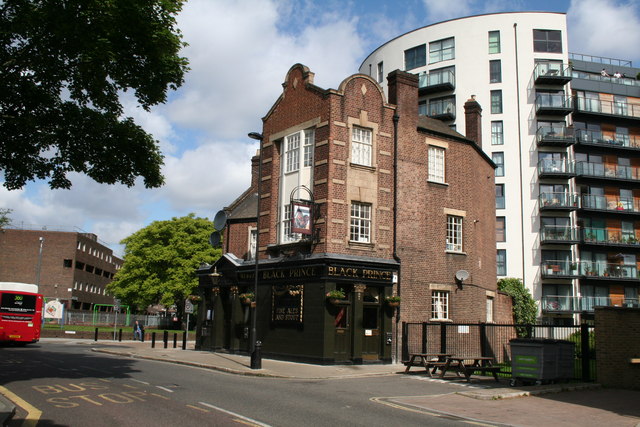
A medieval royal palace once stood here, long before this street existed. Today the walk is lined with Duchy of Cornwall housing built in two waves, one Edwardian and one between the wars, and a corner pub that has worn three names since the 1840s.
Beneath the brick blocks lies older ground: demesne land of the Manor of Kennington, and before that the triangle where the Black Prince built his palace. The street's own name, though, points not to princes but to an archbishop.
Name Origin
From Park Street to an Archbishop's Name
The street was known as Park Street until 1882. It was formally renamed Sancroft Street on 17 February that year, honouring William Sancroft, 79th Archbishop of Canterbury, chosen because of the street's proximity to Lambeth Palace, seat of the archbishops. The street itself had been formed around 1800 across demesne land belonging to the Manor of Kennington.
History
Royal Ground, Then Model Housing
Long before Park Street existed, this ground belonged to a king's son. In 1337 Edward III granted the manors of Kennington and Vauxhall to Edward, Earl of Chester and Duke of Cornwall — the Black Prince — who built a palace in the triangle formed by Kennington Lane, Sancroft Street and Cardigan Street. The great barn of that manor house stood approximately where St Anselm's Church now meets Sancroft Street at Kennington Road.
The Duchy of Cornwall, inheritor of that same royal land, returned to rebuild it centuries later. In the 1890s and 1900s it made its first attempt at improving housing conditions in the area along Sancroft Street. A larger scheme followed in 1913–15, when the Duchy redeveloped the land in the angle between Kennington Lane and Sancroft Street to designs by Stanley Davenport Adshead and Stanley Churchill Ramsey. A further phase of Duchy housing, designed by the Louis de Soissons Partnership, was built on the street in 1948.
Culture
A Pub That Took the Duchy's Name
The street's Edwardian and interwar housing is part of the same Duchy building programme. Nos. 49 and 51 form an early block built by the Duchy. No. 60 is a later block from the same estate, built between the wars.
People
A Schoolboy on Sancroft Street
Charlie Chaplin was schooled on Sancroft Street. No further detail on the school or the dates survives in the sources used here, but the connection places the future entertainer in this corner of Kennington before his fame.
The eastern stretch of Sancroft Street, around Stables Way, lies within an Archaeological Priority Area marking the probable site of the medieval Kennington Palace.
On the Map
Sancroft Street Then & Now
Frequently Asked Questions
Why is it called Sancroft Street?
It was renamed in 1882 from Park Street in honour of William Sancroft, 79th Archbishop of Canterbury, the name chosen because of the street's nearness to Lambeth Palace, the archbishops' London residence.
What is Sancroft Street known for?
It is known for its Duchy of Cornwall housing, built in phases from the 1890s through 1948, and for standing on land once occupied by the medieval Kennington Palace of the Black Prince.
When was Sancroft Street formed?
The street was laid out around 1800 across demesne land of the Manor of Kennington, under the name Park Street, before being renamed in 1882.
Is there a royal connection to Sancroft Street?
Yes. In 1337 Edward III granted the manors of Kennington and Vauxhall to the Black Prince, who built a palace in the triangle formed by Kennington Lane, Sancroft Street and Cardigan Street.