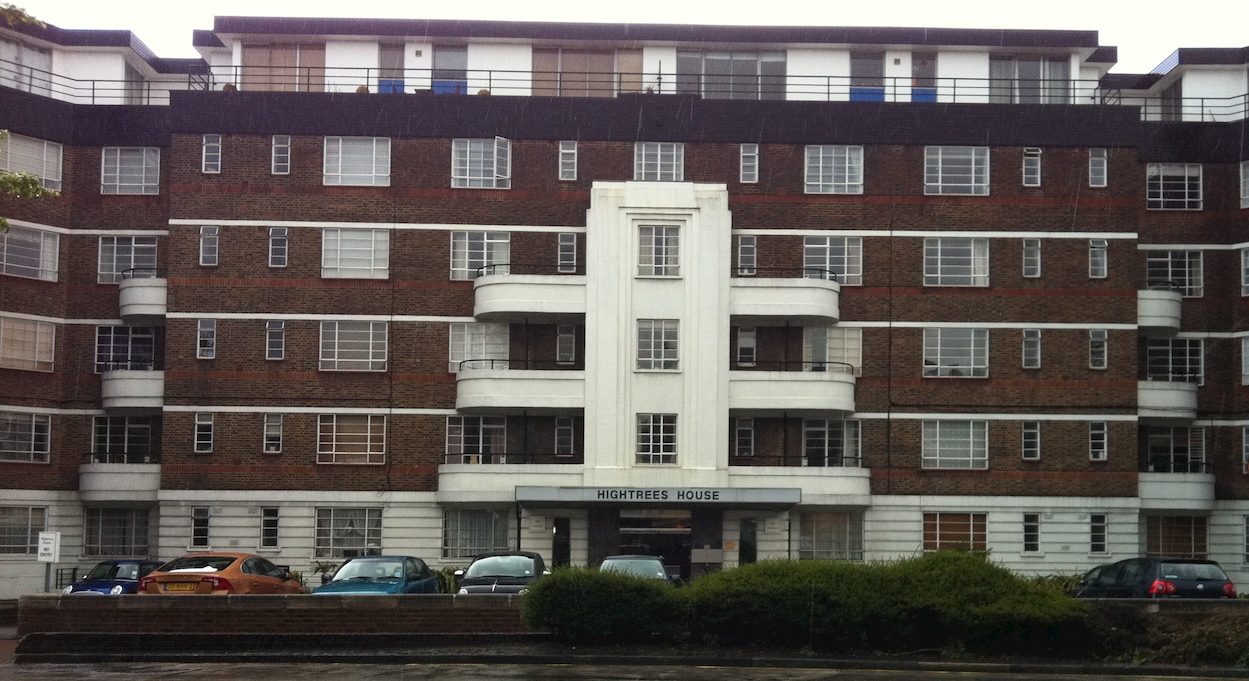
In 1937, Central London Property Trust Ltd (CLPT) leased a block of flats in Battersea, London to High Trees House Ltd (HTH) at £2,500 per year for 99 years. The building was modern, well-appointed, and expected to attract affluent tenants in pre-war London. Then came September 1939.
1937
Lease Begins
Central London Property Trust leases flats to High Trees House Ltd at £2,500 per annum on a 99-year lease.
Sept 1939
War Begins
World War II breaks out; London bombing and evacuation begin immediately, destroying rental market.
Jan 1940
Rent Reduced
High Trees House approaches landlord; landlord agrees in writing to halve rent to £1,250 per annum.
1945
War Ends
London recovers rapidly; flats become fully occupied. Landlord demands original rent and arrears.
18 July 1946
Denning's Judgment
Denning J held that the promise to accept reduced rent was binding under promissory estoppel, preventing landlord from claiming back pay before early 1945.
1947
Case Reports
Central London Property Trust Ltd v High Trees House Ltd [1947] KB 130 published; becomes leading authority on estoppel.
Did You Know?
The most significant part of the judgment is obiter dictum — it addresses hypothetical facts not directly at issue, since the landlord did not seek repayment of wartime rent arrears. Yet this obiter statement created the doctrine that reshaped contract law, persuading the court and legal profession that a promise, once made and acted upon, cannot be revoked without breaching equity, even if it lacks formal consideration. Denning’s bold statement — “I am in favour of the view that such a promise may be enforceable” — overturned centuries of rigid common law.
Denning J reasoned that if a party leads another party to believe that strict legal rights will not be enforced, then the courts will prevent him from doing so at a later stage. The rent reduction was understood by both parties as temporary, lasting only while the flats remained unlet due to wartime conditions. Once full occupancy returned in early 1945, the full rent became payable again. The landlord could not demand back-pay from 1940 onwards, though they were entitled to full rent henceforth. The principle was clear: a promise intended to be binding, intended to be acted on, and in fact acted on, is binding even without consideration.
The case created what became known as promissory estoppel: the doctrine that prevents a party from reverting to strict legal rights after making a clear promise that the other party has relied upon. Though doubly not a binding precedent (being obiter dicta in a court of first instance), the judgment essentially created the doctrine of promissory estoppel in English law. What might have remained a backwater of legal history became foundational. The street that took High Trees’s name inherited that significance — a reminder that even the fairness of contract law had to be fought for in a Lambeth courtroom in 1946.