Lambeth London England About Methodology
Feltham · SE11

Hamilton Road

A Victorian street where philanthropic almshouses rose in the 19th century as London's expanding population transformed Lambeth from village to suburb.

Named After
Uncertain
First Recorded
c. 1862
Borough
Lambeth
Character
Residential
Last Updated
Time Walk

The Street Over Time

2015
Hamilton Road, West Norwood
Wikimedia Commons · CC BY-SA 2.0
Today
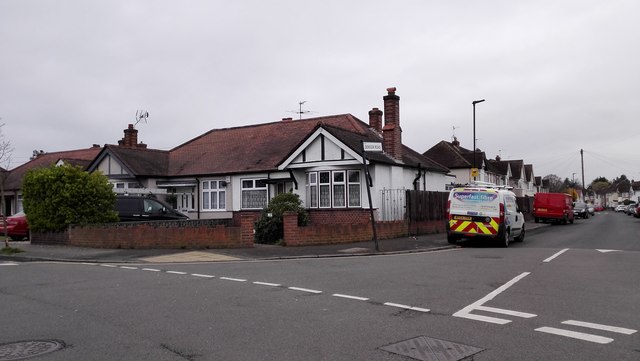
Hamilton Road junction with Denison Road - Lower Feltham
Geograph · CC BY-SA 2.0
Today

Suburban Inheritance

Hamilton Road in Feltham is a residential street shaped by Victorian London’s hunger for new housing. Like many thoroughfares in this part of Lambeth, it carries the mark of the 1860s suburban boom, when developers sought land away from the crowded City and created entire neighbourhoods almost overnight. The street’s name has never been fully explained in surviving records.

The road is historically bound to an act of charity. In 1862, British History Online documents that St. Saviour’s Almshouses were built here, one of several philanthropic institutions that moved to Lambeth during the second half of the 19th century as central London became too expensive and crowded. This tells us the street existed by then—but its naming remains obscure.

✦   ✦   ✦
Name Origin

An Unexplained Name

The origin of Hamilton Road’s name is not recorded in available sources. The street appears in historical records by the early 1860s, when St. Saviour’s Almshouses were established on its length, but no documentary evidence explains why it was called Hamilton. Like many London street names that predate comprehensive record-keeping, the reason for this particular designation has been lost to time. The word Hamilton itself is Scots in origin, meaning ‘flat-topped hill’, though that etymology tells us little about this street’s specific choice.

It is possible the street was named after a local landowner or builder of the period, but without primary sources—such as vestry minutes, property deeds, or contemporary maps—any such claim remains speculation. If you have evidence of the street’s naming, Street Origin would welcome your input.

Recorded Name Variants
c. 1862 Hamilton Road
present Hamilton Road
✦   ✦   ✦
History

From Rural Parish to Charitable Haven

Hamilton Road emerged as part of Lambeth’s rapid transformation in the 19th century. British History Online records that Lambeth was an ancient parish of Surrey until the Victorian boom brought railways, industry, and dense residential development. The population tripled between 1801 and 1831, and continued to grow explosively. This expansion created demand for new streets and housing in areas like Feltham, once farmland on the parish’s southern edge.

Key Dates
c. 1862
St. Saviour's Built
Almshouses established on Hamilton Road, providing homes for the poor and elderly as Lambeth underwent rapid urbanisation.
1860s–1880s
Suburban Expansion
Lambeth experiences intense building activity; residential streets multiply as the Metropolitan Board of Works begins to regulate development.
1900
Metropolitan Borough
Lambeth parish becomes the Metropolitan Borough of Lambeth under reformed local government, formalising its status as part of London County Council.
1939–1945
World War II
Like much of South London, Lambeth suffers bomb damage during the Blitz, altering the street’s physical character.
Did You Know?

St. Saviour’s Almshouses on Hamilton Road were not an isolated charity. During the second half of the 19th century, Lambeth became home to numerous philanthropic institutions—orphanages, almshouses, schools, and training colleges—as established charities relocated from overcrowded central London, seeking cheaper land and room to expand.

St. Saviour’s Almshouses, built in 1862, represent the street’s most documented early institution. The almshouses were part of a network of charitable housing that had existed in South London since medieval times. But in the 19th century, as the parish became increasingly industrial and densely populated, such institutions needed to move outward to find both space and affordable ground. Lambeth, though suburban by modern standards, was exactly the kind of destination. The road itself, lined with Victorian terraces and marked by these charitable buildings, reflects a moment when London was consciously trying to accommodate both its poor and its growing middle class.

✦   ✦   ✦
Culture & Character

Philanthropy and Urban Change

Hamilton Road’s cultural significance lies not in grand buildings or famous residents, but in what it represents: the Victorian philanthropic impulse to house the destitute, and the suburban expansion that made such housing economically possible. The almshouses that gave the street its early identity were part of a broader movement to address urban poverty through charity rather than state provision. They stood as physical expressions of Christian duty and social hierarchy—benevolent provision by the wealthy, gratefully received by the poor.

Charitable Institution
St. Saviour’s Almshouses

Built 1862. Part of a chain of institutions founded in the 16th century and relocated multiple times as London expanded. The almshouses represented the Victorian era’s reliance on private charity to house the elderly and infirm, a role the state would gradually assume after the Second World War.

Today, the street remains residential, its Victorian character modified by modern development. Like much of Lambeth, Hamilton Road bears the marks of London’s transformation from a patchwork of villages and orchards into a continuous urban landscape. The street itself has no famous literary or historical associations documented in sources, but it carries the everyday history of suburbanisation—the story of how Victorian London accommodated population growth by building outward, one street at a time.

✦   ✦   ✦
Recent Times

A Quiet Residential Evolution

The 20th century saw Hamilton Road change gradually from a philanthropic centrepiece to an ordinary residential street. St. Saviour’s Almshouses, like many Victorian charitable institutions, faced uncertain futures as the welfare state expanded after 1945. Buildings were adapted, relocated, or demolished to make way for new housing. The street itself, never famous or fashionable, has remained solidly residential—neither booming with development nor declining into neglect, but part of the stable suburban fabric of South London.

No major institutions or cultural landmarks are documented as occupying Hamilton Road in the post-war period. The street has been, in the best sense, ordinary—a place where Londoners lived their lives away from the spotlight of historical record. That ordinariness is itself a kind of historical truth: the story of suburban London is not made by headlines, but by thousands of streets like this one.

✦   ✦   ✦
Today

Suburban Continuity

Hamilton Road today is a residential street in the Feltham area of Lambeth, characterised by Victorian and Edwardian terraces alongside later 20th-century housing. The street forms part of the fabric of South London’s inner suburbs—neither as central as Westminster nor as remote as the green belt, but part of the densely populated zone that rings the ancient City. The area is served by local transport and remains residential in character, home to a mixed community of renters and owner-occupiers.

The name Hamilton Road, still unexplained after more than 160 years of recorded use, endures without fanfare. It is one of thousands of London street names that have never made it into the histories, yet shape the city’s geography and its sense of local identity. That anonymity does not make it less real, or less worth understanding.

5 min walk
Kennington Park
Historic Victorian park with open grassland and tree-lined paths, long a green space for the Lambeth community.
10 min walk
Archbishop Park
Small neighbourhood green space with play areas, reflecting Lambeth’s post-war commitment to urban parks.
12 min walk
The Oval
England’s historic cricket ground, venue since 1845, a landmark of South London sporting culture.
15 min walk
Thames embankment paths
Riverside walking routes offering views of the Thames and access to the South Bank cultural quarter.
✦   ✦   ✦
On the Map

Hamilton Road Then & Now

National Library of Scotland — Ordnance Survey 6-inch, c. 1888. Hosted by MapTiler. Modern: © OpenStreetMap contributors.

✦   ✦   ✦

Frequently Asked Questions

Why is it called Hamilton Road?
The precise origin of the name is not recorded in available sources. The street was well-established by 1862, when St. Saviour’s Almshouses were built there, but no documentary evidence explains the naming. Like many Victorian street names, the reason has been lost or was never formally recorded.
What important institution was on Hamilton Road?
St. Saviour’s Almshouses, built in 1862, were the most documented early institution on the street. The almshouses provided housing for the elderly and infirm as part of a wider movement of charitable institutions relocating from overcrowded central London to newly developing suburban areas like Lambeth in the 19th century.
What is Hamilton Road known for?
Today, Hamilton Road is known as a residential street in the Feltham neighbourhood of Lambeth, embodying Victorian suburban expansion. Historically, it is significant as the location of St. Saviour’s Almshouses and as part of Lambeth’s 19th-century transformation from rural parish to urban neighbourhood.