Lambeth London England About Methodology
Lambeth · SE11

Cranmer Court

A name that reaches back to a Tudor martyr who burned for his faith in Oxford — and whose London residence stood barely a mile from this very spot.

Name Meaning
Cranmer the Martyr
First Recorded
Not yet traced
Borough
Lambeth
Character
Residential court
Last Updated
Time Walk

A Court in the Shadow of the Archbishop’s Palace

Cranmer Court sits in the Hampton neighbourhood of Lambeth, SE11 — a short residential address in a borough defined for centuries by its extraordinary proximity to ecclesiastical power. Lambeth Palace, the principal London seat of the Archbishops of Canterbury, dominates the riverbank barely a mile to the north. It is in that shadow that this court takes its meaning.

The street today is a quiet residential enclave amid the denser urban fabric of SE11. That modesty belies the weight of the name above its entrance. The story of why a small Lambeth court carries the title “Cranmer” leads directly to one of the most dramatic deaths in English religious history.

1533
Hans Holbein the younger (c.1497-1543) (circle of) - Thomas Cranmer (1489–1556), Archbishop of Canterbury
Hans Holbein the younger (c.1497-1543) (circle of) - Thomas Cranmer (1489–1556), Archbi...
Wikimedia Commons · Public domain
Historical image not found
Today
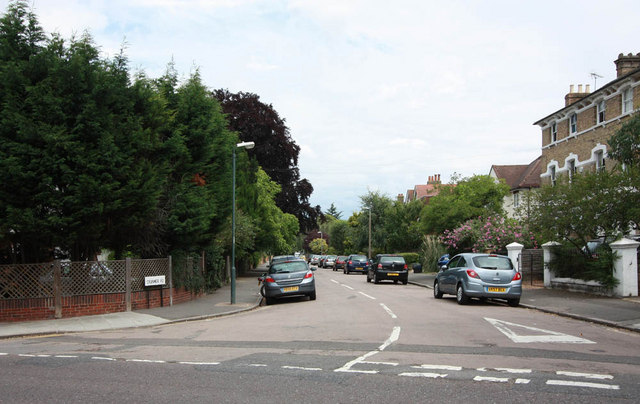
Cranmer Road — near Cranmer Court
Geograph · CC BY-SA 2.0
✦   ✦   ✦
Name Origin

The Martyr at Lambeth Gate

That name — Cranmer — goes back to one man: Thomas Cranmer, first Protestant Archbishop of Canterbury, who served under Henry VIII, Edward VI and briefly under Mary I. The name is most likely an honour to the reformer whose principal London seat, Lambeth Palace, stood for over two decades as his home and workplace in this very borough. As documented by British History Online, the Cranmer name appears in multiple forms across the south bank wherever archiepiscopal influence was felt — in streets, squares, and courts that acknowledged the palace’s enduring presence.

The word “Court” in the street name derives from the Old French cort, denoting an enclosed yard or residential enclosure — a common suffix for short residential addresses laid out from the Victorian era onwards. The combination is straightforward: a residential enclosure named in probable honour of the Protestant martyr whose Lambeth years shaped the English church. No documentary evidence naming a specific individual donor or developer who chose the name has been found in available sources.

How the name evolved
pre-name Unnamed enclosure
recorded Cranmer Court
✦   ✦   ✦
History

Archbishop, Architect of the English Church, Condemned Man

Thomas Cranmer was born on 2 July 1489 in Nottinghamshire. His appointment as Archbishop came in 1533, engineered by the Boleyn family and ratified by Henry VIII in urgent need of a churchman who could end his marriage to Catherine of Aragon. As noted by Historic England in its records of Lambeth’s built heritage, the archiepiscopal estate at Lambeth became the administrative and spiritual nerve centre of the English Reformation under Cranmer’s tenure, shaping the character of the entire neighbourhood.

Key Dates
1489
Cranmer Born
Thomas Cranmer born in Aslacton, Nottinghamshire, on 2 July. His path to the church was sealed by the death of his elder brother, who inherited the family estate.
1533
Archbishop Appointed
Cranmer consecrated Archbishop of Canterbury on 30 March. Lambeth Palace became his London base. He immediately annulled Henry VIII’s marriage to Catherine of Aragon.
1549
Book of Common Prayer
Cranmer’s first Book of Common Prayer imposed across England — the document that established the liturgical backbone of the Church of England for centuries.
1553
Arrested Under Mary I
Mary Tudor’s accession ended Cranmer’s power. He was arrested, tried for heresy, and spent seventeen months in Bocardo Prison in Oxford before execution.
1556
Burned at the Stake
On 21 March, Cranmer was burned at the stake in Oxford. He thrust his right hand into the flames first, the hand that had signed his recantations, declaring it the offending member.
19th c.
Cranmer’s Name Spreads
Victorian-era street naming in Lambeth drew heavily on archiepiscopal associations. Cranmer Court is believed to have taken its name during this period of residential development around SE11.
Did You Know?

When Cranmer was taken out to be burned on 21 March 1556, he shocked his executioners. He had signed five recantations of his Protestant faith under pressure — but at the stake, he disavowed every one of them and thrust the “offending” hand that had signed them directly into the flame, holding it there until it was consumed before the rest of his body was touched by the fire.

Cranmer’s long residence at Lambeth Palace gave him an inseparable association with this borough. As recorded by MOLA, the archaeology of the Lambeth riverbank reflects centuries of archiepiscopal influence, with the palace estate shaping land use, ownership, and place-names across the surrounding neighbourhood well into the modern era. The street name Cranmer Court belongs to that tradition of commemorative naming — a civic gesture towards a figure who drafted the language of English Protestant worship and paid for it with his life.

Cranmer’s theological output was extraordinary. He placed the English Bible in parish churches, composed a litany still in partial use today, and drafted the Book of Common Prayer — a document whose elegant prose influenced the English language for generations. In dying, he achieved what his cautious career had sometimes obscured: a clear statement of personal conviction that made him, in the eyes of Protestant England, a genuine martyr and a name worth preserving in stone.

✦   ✦   ✦
Culture

The Prayer Book and the Place-Name

Thomas Cranmer’s cultural legacy in Lambeth is inseparable from Lambeth Palace itself. As recorded by British History Online, Cranmer was resident at the palace during the most decisive years of the English Reformation — years in which he drafted the Book of Common Prayer and oversaw the placement of the English Bible in every parish church. The Cranmer name in Lambeth streets is a direct product of that legacy, a Victorian habit of commemorating reformers and martyrs in the urban fabric of a borough where their influence was still tangible.

The Reformer’s Tongue
Cranmer and the Language of English Worship

Cranmer’s 1549 Book of Common Prayer introduced English-language worship to every parish in the land — a linguistic as much as a theological revolution. Its prose rhythms, drafted at Lambeth Palace, shaped the cadences of English for centuries. The street name Cranmer Court sits in the borough where that prose was written.

The SE11 postcode district carries an unusual density of names referencing the archiepiscopal world: palace grounds, clerical associations, and reformers’ names embedded in the street plan. The Cranmer name belongs to a wider cluster of such commemorations, reflecting the long shadow of Lambeth Palace over local naming patterns. As SE1 Direct has documented in its coverage of south-bank heritage, the archiepiscopal influence on south London place-names extended well beyond the immediate palace precincts and persists into the present day.

✦   ✦   ✦
People

The Man Behind the Name

Thomas Cranmer (2 July 1489 – 21 March 1556) was the first Protestant Archbishop of Canterbury, serving under Henry VIII, Edward VI and Mary I. He drafted the Book of Common Prayer, secured the English Bible’s presence in parish churches, and annulled Henry VIII’s marriage to Catherine of Aragon. His Lambeth Palace years — spanning more than two decades — made him one of the most significant figures ever to reside in this borough.

His end was spectacular. Convicted of heresy under Mary I and burned at Oxford on 21 March 1556, Cranmer thrust his right hand into the flames first, declaring it the hand that had “offended” by signing his recantations under duress. The gesture was reported across Protestant Europe and immortalised in John Foxe’s Acts and Monuments. It turned a cautious ecclesiastical politician into an enduring symbol of Protestant martyrdom — and made his name a natural choice for streets across the borough where he had lived.

✦   ✦   ✦
Recent Times

SE11 in the Twentieth Century

The Hampton neighbourhood of SE11 underwent significant transformation through the twentieth century. Wartime bomb damage across Lambeth was considerable — the borough suffered extensive raids in the Blitz of 1940–41. Post-war reconstruction reshaped much of the residential fabric around Kennington and the surrounding streets, introducing new housing estates and infill development that changed the scale of neighbourhoods throughout the postcode district.

By the late twentieth century, SE11 had established itself as a mixed residential area, with Victorian and Edwardian terraces surviving alongside post-war social housing. The borough’s proximity to the South Bank and Waterloo drove gradual gentrification from the 1990s onwards. Cranmer Court, as a residential address in this context, reflects the layered residential history of a neighbourhood that has been continuously occupied and periodically remade across many generations.

✦   ✦   ✦
Today

Hampton, Lambeth: Still in the Archbishop’s Shadow

Cranmer Court today is a residential address in the Hampton neighbourhood of Lambeth — a short court in a borough that remains defined by its centuries-long relationship with ecclesiastical power. Lambeth Palace still stands to the north on the Thames embankment. The palace gardens, Archbishop’s Park, and the network of streets carrying archiepiscopal names continue to give SE11 a character distinct from any other inner-London postcode.

The green spaces near the court offer ready relief from the urban density of SE11. Archbishop’s Park, adjacent to the palace grounds, is the neighbourhood’s most historically resonant open space. Kennington Park, a little further south, provides larger open ground with a history stretching back to the seventeenth century. The wider area retains a strong residential identity despite its central location.

5–10 min walk
Archbishop’s Park
Historic parkland adjacent to Lambeth Palace, open to the public since 1901. The most archiepiscopally resonant green space in the borough.
10–15 min walk
Kennington Park
A substantial Victorian park south of the court, with open lawns and mature trees. A traditional gathering place for Lambeth residents since the nineteenth century.
10–15 min walk
Lambeth Palace Gardens
The palace grounds include one of London’s oldest gardens, with a fig tree reputedly planted in the Tudor era. Partial public access is available at certain times.
15 min walk
Vauxhall Pleasure Gardens Site
The former Vauxhall Pleasure Gardens — once the most celebrated outdoor entertainment venue in eighteenth-century London — lie a short walk to the north-west.
✦   ✦   ✦
“He held his right hand steadfastly in the fire till it was burnt to a cinder, even before his body was injured.”
John Foxe, Acts and Monuments (1563) — describing Cranmer’s martyrdom at Oxford, 21 March 1556
✦   ✦   ✦
On the Map

Cranmer Court Then & Now

National Library of Scotland — Ordnance Survey 6-inch, c. 1888. Hosted by MapTiler. Modern: © OpenStreetMap contributors.

✦   ✦   ✦

Frequently Asked Questions

Why is it called Cranmer Court?
Cranmer Court in SE11 is most likely named after Thomas Cranmer (1489–1556), the first Protestant Archbishop of Canterbury. Cranmer’s London residence was Lambeth Palace, barely a mile from the court. His name recurs across Lambeth’s street plan, reflecting the lasting influence of the archiepiscopal estate on local place-names. No primary documentary source naming the specific developer or occasion of naming has been found in available records.
Who was Thomas Cranmer and why does his name appear in Lambeth?
Thomas Cranmer served as Archbishop of Canterbury from 1533 to 1556, residing at Lambeth Palace during that entire period. He was the principal architect of the English Reformation: he drafted the Book of Common Prayer, placed the English Bible in parish churches, and annulled Henry VIII’s marriage to Catherine of Aragon. Queen Mary I condemned him for heresy and he was burned at the stake in Oxford on 21 March 1556. His two-decade presence at Lambeth Palace made his name inseparable from this part of south London.
What is Cranmer Court known for?
Cranmer Court is a residential address in the Hampton neighbourhood of Lambeth, SE11, most likely named in honour of Thomas Cranmer, the Protestant martyr and first Protestant Archbishop of Canterbury. The court sits within a borough shaped for centuries by the presence of Lambeth Palace and the archiepiscopal tradition, and the Cranmer name is one of many in the area that commemorates figures associated with that history. Cranmer himself is remembered as the author of the Book of Common Prayer and as one of the most dramatic Protestant martyrs of the Tudor Reformation.