Lambeth London England About Methodology
Lambeth · SW16 · Streatham

Braxted Park

An Edwardian street beside Streatham Common that borrowed its name from a medieval Essex deer park — a thousand-year-old estate condensed into a south London address.

Name Meaning
Place of New Ground
First Recorded
1902 (as Braxted Road)
Borough
Lambeth
Character
Edwardian Residential
Last Updated
Time Walk

The Common’s Edge

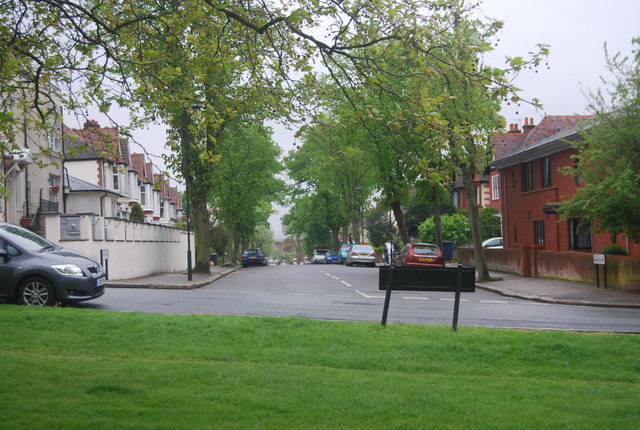
The top of Braxted Park meets Streatham Common South, and on a clear day the open green slopes of the Common are visible from the doorsteps of its bay-windowed Edwardian houses. The street is predominantly residential: red brick and render, bay windows, front gardens set back a little from the pavement, the kind of street that communicates settled suburban confidence. Streatham Common South runs along one end; the quieter residential roads of the neighbourhood spread in every direction.

2010
Braxted Park off Streatham Common South
Wikimedia Commons · CC BY-SA 2.0
2020
Braxted Park Streatham Wandsworth unused RP old PC LONDON POSTCARD (50272894192)
Wikimedia Commons · Public domain
Historical image not found
Today
Braxted Park off Streatham Common South
Geograph · CC BY-SA 2.0

The street was laid out in 1902, when this corner of Streatham was being actively marketed to prospective residents as “Healthy Streatham.” Its developers reached for a name that carried prestige — and found one in Essex. The name itself points back nearly a thousand years.

✦   ✦   ✦
Name Origin

Bracken, New Ground, and an Essex Park

The name traces to Braxted Park, the historic country estate near the village of Great Braxted in Essex. “Braxted” is first recorded in the Domesday Book of 1086, where it appears as Brachesteda. According to the Wikipedia entry for Great Braxted — corroborated by British History Online’s records on Great Braxted — the place-name most likely derives from the Old English braec, meaning “newly cultivated land” or brushwood, combined with stede, meaning “place”. The Essex estate gave its name to an entire manorial territory before the grand house was built upon it.

When developers laid out the Streatham street in 1902, they initially called it Braxted Road. The upgrade to “Park” — a common Victorian and Edwardian marketing device — followed, borrowing the prestige of the Essex estate’s own name change. The estate had itself only become “Braxted Park” in the 1820s, when the house was substantially remodelled.

How the name evolved
1086 Brachesteda
1206 Bracsted
c.1680 Braxted Lodge
c.1823 Braxted Park (Essex)
1902 Braxted Road (Streatham)
present Braxted Park
✦   ✦   ✦
History

From Medieval Deer Park to Suburban Road

The story this street carries begins not in Streatham but in Essex. The manor of Braxted Park is recorded in the Domesday Book of 1086 as belonging to Eudo Dapifer, a steward to William the Conqueror. By 1342, as documented by Historic England, the land was formally registered as a deer park — then owned by the Countess of Pembroke — making it one of the named medieval hunting preserves of Essex.

Key Dates
1086
Domesday Entry
The manor of Great Braxted recorded as belonging to Eudo Dapifer, steward to William the Conqueror.
1342
Deer Park Recorded
The estate formally documented as a deer park under the Countess of Pembroke.
1680
Braxted Lodge Built
Thomas Darcy’s son constructs Braxted Lodge on the present site; man-made ponds and a lime avenue added.
1751
Du Cane Era Begins
Peter Du Cane, cloth merchant and director of the Bank of England, acquires and transforms the estate with architect Robert Taylor.
c.1823
Renamed Braxted Park
Peter Du Cane III inherits and formally renames the estate; a 7.2-kilometre park wall is built to enclose the grounds.
1902
Streatham Street Laid Out
Braxted Road first appears in Streatham, marketed as part of “Healthy Streatham.” Later renamed Braxted Park.
Did You Know?

The Essex estate that gave this street its name is the largest walled private estate in the county of Essex — its perimeter wall stretches 7.2 kilometres. The Streatham street is, in that sense, named after a boundary rather than a building.

Thomas Darcy purchased the Essex lands in 1650 from the estate of the Countess of Pembroke; his son built the original house in 1680. In 1751, Peter Du Cane — a Huguenot cloth merchant descended from the “Du Quesne” family — settled the family at Braxted and commissioned architect Robert Taylor to reconstruct the house. Du Cane was a director of both the Bank of England and the East India Company, and the scale of his ambitions for the park matched his commercial standing.

Back in Streatham, the street itself emerged from the Edwardian building boom that reshaped the slopes and common edges of south London after 1900. The neighbourhood was deliberately marketed for its healthful air and proximity to open common land — a direct contrast with the dense inner-city terraces that still defined much of working London at the time. Braxted Road, as it was first called, was part of that calculated pitch to a aspirational suburban market.

✦   ✦   ✦
Culture

The Prestige of Borrowed Names

Edwardian developers understood the power of names. Calling a new suburban road “Park” rather than “Road” or “Street” was a deliberate marketing act: it suggested space, greenery, and social elevation. The choice of “Braxted” — an unusual, slightly aristocratic-sounding word with no obvious local meaning — reinforced that aspiration. The Essex estate the name referenced was by then associated with country-house grandeur and the Du Cane family’s generations of improvement.

Grade II* Listed — The Essex Original
Braxted Park House & Gardens, Essex

The estate whose name the Streatham street borrowed is itself a Grade II* listed building and a Grade II* registered park and garden. As recorded by Historic England, the park is of medieval origin, remodelled in the mid-18th and early 19th centuries — its walled kitchen garden, lime-tree avenue, and sinuous lake all survive. The Streatham street carries the name of one of Essex’s most intact historic landscapes.

The Edwardian houses of Braxted Park in Streatham are themselves a document of a particular cultural moment — when London’s middle classes moved south in numbers, when railway lines made suburban life practical, and when developers gave new streets old-sounding names to lend instant heritage to fresh brickwork. The Common at the top of the road was the genuine article; the name was the borrowed one.

📺 TV
Back to Life
BBC · 2019
Filming locations included houses on Braxted Park, Lambeth for the series.
✦   ✦   ✦
People

Merchants, MPs, and a Governor of Tasmania

The Essex estate whose name this Streatham street carries was shaped most decisively by the Du Cane family. Peter Du Cane, who settled at Braxted in 1751, was a director of the Bank of England and the East India Company — a Huguenot merchant family that had arrived in England carrying the surname “Du Quesne.” His grandson, Peter Du Cane III, renamed the estate “Braxted Park” around 1823 and built the seven-kilometre park wall that still defines the landscape.

Charles Du Cane, who inherited in 1841, served as Member of Parliament for North Essex and as civil Lord of the Admiralty before being appointed Governor of Tasmania from 1868 to 1874. He died at the estate in 1889. The family that stamped its name on the Essex park — and thereby, indirectly, on this Streatham street — spanned generations of public life, from trade to imperial administration. No individual with a documented personal connection to the Streatham street itself has been identified in available records.

✦   ✦   ✦
Recent Times

From Suburban Aspiration to Sought-After Address

The Essex estate that gave the street its name passed out of Du Cane hands in 1919, when Sir William Boulton purchased it. In 1947, the Boulton family sold Braxted Park to The Plessey Company; its chairman, Sir Allen George Clark, made the estate his family home and restored the Queen Anne house in the 1950s. The Clark family — in the form of Clark’s grandson Duncan Clark — continues to manage the estate today as an events venue, golf course, and working farm.

The Streatham street, meanwhile, followed the quieter arc of south London suburban life. The area remained predominantly residential through the 20th century. By the 2000s, proximity to Streatham Common and the street’s tree-lined Edwardian stock had made it one of the more desirable addresses in the neighbourhood. Property prices on Braxted Park reached £1.375 million by 2021 — a long way from the modest aspirational pitch of 1902.

✦   ✦   ✦
Today

Tree-Lined, Common-Edged, Quietly Rooted

Braxted Park today is a tree-lined residential street in Streatham, notable for its Edwardian houses and direct access to the open space of Streatham Common. The street connects to Streatham Common South at one end and draws from the surrounding neighbourhood’s amenities — schools, the Common’s café and Rookery gardens, and rail connections at Streatham Common and Norbury stations.

Top of the street
Streatham Common
Open grassland with paddling pool, café, and wooded areas. Direct access from the top of Braxted Park.
5 min walk
The Rookery
Landscaped walled garden atop Streatham Common; formal planting, rose walks, and a White Garden.
15 min walk
Norbury Park
Linear park beside the Norbury Brook — a quiet green corridor linking Norbury to Streatham.
Common wildlife
Urban Green Corridor
Streatham Common’s mature trees and scrub support song thrushes, sparrowhawks, and hedgehogs.

The street’s name still does what Edwardian developers intended: it connotes space and a degree of pastoral grandeur, even in the middle of a south London suburb. The Old English bracken-land of Essex and the bay-windowed terraces of Streatham are separated by a century of naming and more than 40 miles of road. The name bridges them both.

✦   ✦   ✦
On the Map

Braxted Park Then & Now

National Library of Scotland — Ordnance Survey 6-inch, c. 1888. Hosted by MapTiler. Modern: © OpenStreetMap contributors.

✦   ✦   ✦

Frequently Asked Questions

Why is it called Braxted Park?
The street was named after Braxted Park, the historic country estate near Great Braxted in Essex. The place-name “Braxted” is first recorded in the Domesday Book of 1086 as Brachesteda and most likely derives from Old English braec (newly cultivated land or brushwood) and stede (place). When the street was laid out in 1902 as part of Streatham’s Edwardian suburban expansion, developers named it Braxted Road before it acquired the more prestigious “Park” suffix — borrowing the cachet of the Essex estate’s own 19th-century name.
When was Braxted Park in Streatham first laid out?
The street was first laid out in 1902, initially under the name Braxted Road, as part of the Edwardian development of Streatham marketed as “Healthy Streatham.” Its location near Streatham Common was a key selling point for developers targeting aspirational suburban buyers at the turn of the 20th century.
What is Braxted Park known for?
Braxted Park is known as a quiet, tree-lined Edwardian residential street in Streatham, with direct access to the open space of Streatham Common at its northern end. Its houses date primarily from the early 1900s and are typical of the bay-windowed red-brick suburban expansion of south London during the Edwardian era. The street’s name connects it — unusually — to one of Essex’s great historic estates: a Grade II* listed Queen Anne mansion with origins as a medieval deer park recorded in 1342.