Lambeth London England About Methodology
Lambeth · SE11 · Oval

Andrew Place

A residential street set within the ancient Duchy of Cornwall estate — the same freehold that once grew cabbages where England now plays its greatest cricket.

Name Meaning
Uncertain
First Recorded
c. 19th century
Borough
Lambeth
Character
Residential
Last Updated
Time Walk

Cricket Ground, Cabbage Patch, Royal Manor

Andrew Place sits in Oval, one of the most historically loaded pockets of inner south London. The Kia Oval cricket ground — where England played its first home Test match in 1880 — stands yards away, and the land underfoot was once part of the Duchy of Cornwall estate that has shaped every street, lease, and building plot in this neighbourhood for centuries. The land here was, from the seventeenth century, used for a market garden. That transformation from cabbages to cricket, from common land to close-built Victorian terrace, is written in the fabric of every street around it.

2016
Lambeth Court
Lambeth Court — near Andrew Place
Wikimedia Commons · CC BY-SA 2.0
2025
Lambeth Palace
Lambeth Palace
Wikimedia Commons · CC BY-SA 2.0
Historical image not found
Today
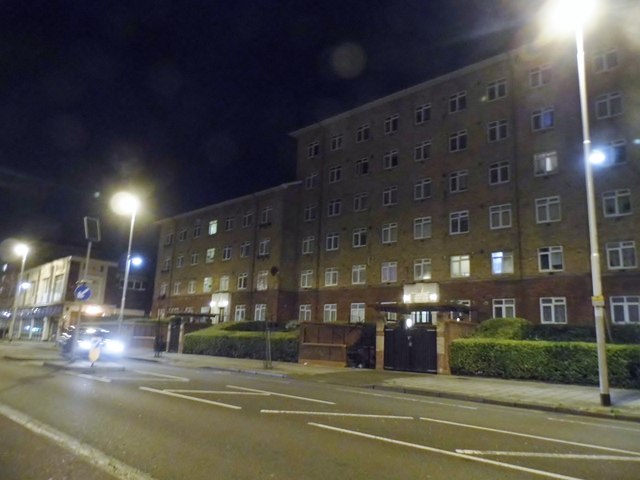
Flats on Wandsworth Road, South Lambeth — near Andrew Place
Geograph · CC BY-SA 2.0

The short residential character of Andrew Place today — Victorian stock-brick housing, tight plots, the hum of the city just over the rooftops — is entirely typical of the rapid in-fill that changed this corner of Lambeth in the decades after 1845. The name belongs to this same wave of Victorian street-naming. But where exactly the name “Andrew” comes from is a question worth asking.

✦   ✦   ✦
Name Origin

A Personal Name on a Duchy Estate

The name Andrew Place most likely derives from a personal name — a local builder, leaseholder, or landowner called Andrew — which was the dominant naming convention for the minor courts and places laid out across the Oval area during the Victorian building boom. As documented by British History Online in its Survey of London coverage of Kennington, individual craftsmen and developers typically received short leases from the Duchy of Cornwall in consideration of their expenses in building houses, and streets were often named informally after whoever held or developed the plot. The exact individual, if any, has not been identified in available primary sources.

The given name Andrew has deep roots in this part of Lambeth. The area around Kennington and Lambeth has no shortage of streets named after individuals connected to its landowners, clergy, or local tradesmen, and “Place” as a street suffix was commonly applied to short residential cul-de-sacs or terraces developed in the second half of the 19th century. No documentary evidence has been found to confirm a specific person named Andrew as the origin of this street’s name.

How the name evolved
c. 1845–1890 Andrew Place
present Andrew Place
✦   ✦   ✦
History

From Duchy Cabbage-Ground to Victorian Terrace

The ground beneath Andrew Place was, for most of recorded history, agricultural. In 1844, the site of the Kennington Oval was a cabbage patch and market garden owned by the Duchy of Cornwall. The Duchy’s ownership of this entire neighbourhood meant that every building plot, every street, and every lease in the Oval area ultimately originated from a Crown estate decision. As recorded by British History Online’s Survey of London, leases for individual plots were granted to local builders and tradesmen who undertook to construct houses at their own cost — a pattern that produced the dense grid of Victorian terraces that still defines the area today.

Key Dates
c. 1637
Rural Kennington
Harbord’s map of 1636–37 shows the area as open ground; the Oval district is entirely agricultural, forming part of the Duchy of Cornwall manor of Kennington.
1790
The Oval Planned
The name “Oval” emerged from a street layout which was originated in 1790 but never completely built.
1845
Cricket Ground Opens
The Oval has been the home ground of Surrey County Cricket Club since it was opened in 1845. The surrounding market gardens rapidly gave way to housing.
c. 1853
Gasometers Constructed
The Oval cricket ground was leased to Surrey County Cricket Club from the Duchy of Cornwall in 1845, and the adjacent gasometers were constructed in 1853.
1859
Overcrowding Crisis
Dense building and the carving-up of large houses for multiple occupation caused Kennington to be “very seriously over-populated in 1859, when diphtheria appeared.”
1880
First Home Test Match
The Oval was the first ground in England to host international Test cricket in September 1880. The neighbourhood’s identity was cemented by cricket.
Did You Know?

The Oval hosted the first representative football match between England and Scotland in 1870, and the first FA Cup final in 1872 — making the ground yards from Andrew Place a founding site of both cricket and football as national sports.

The Victorian building wave that created Andrew Place and its neighbours transformed Kennington within a generation. The distinctive shape of the Oval cricket ground plot was determined by the course of the River Effra beside it. That same buried river — now culverted underground — once shaped the field boundaries that determined where streets could be laid. Excavations by MOLA (Museum of London Archaeology) across inner south London have repeatedly shown how Roman-era road alignments and medieval field systems continued to influence Victorian street layouts, and the Oval area is no exception: Kennington Park Road is a long and straight stretch of road because it follows the old Roman Stane Street.

✦   ✦   ✦
Culture

A Royal Manor’s Long Shadow

The culture of the Oval neighbourhood is inseparable from its royal and cricketing identity. Edward, the Black Prince, lived in Lambeth in the 14th century in an estate that incorporated Kennington; much of the freehold land of Lambeth to this day remains under Royal ownership as part of the estate of the Duchy of Cornwall. That ancient connection to the Crown is what gave the Duchy of Cornwall the authority to lease the cricket ground in 1845, and why the streets immediately around it — including Andrew Place — carry names that reflect Victorian development rather than medieval settlement. Historic England’s records show numerous listed buildings within the Oval conservation area, testament to the quality of the mid-Victorian terraced housing stock that survives in the neighbourhood.

Duchy Ground — Six Centuries of Crown Ownership
The Duchy of Cornwall Estate

The Surrey Club held the Oval for many years on a lease from the Duchy of Cornwall, to which the land hereabouts still belongs; a fact which is kept in remembrance by the “Duchy Arms” inn and “Cornwall” Cottages. Andrew Place sits within this same historic estate. The Duchy was granted to the Black Prince in 1337 and has shaped the character of this neighbourhood ever since.

The wider area around Andrew Place has also been a stage for political history. Kennington Common was the site of the execution of Scottish rebels and the great Chartist meeting of 1848. Tens of thousands gathered there barely half a mile from where Andrew Place would shortly be built — a reminder that these quiet Victorian streets were laid out on ground where some of the 19th century’s most turbulent public dramas had only just played out. As SE1 Direct has noted in its coverage of the Lambeth and Bankside area, the streets of inner south London carry layers of working-class and political history that are easily overlooked beneath their residential surfaces.

✦   ✦   ✦
People

Builders, Leaseholders, and the Duchy’s Tenants

The people who shaped Andrew Place were, overwhelmingly, anonymous Victorian tradesmen and small builders working within the Duchy of Cornwall’s leasehold system. As the Survey of London records for the Kennington copyhold lands show, individual craftsmen — painters, bricklayers, plumbers, paper-stainers, masons, smiths and builders — received leases of plots in consideration of their expenditure in building the houses. These men built the terraces, named the courts and places after themselves or their patrons, and moved on. Their names survive, if at all, only in deeds and rate books.

No verified individual with a documented personal connection to Andrew Place itself — as resident, builder, or namesake — has been identified in available sources. The street’s name most likely commemorates one of these obscure Victorian developers whose records have not survived in accessible form.

✦   ✦   ✦
Recent Times

Gentrification and the Cricket Ground’s New Skyline

The Oval neighbourhood has changed dramatically since the 1990s. Lambeth was historically a largely deprived area of Inner London with very dense housing; this began to change in the 1990s as the gentrification apparent in just about all of inner London also manifested itself here. For a street like Andrew Place, that shift has meant rising property values, renovation of the Victorian housing stock, and an influx of new residents drawn by proximity to the City and the symbolic cachet of living next to one of England’s most famous sporting venues.

The cricket ground itself has been transformed. Surrey County Cricket Club has planned a £50m long-term redevelopment of the ground which will see The Oval transformed into the largest cricket stadium in the western hemisphere, with a capacity of 40,000. The construction that has changed the skyline visible from streets around Andrew Place will continue for years to come, altering the physical setting of this Victorian neighbourhood more dramatically than at any point since the houses were first built.

✦   ✦   ✦
Today

Green Spaces in the Shadow of the Gasometers

Andrew Place today is a quiet residential street in the heart of the Oval, its Victorian terraces intact within a neighbourhood that balances inner-city density with surprising greenery. The streets around it carry names that echo the Duchy of Cornwall connection — Stannary Street, Chester Way, Cornwall Road — each one a reminder that the freehold beneath the pavements has belonged to the Prince of Wales since 1337.

5 min walk
Kennington Park
Laid out by Victorian architect James Pennethorne, covering the site of the historic Kennington Common where public executions and the great Chartist meeting of 1848 took place.
8 min walk
Geraldine Mary Harmsworth Park
The green setting of the Imperial War Museum in Lambeth Road, a former Bethlem Royal Hospital garden — one of inner London’s most historic open spaces.
10 min walk
Vauxhall Park
This small park came about in 1890 through the campaigning of Octavia Hill, co-founder of the National Trust, for “More Air for London.”
The Kia Oval
9 acres of turf
The Oval covers about nine acres of ground and remains the largest green open space immediately surrounding Andrew Place — though entry requires a ticket.
✦   ✦   ✦
“The Oval, which, within the memory of living persons, was a cabbage-garden, covers about nine acres of ground, and is set apart entirely for cricket-matches.”
Edward Walford, Old and New London, c. 1878 — via British History Online
✦   ✦   ✦
On the Map

Andrew Place Then & Now

National Library of Scotland — Ordnance Survey 6-inch, c. 1888. Hosted by MapTiler. Modern: © OpenStreetMap contributors.

✦   ✦   ✦

Frequently Asked Questions

Why is it called Andrew Place?
The origin of the name Andrew Place has not been confirmed in available primary sources. The name most likely derives from a personal name — a local leaseholder, builder, or developer called Andrew who held or developed the plot under the Duchy of Cornwall’s leasehold system during the Victorian period. This was the standard naming convention for short streets and courts laid out across the Oval area in the second half of the 19th century. No documentary record identifying a specific individual has been found.
What is the history of Oval, where Andrew Place is located?
The Oval neighbourhood in Lambeth developed on land belonging to the Duchy of Cornwall, which has owned the freehold since the Black Prince was granted the manor of Kennington in 1337. From the 17th century the land was used for market gardens. An oval street layout was planned in 1790 but never fully built, and the name “Oval” stuck to the area. The Kia Oval cricket ground — home of Surrey County Cricket Club since 1845 — sits yards from Andrew Place and has defined the neighbourhood ever since.
What is Andrew Place known for?
Andrew Place is a Victorian residential street in Oval, Lambeth, within the historic Duchy of Cornwall estate that has shaped this neighbourhood for nearly seven centuries. Its immediate surroundings include the internationally famous Kia Oval cricket ground — the first venue in England to host a Test match — and Kennington Park, laid out on the site of Kennington Common where the Chartists gathered in 1848. The street’s Victorian housing stock reflects the rapid residential development of inner south London after the cricket ground opened in 1845.