Lambeth London England About Methodology
Lambeth · SE11 · Oval

Albert Square

A Grade II* listed Victorian garden square built on market garden soil in 1846—where the name of a prince was pressed into London brick before he had even died.

Name Meaning
Prince Albert
First Built
c. 1846
Borough
Lambeth
Character
Garden Square
Last Updated
Time Walk

Market Gardens to Garden Square

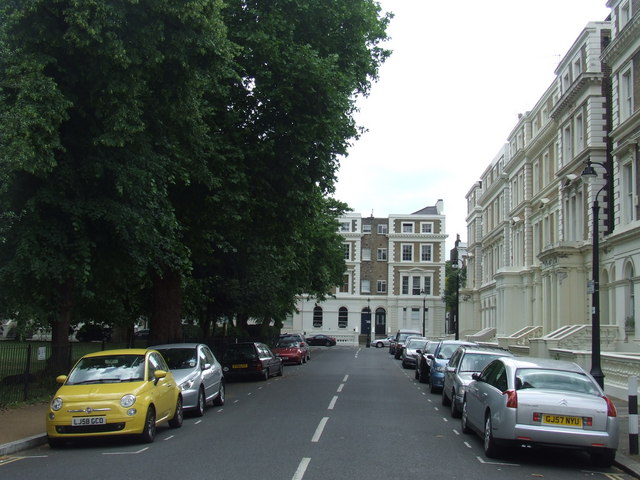
Albert Square sits in the Oval neighbourhood of Lambeth as one of south London’s finest surviving Victorian garden squares. The central garden—locked, private, and much coveted by locals—is ringed by 37 stucco-fronted townhouses in a state of notable preservation. The surrounding streets—Aldebert Terrace, Wilkinson Street, and St Stephen’s Terrace—form a complete mid-Victorian neighbourhood that reads almost as a single composition.

2011
Albert Square, SW8 (geograph 2435181)
Wikimedia Commons · CC BY-SA 2.0
2013
Albert Square (8669100112)
Wikimedia Commons · CC BY 2.0
Historical image not found
Today
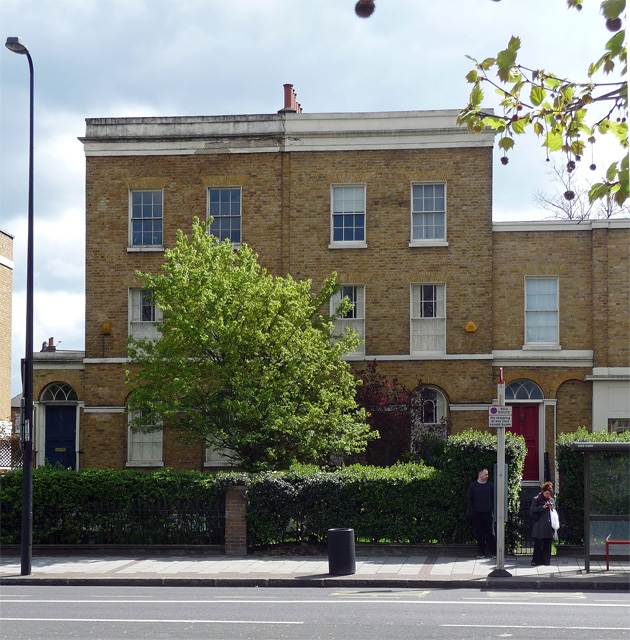
127-129 Clapham Road — near Albert Square
Geograph · CC BY-SA 2.0

The square is one of only a handful in south London to have retained its unified architectural character across nearly 180 years. Walking its perimeter today, the Victorian ambition of the development is plain: this was not artisan housing, but an aspirational middle-class enclave dropped onto former farmland. The name at the entrance tells its own story—and that story begins with a royal marriage and a nation’s enthusiasm for its Prince Consort.

✦   ✦   ✦
Name Origin

A Prince Consort in South Lambeth Brick

The name Albert Square derives directly from Prince Albert of Saxe-Coburg and Gotha, consort of Queen Victoria, who married in 1840. The square was built in 1846–1851—at the peak of the royal couple’s public popularity—and naming new developments after the Prince was a common gesture of the era. As documented by British History Online, the same impulse produced “Albert Villas” and “Albert Square” designations on new Victorian developments across London at almost exactly the same period.

The naming convention is confirmed by the street nomenclature of Lambeth itself: as the Wikipedia article on street names of Kennington and Lambeth records, Albert Embankment nearby was named for the same Prince Consort. The Royal Albert pub on St Stephen’s Terrace, one of two Victorian pubs surviving in the immediate area, carries the same commemorative impulse into licensed premises. No documentary primary source—such as builder’s deed or council minute—naming the specific individual has yet been traced, but the evidence of the period, the pattern of naming, and the surviving pub name together make the attribution to Prince Albert the probable explanation.

How the name evolved
pre-1846 Market Garden Land
c. 1846 Albert Square (new build)
present Albert Square
✦   ✦   ✦
History

From Cabbages to Stucco

The land beneath Albert Square was market garden well into the 1840s. The land here was, from the seventeenth century, used for a market garden—a pattern consistent across the wider Oval area of Lambeth. The Square was built by John Glenn of Islington from 1846. Built on what was originally market garden land in the mid-19th century, it was completed between 1848 and 1851.

Key Dates
pre-1846
Market Garden
The land that would become Albert Square is cultivated as market garden, a pattern across the Oval area since the 17th century.
1846
Building Begins
Builder John Glenn of Islington begins construction of the square’s terraced houses.
1848–51
Square Completed
The main body of Albert Square, including its private garden, is completed. The surrounding 37 houses define the garden trust area.
1865–75
Neighbourhood Fills In
Aldebert Terrace, Wilkinson Street and St Stephen’s Terrace are built, completing the Victorian neighbourhood around the square.
1951
Church Demolished
The original 19th-century St Stephen’s Church is demolished. A replacement church and adjacent flats are built on the original site.
Sep 1976
Conservation Area
Albert Square is designated Conservation Area CA4 by Lambeth Council, protecting its unified Victorian character.
Feb 1997
Boundary Extended
The conservation area boundary is extended, bringing additional surrounding streets under formal protection.
Did You Know?

Prince Albert had a direct physical legacy in the neighbourhood. His Model Cottage—originally displayed at the Great Exhibition of 1851 in Hyde Park—was dismantled and re-erected just over a mile away in Kennington Park in 1852–53, where it still stands today as Prince Consort Lodge, now the headquarters of the Trees for Cities charity.

The houses that back on to the Square from Clapham Road were completed at about the same time. The surrounding streets—Aldebert Terrace, Wilkinson Street and St Stephen’s Terrace—are fine examples of Victorian terrace housing, built between 1865 and 1875. The neighbourhood coheres as a remarkably intact example of aspirational mid-Victorian speculative building, aimed at the professional classes then beginning to settle south of the river.

The original 19th-century St Stephen’s Church was demolished in 1951; the current church and adjacent blocks of flats stand on the original site. The square’s garden, created at the time of the original build, has remained in private hands throughout: the Albert Square garden was created when the Square was built in 1846–49. It is part of the Grade 2* listed Square and of the conservation area for this historic part of south London.
✦   ✦   ✦
Culture

Conserved, Listed, and Contested

Albert Square holds one of the highest heritage ratings in south London. The conservation area is characterised by formal terraces of middle-class 19th-century housing with unified architectural detailing. It is part of the Grade 2* listed Square and of the conservation area for this historic part of south London. As noted by Historic England, the Grade II* listing—a step below the highest Grade I—reflects outstanding architectural and historic interest, placing the square among the top few per cent of listed buildings in England.
Stars & Soot: A Victorian Pub Pair
The Canton and The Royal Albert

The area contains two pubs dating from Victorian times, the Canton on Clapham Road and the Royal Albert on St Stephen’s Terrace. Both survive from the original development era, and the Royal Albert’s name echoes the square’s own dedication to the Prince Consort—making it one of Lambeth’s few pubs where the name and the street name share the same Victorian royal source.

The square’s garden is managed by the Albert Square Garden Trust on behalf of the 37 households surrounding it. English Heritage produced a history of the Square in 2001. One of the most visible signs of the resident association’s stewardship is the Tradescant sculpture outside St Stephen’s Church, at the corner of Wilkinson Street and St Stephen’s Terrace—a nod to the Tradescant family, celebrated plant hunters and gardeners buried in the neighbouring parish of St Mary-at-Lambeth.

🎬 Film
Love Actually
Richard Curtis · 2003
Albert Square in Stockwell SW8 was used with properties on Aldebert Terrace
Velvet Goldmine
Todd Haynes · 1998
Eddie Izzard steps out to face the press at Albert Square
· Art
Tradescant Sculpture
Unveiled by David Bellamy · 1988
Memorial sculpture unveiled in 1988 honoring the Tradescant family
✦   ✦   ✦
People

The Prince Who Named It, the Builder Who Built It

The square takes its name from Prince Albert of Saxe-Coburg and Gotha (1819–1861), consort of Queen Victoria. Albert was one of the most consequential royal figures of the 19th century: the driving force behind the Great Exhibition of 1851 and president of the Society for Improving the Condition of the Labouring Classes. His interest in model working-class housing was tangible and local—at the conclusion of the Great Exhibition the Model Cottage was dismantled and rebuilt in Kennington. By one estimate over 250,000 people visited the cottage, including Queen Victoria and Charles Dickens.

The man who actually turned the market garden into a square was John Glenn of Islington. No further biographical details have been traced in available sources. He was one of hundreds of speculative builders who shaped south London’s Victorian residential districts, working with borrowed capital and selling or letting on completion. His is a name that appears once in the record of the square’s creation—and nowhere else.

✦   ✦   ✦
Recent Times

Article 4, and the Fight for the Façades

The designation of Albert Square as Conservation Area CA4 in September 1976 was only the first layer of protection. The conservation area is characterised by formal terraces of middle-class 19th-century housing with unified architectural detailing, and to enforce that unity, the council applied an Article 4 Direction, removing permitted development rights from householders and requiring formal consent for alterations to windows, doors, and rooflines. The boundary was extended in February 1997 to bring additional surrounding streets under the same protection.

The square has become emblematic of the gentrification of the wider Oval neighbourhood. In recent years, Kennington has experienced gentrification, principally because of its location and good transport links to the West End and the City of London. Albert Square sits at the quieter, more residential edge of that process, its managed garden and protected façades making it one of the most sought-after residential addresses in Lambeth. Research into the square is documented by SE1 Direct, which covers the broader Southwark and Lambeth area and has followed the changing character of these Victorian streets.

✦   ✦   ✦
Today

The Locked Garden and the Open Street

Albert Square remains primarily residential. The central garden—accessible to residents of the 37 surrounding houses via an electronic key fob—is managed by a committee of the Albert Square Garden Trust. Annual subscription grants access to the wider local community at the Trust’s discretion. As MOLA and other archaeological institutions have noted of this part of south London, the Victorian street patterns here are substantially intact above and below ground, with little of the post-war clearance that altered other parts of Lambeth.

The neighbourhood’s resident association—ASSA, the Albert Square and St Stephen’s Association—is an active presence, maintaining the Tradescant sculpture and organising community events. Two Victorian pubs survive, and the streets around the square retain their 19th-century scale and materiality. The square itself is unchanged in footprint from its 1851 completion.

10 min walk
Kennington Park
The former Kennington Common, enclosed as a public park in 1852. Home to Prince Consort Lodge, originally displayed at the Great Exhibition.
12 min walk
Vauxhall Park
A Victorian people’s park opened in 1890, with a miniature walled garden and community allotments.
15 min walk
Myatt’s Fields Park
A Grade II listed Victorian park in Brixton, restored with Heritage Lottery funding and known for its rose garden.
Private
Albert Square Garden
The square’s own central garden, created in 1846–49 and maintained by the Albert Square Garden Trust for residents.
✦   ✦   ✦
On the Map

Albert Square Then & Now

National Library of Scotland — Ordnance Survey 6-inch, c. 1888. Hosted by MapTiler. Modern: © OpenStreetMap contributors.

✦   ✦   ✦
“An outstanding example of one of London’s famous garden squares.”
Albert Square and St Stephen’s Association (ASSA), History of the Square

Frequently Asked Questions

Why is it called Albert Square?
Albert Square in Lambeth is named after Prince Albert of Saxe-Coburg and Gotha, consort of Queen Victoria. The square was built in 1846–1851, during the height of the royal couple’s popularity, and the name reflects the mid-Victorian custom of honouring Prince Albert in public works and new developments. The nearby Royal Albert pub on St Stephen’s Terrace carries the same commemorative impulse.
When was Albert Square in Lambeth built?
Albert Square was built on what had previously been market garden land. Construction began c. 1846, carried out by builder John Glenn of Islington, and the square was completed between 1848 and 1851. The surrounding streets—Aldebert Terrace, Wilkinson Street and St Stephen’s Terrace—followed later, built between 1865 and 1875.
What is Albert Square known for?
Albert Square in the Oval, Lambeth is best known as an outstanding example of a Victorian London garden square. It is Grade II* listed and sits at the heart of the Albert Square Conservation Area (CA4), first designated in 1976 and extended in 1997. Its private central garden—owned by a trust for the benefit of the 37 surrounding houses—is one of the finest preserved garden squares in south London.