Kensington & Chelsea London England About Methodology
Kensington & Chelsea · SW3

Cranmer Court

Named after the Tudor archbishop who held his right hand in the flames — a nine-storey Art Deco colossus that rose on Whitehead’s Grove in 1934.

Named After
Thomas Cranmer
First Built
1934–35
Borough
Kensington & Chelsea
Character
Art Deco mansion block
Last Updated
Time Walk

Nine Storeys Above Chelsea

Cranmer Court dominates its Chelsea block the way only a 1930s ambition could. Built between 1934 and 1935, it occupies most of the ground enclosed by Sloane Avenue, Whitehead’s Grove, Elystan Street, and Francis Street — nine storeys tall, with a row of shops along the Sloane Avenue frontage opening through to the first of two quadrangles. From the pavement, the massing is deliberately grand: this was meant to signal a new, modern Chelsea to anyone walking south from the King’s Road.

1533
Hans Holbein the younger (c.1497-1543) (circle of) - Thomas Cranmer (1489–1556), Archbishop of Canterbury
Hans Holbein the younger (c.1497-1543) (circle of) - Thomas Cranmer (1489–1556), Archbi...
Wikimedia Commons · Public domain
1600
British (English) School - Thomas Cranmer (1489–1556), Archbishop of Canterbury
Wikimedia Commons · Public domain
Today
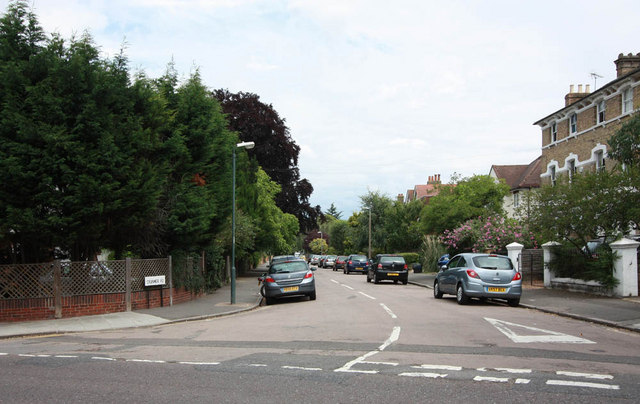
Cranmer Road — near Cranmer Court
Geograph · CC BY-SA 2.0

The name is older than the building by four centuries, borrowed from a street nearby that already carried the memory of the man who shaped the Church of England. That name traces back to a stake in Oxford and a hand thrust deliberately into fire.

✦   ✦   ✦
Name Origin

The Archbishop’s Unworthy Hand

The name reaches back directly to Thomas Cranmer (2 July 1489 – 21 March 1556), the English theologian who led the English Reformation and served as Archbishop of Canterbury under Henry VIII, Edward VI, and briefly Mary I — honoured as a martyr in the Church of England. As archbishop, he put the English Bible in parish churches, drew up the Book of Common Prayer, and composed a litany that remains in use today. His reward, under the Catholic Queen Mary, was conviction for heresy.

On 21 March 1556 Cranmer was taken out to be burned, first required to make his recantation public. The proximity of death restored both his faith and his dignity. He shocked his enemies by disavowing his recantation and emphatically reasserting his Protestant beliefs. As he had promised, he held his right hand — which “had offended” by signing the false recantations — into the flame until it was consumed. Victorian Chelsea named streets after this martyr, and when the mansion block rose on Whitehead’s Grove in 1934, it inherited the same commemorative impulse. As documented by British History Online, the surrounding district was by then filling with large interwar residential blocks, and Cranmer Court took the name already embedded in the neighbourhood.

How the name evolved
1556 Cranmer martyred
Victorian era Cranmer Road named
1934–35 Cranmer Court built
present Cranmer Court
“He held his right hand unshrinkingly in the fire till it was burnt to a cinder, frequently exclaiming, ‘This unworthy right hand!’”
John Foxe, Acts and Monuments (Foxe’s Book of Martyrs), on the death of Thomas Cranmer, 21 March 1556
✦   ✦   ✦
History

From Empty Lot to Chelsea Colossus

The land on which Cranmer Court stands was still open ground in the early 1930s. By the end of the 1930s the whole district had filled with housing for the better-off — described as “a curious mixture of select, consciously picturesque low houses” and enormous blocks of flats, “either cautiously Art Deco or approximately neo-Georgian in style.” Cranmer Court was very much the former camp: nine storeys of streamlined brickwork designed to attract a prosperous Chelsea clientele.

Key Dates
1489
Cranmer born
Thomas Cranmer born in Aslacton, Nottinghamshire, destined for the church.
1533
Archbishop appointed
Cranmer consecrated as first Protestant Archbishop of Canterbury under Henry VIII.
1556
Martyrdom
Cranmer burned at the stake in Oxford on 21 March; his defiant act with his right hand becomes legendary.
1934–35
Block built
Cranmer Court constructed on Sloane Avenue/Whitehead’s Grove, one of London’s largest residential blocks.
1940
Bomb damage
The building is damaged during the Blitz alongside other Chelsea landmarks.
c. 1940s
Wartime requisition
Cranmer Court is reportedly used by government wartime operations before returning to residential use after the war.
Did You Know?

When completed, Cranmer Court was considered one of the largest blocks of flats in London — a claim that sat alongside neighbours such as the ten-storey Chelsea Cloisters, built just to its north only two or three years later.

The Blitz interrupted its interwar swagger. Buildings damaged during the war included Cranmer Court on Sloane Avenue in 1940, along with Thurloe Court on the Fulham Road and Ashburnham Mansions. Post-war repairs restored the block, and it returned to the role for which it was designed: prestigious Chelsea address, long service to a well-heeled residential population.

✦   ✦   ✦
Culture

Reformation in Brick and Glass

The decision to name a 1930s mansion block after a Tudor Protestant martyr was not unusual for Chelsea, a borough that had long reached back to Reformation history for its street names. Thomas Cranmer added a brick tower to Lambeth Palace in the sixteenth century to accommodate his study — the physical imprint of an archbishop who made the whole south bank of the Thames part of his working landscape. By the 1930s that history had settled into Chelsea’s residential geography as quietly as the name on a block of flats. According to Historic England, the broader Sloane Avenue neighbourhood contains a notable cluster of interwar listed buildings reflecting the confident civic and residential investment of the period.

Art Deco Survivor
Nine Storeys of Streamlined Chelsea

Cranmer Court is cited in the Survey of London record maintained by British History Online as one of the defining large-scale residential developments of 1930s Chelsea. Its Art Deco character — geometric brickwork, clean horizontal lines, sheltered quadrangles — places it in a distinct interwar tradition that transformed this part of SW3 from Victorian terraces into a modern residential quarter.

Under Archbishop Thomas Cranmer, Lambeth Palace became central to the changes sweeping England: Cranmer produced two prayer books which later became the basis for the Book of Common Prayer. That the street carrying his name sits a few minutes from the Thames — the same river Cranmer would have crossed on his way between Lambeth Palace and the City — gives the address a quiet geographic logic.

✦   ✦   ✦
People

Residents of Note

Cranmer Court has attracted a thread of distinguished creative residents across the decades. Over the years the building has been home to notable residents including fashion designer Mary Quant, writer Rosamund Lehmann, and actor Dirk Bogarde. Each arrived at a different moment in the block’s post-war life, drawn by the combination of substantial rooms, Chelsea address, and the quiet prestige that a well-run portered block could still offer in a city where that currency was diminishing.

The man the building commemorates, Thomas Cranmer, never set foot in Chelsea — his London world was Lambeth Palace and the corridors of Tudor power across the river. Yet his name has proved durable enough to outlast the fashion cycles and social shifts that have remade the neighbourhood around Sloane Avenue several times over. As MOLA and other archaeological record-keepers have noted, the naming of streets and buildings after Tudor and Stuart figures was a deliberate Victorian act of civic memory — one that Chelsea enacted repeatedly.

✦   ✦   ✦
Recent Times

Restoration and Continuity

Cranmer Court has undergone restoration work in recent decades to preserve its original Art Deco detailing. The geometric brick patterning and the proportions of the quadrangles — both features of the original 1934–35 design — have been maintained. The building continues to function as a portered residential block, retaining the character that made it sought-after when it first opened. The Sloane Avenue frontage retains its original commercial ground floor, a retail strip that has been there since the block was first occupied.

The wider Sloane Avenue corridor has changed substantially since the 1930s, but Cranmer Court itself has remained legible as a piece of interwar Chelsea. SE1 Direct and other local London heritage monitors have noted how rare it is for blocks of this scale and era to survive with their architectural character substantially intact across a period of nearly ninety years.

✦   ✦   ✦
Today

Chelsea Green to Sloane Square

Cranmer Court remains one of Chelsea’s most immediately recognisable residential addresses. The building is highly regarded as a portered mansion block, ideally situated between Chelsea Green and Sloane Avenue in the heart of Chelsea. The two quadrangles give the complex a degree of enclosure unusual for central London, and residents stepping out onto Whitehead’s Grove find themselves within easy reach of the King’s Road, Chelsea Green, and the open spaces of the Royal Hospital grounds.

8 min walk
Chelsea Physic Garden
Founded in 1673, one of the oldest botanic gardens in Britain, backing onto the Thames Embankment.
10 min walk
Royal Hospital Gardens
The grounds of the Royal Hospital Chelsea, open to the public and host to the Chelsea Flower Show each May.
12 min walk
Ranelagh Gardens
Formal gardens within the Royal Hospital estate, offering open lawns and mature trees alongside the hospital buildings.
14 min walk
Burton’s Court
A large open recreation ground in the heart of Chelsea, popular with local residents year-round.

The neighbourhood around Sloane Avenue has evolved from the 1930s vision of a prosperous modern quarter into one of London’s most stable high-value residential areas. The block that rose on a “curious mixture” of cleared Victorian ground in 1934 now anchors a streetscape where its own architecture has become the historical layer.

✦   ✦   ✦
On the Map

Cranmer Court Then & Now

National Library of Scotland — Ordnance Survey 6-inch, c. 1888. Hosted by MapTiler. Modern: © OpenStreetMap contributors.

✦   ✦   ✦

Frequently Asked Questions

Why is it called Cranmer Court?
Cranmer Court takes its name from Thomas Cranmer (1489–1556), the first Protestant Archbishop of Canterbury. Cranmer was the chief architect of the English Reformation, responsible for the Book of Common Prayer and for placing the English Bible in parish churches. He was burned at the stake for heresy under Queen Mary I on 21 March 1556, famously holding his right hand — which had signed forced recantations — into the flames first. Victorian Chelsea named a road after him in tribute, and the mansion block built in 1934–35 adopted the same commemorative name for its address.
Was Cranmer Court bombed during World War II?
Yes. British History Online records that Cranmer Court was among the Chelsea buildings that sustained bomb damage in 1940 during the Blitz, alongside Thurloe Court on the Fulham Road and Ashburnham Mansions. The building survived and was repaired, returning to residential use after the war.
What is Cranmer Court known for?
Cranmer Court is one of the largest and most architecturally distinctive interwar mansion blocks in London — a nine-storey Art Deco complex occupying most of the block between Sloane Avenue and Whitehead’s Grove in Chelsea. Built in 1934–35, it has been home to notable residents including fashion designer Mary Quant, novelist Rosamund Lehmann, and actor Dirk Bogarde. The name honours Thomas Cranmer, the Tudor Protestant martyr and Archbishop of Canterbury, whose legacy to English religious life included the Book of Common Prayer.