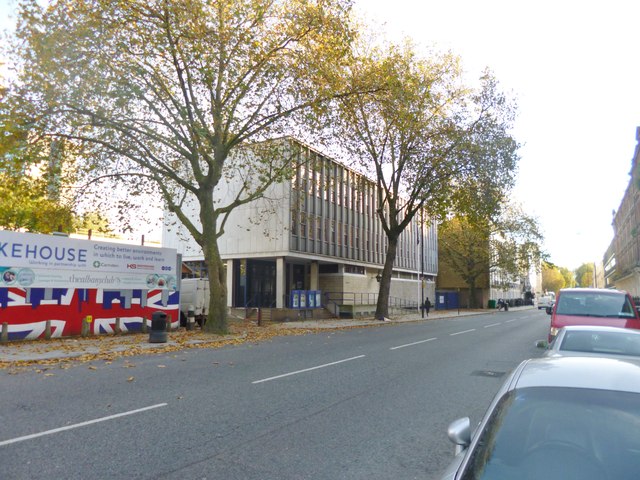
The land that became Albany Street was, until the Regency period, part of the open fields north of London. As recorded by British History Online in the Survey of London, this street was laid out by John Nash to divide the buildings fronting Regent’s Park from the commercial district to the east of it. Nos. 29–33 were originally two houses, the principal front of which faces west into St Andrew’s Place. They were built by George Thompson in 1826 and are among the finest surviving Nash-era frontages on the street.
1818
Ophthalmic Hospital
Nos. 152–154 built as a hospital for soldiers blinded in the Egyptian Campaigns; Sir William Adams served as oculist gratuitously until 1821.
1820s
Street laid out
John Nash lays out Albany Street as the eastern boundary of the Regent’s Park development; building begins under Crown Estate leases.
1826
Nos. 29–33 built
George Thompson constructs the pair of Nash-designed houses with porticoed west fronts; now Grade I listed.
1837
Christ Church built
Sir James Pennethorne’s neo-Grecian church opens on the east side to serve Nash’s new residential district.
1864
Renumbering
Albany Street and Upper Albany Street unified under a single numbering sequence: odd numbers west, even numbers east.
1875
The Colosseum demolished
The vast panorama rotunda between nos. 35 and 55, designed by Decimus Burton, is pulled down after drawing crowds for decades.
Did You Know?
The building at nos. 152–154, originally built as a hospital, was taken over by Sir Goldsworthy Gurney, who here constructed the steam carriage in which he managed to get to Bath and back at fifteen miles per hour. It is also said to have been used as a factory for Perkins and Bacon’s “steam guns,” prototypes of the modern machine gun.
Between nos. 35 and 55, an entire inserted street now occupies the site of the Colosseum—a vast circular rotunda designed by Historic England-listed architect Decimus Burton. The Colosseum housed a panoramic painting of London viewed from St Paul’s dome, which drew enormous crowds from the 1820s onward. Demolished in 1875, it was replaced by “Colosseum Terrace” houses in 1878.
Until 1864, Albany Street and Upper Albany Street were numbered separately, with consecutive numbers in each part. In that year, the whole street was renumbered with odd numbers on the west side and even on the east. The street’s divided identity reflected its dual character: Crown Estate stucco to the west, working commercial Camden to the east.