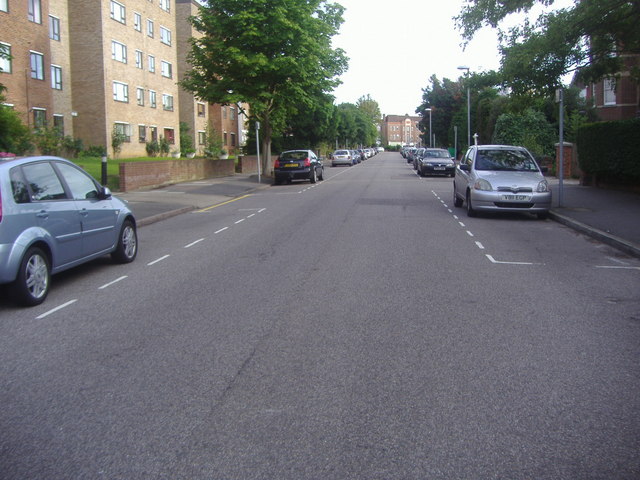
Until the Regency era, this land was part of the Manor of Chalcots—agricultural fields belonging to Eton College. As recorded by British History Online, the college surveyed the estate in 1824, obtained an Act to grant 99-year building leases in 1826, and appointed John Shaw—developer of St John’s Wood—as surveyor. Shaw drew up villa schemes for the Haverstock Hill frontage but refrained from a comprehensive plan, as the market had temporarily collapsed.
1824
Estate Surveyed
Eton College surveys the Chalcots estate; building leases authorised by Act of Parliament in 1826.
1830
Road Named
Eton College constructs c. 100 yards of road and names it Adelaide Road after the new queen.
1837
Tunnel Completed
The Primrose Hill Tunnel—London’s first railway tunnel—is bored beneath the street before housebuilding begins above it.
1843–52
Cuming Builds
Samuel Cuming erects 104 houses—stuccoed pairs in a plain late Georgian style—transforming Adelaide Road into a built street.
1856
Omnibus Opens
A regular omnibus service begins along Adelaide Road, serving a neighbourhood of modest mixed income.
1940s
Wartime Damage
German bombing raids severely damage the street. Post-war redevelopment replaces much of the Victorian fabric with the Chalcots Estate.
Did You Know?
The Primrose Hill Tunnel was the first railway tunnel built in London—and it was bored beneath Adelaide Road before a single house had been built above it. The London & Birmingham Railway, which opened in 1838, made the area temporarily less attractive to builders, delaying housebuilding until c. 1839.
John Shaw the younger, who took over as Eton’s surveyor in 1832, insisted on linking the estate to St John’s Wood. Early building concentrated on Adelaide Road, which was driven through to Avenue Road and Finchley Road by 1848. The key figure was Samuel Cuming, a Devonshire carpenter who built 104 houses between 1845 and 1852—mostly stuccoed pairs, three storeys above a basement, in a plain late Georgian manner. By 1851 he employed around 80 men and had become, in the words of British History Online, a “wealthy man.”
An omnibus service opened along the road in 1856, and by 1862 Adelaide Road formed a continuous band of development through the centre of the estate. The street attracted artists and professionals: William Dobson, the painter, and Samuel Birch, the Egyptologist, were both recorded in Chalcot Villas on Adelaide Road in the 1850s.